

| News | |||||||||||||||||||||||||||||||||||||||||||||||||||||||||||||||||||||||||||||||||||||||||||||||||||||||||||||||||||||||||||||||||||||||||||||||||||||||||||||||
 President Trump has told friends he wants to start a digital media company to clobber Fox News and undermine the conservative-friendly network, sources tell Axios. | |
Submitted at 11-12-2020, 07:39 PM by Xiphias | |
7 Comments | |
 A Utah man who claimed he was on his way to Missouri to kill a former U.S. senator was arrested after UHP troopers caught him driving up to 130 mph in the snow while impaired.
George William Stahl, 36, of Cottonwood Heights, was booked into the Summit County Jail early Wednesday for investigation of making a threat of terrorism, failing to stop at the command of police, reckless driving, speeding, DUI and drug possession.
About 12:45 a.m. Wednesday, Stahl was spotted by a Utah Highway Patrol trooper traveling 115 mph on I-80 in Summit County, according to a police affidavit.
“I activated my emergency lights immediately and the vehicle appeared to accelerate faster and pull away from me. I caught up to the vehicle who was still traveling over 100 mph and the vehicle accelerated again and pulled away,” the affidavit states.
Report ad
Despite light snow falling and slick roads, the vehicle reached speeds of at least 130 mph, according to the affidavit.
After another trooper spiked the vehicle’s tires, Stahl was arrested.
“Stahl was belligerent and appeared heavily intoxicated. He smelled of an alcoholic beverage and his eyes were glassy and bloodshot. There was an empty 12 pack of Budweiser beer in his vehicle as well as a partially consumed other 12 pack. Stahl stated that he was on Adderall and LSD and beer,” the affidavit states. | |
Submitted at 11-12-2020, 07:38 PM by Xiphias | |
 A Twin Cities man who identified himself to authorities as a supporter of President Donald Trump is accused of attacking an elderly couple with a golf club over the weekend after he saw them standing at a street corner with a homemade Joe Biden sign.
Fifty-year-old Mark Anthony Ulsaker, of Lino Lakes, is charged with second-degree assault with a dangerous weapon, threats of violence and assaulting a peace officer in connection to the Sunday incident, court documents filed in Ramsey County show. If convicted of all counts, he could face a maximum sentence of 15 years in prison.
According to a criminal complaint, multiple witnesses called 911 around 3 p.m. after seeing a man, described as stocky and bald, attacking an elderly couple with a golf club in White Bear Lake, at the intersection of Highway 96 and Centerville Road. After the golf club broke during the attack, the man reportedly punched the elderly man in the head.
The attacker then retreated to his pickup truck, which was parked at a nearby Walgreens, witnesses told investigators. The elderly woman gave chase. When she approached the truck, the pickup drove toward her, hopping over a curb before speeding off on Centerville Road. | |
Submitted at 11-12-2020, 07:36 PM by Xiphias | |
 Sen. Lindsey Graham (R-S.C.) warned that President Trump should not concede defeat in the 2020 presidential election in part because Republicans will "never" be able to elect another president from their party again.
"If Republicans don't challenge and change the U.S. election system, there will never be another Republican president elected again," Graham said Sunday on Fox News. "President Trump should not concede. We're down to less — 10,000 votes in Georgia. He's going to win North Carolina. We have gone from 93,000 votes to less than 20,000 votes in Arizona, where more — more votes to be counted."
Every major news network and The Associated Press on Saturday projected Joe Biden as the winner of the 2020 race for the White House. Trump has said he will not concede, alleging widespread voter fraud led to tens of thousands of illegal ballots being cast against him. | |
Submitted at 11-12-2020, 07:36 PM by Xiphias | |
 On Thursday, the Detroit Free Press reported that the militia ringleader behind the alleged plot to kidnap Gov. Gretchen Whitmer (D-MI) also planned to execute her on live TV — and burn down the state capitol in Lansing with everyone still inside it.
“No one would get out of the Michigan State Capitol alive under the initial plan devised by the accused ringleader in a Michigan terrorist plot, according to the Michigan Attorney General’s Office,” said the report. | |
Submitted at 11-12-2020, 06:23 PM by Forensic | |
 Choosing to earn a living from home once the pandemic ends is a privilege that you should pay for, according to strategists from Deutsche Bank AG’s research arm. | |
Submitted at 11-12-2020, 05:42 PM by Forensic | |
 The top writer had been suspended last month after exposing himself during a video call with colleagues. | |
Submitted at 11-12-2020, 05:29 PM by sleeppoor | |
 The actress, who plays the title character’s daughter, Tutar, talks about body hair, her “nonbiological father” Sacha Baron Cohen, and that scene with Rudy Giuliani. | |
Submitted at 11-12-2020, 05:03 PM by nocash | |
Submitted at 11-12-2020, 03:28 PM by Forensic | |
Submitted at 11-12-2020, 03:24 PM by Forensic | |
Submitted at 11-12-2020, 03:19 PM by Forensic | |
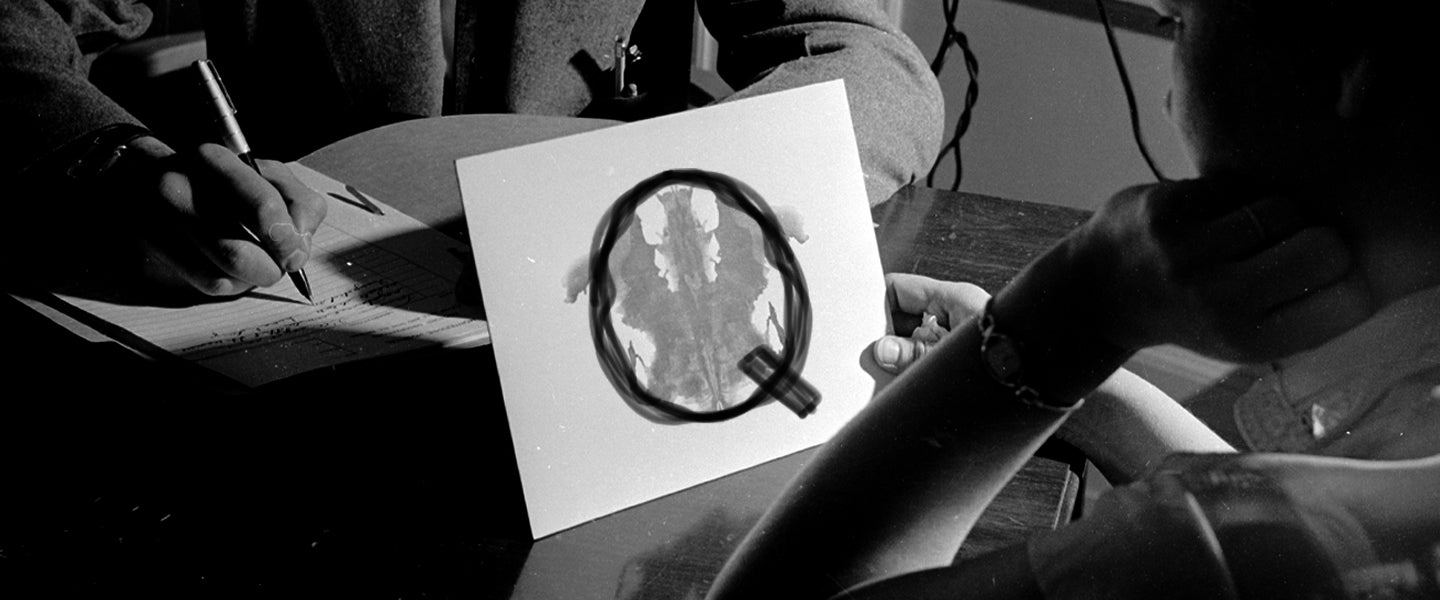 Why do so many people end up believing these ideas? And why are they tearing so many families apart? In a mental health crisis, conspiracy theories start to work like medication | |
Submitted at 11-12-2020, 02:20 PM by nocash | |
 A new translation of the epic takes its cues from ‘Road House’ — proving Beowulf really was literature’s original guy’s guy | |
Submitted at 11-12-2020, 02:19 PM by nocash | |
 Chimére felt like she was losing her mind. Then she found a community of people with the same surprising symptoms. | |
Submitted at 11-12-2020, 02:18 PM by nocash | |
 Joe Biden supports raising the federal minimum wage to $15 per hour. I know this because I follow political news for a living, but also because he said so, on television, in one of his two nationally televised debates with President Donald Trump. In fact, the two men argued about it, making it clear that one person on that stage wished to raise the minimum wage and the other didn’t.
In Florida, on Tuesday, 60 percent of voters overwhelmingly voted to raise the state’s minimum wage to $15 per hour. And on the same day, in Florida, Joe Biden won around 48 percent of the vote and lost decisively to Donald Trump.
It was a long and often brutal slog to get Democrats on board with a $15 minimum wage—so long, in fact, that it should probably now be called the “Fight for $17.22”—but tireless organizing finally convinced Joe Biden, the Democratic nominee for president, to support the proposal. It was not a centerpiece of his platform, but it was something he talked about and campaigned on. Joe Biden was the candidate of a $15 minimum wage. And it simply didn’t matter.
Now it is clearly true that people decide their votes based on many complicated, contradictory ideas, impulses, and biases. It is also probably true that even working-class voters most directly concerned with their own personal economic security may have been grateful to Trump for presiding over an economy that was humming at the start of the year, without assigning him blame for the pandemic that upended it.
But when a ballot measure that is ostensibly a central part of a candidate’s economic agenda runs 12 points ahead of the candidate, something is screwy in the electoral process.
Early Tuesday evening, left-of-center Twitter users began sharing images of polling results taken from Fox News, out of a sense of amusement at seeing this particular data on that particular channel. In the words of The Daily Dot, the polls “accidentally show Americans are liberal.” And indeed, the conclusion one would draw from these polls is not just that America is a liberal country but that it is a robustly left-of-center one.
Huge percentages of voters support government-sponsored health care, more state intervention in the economy, and more government support for clean energy. We have, of course, just learned some important lessons about the limitations of public opinion polling, but these majorities are too large to be completely dismissed as mere polling errors. That Democrats cannot translate robust support for their central policies into consistent electoral victories suggests that something is amiss in the democratic accountability feedback loop. It is of course true that on many of these issues, like health care, the Democratic Party firmly rejected the left’s popular proposals in favor of a confusing and diluted alternative. That is what Democrats nearly always do. Perhaps that is what the electorate punishes them for. But that same electorate also regularly elects Republicans, who are very vocally opposed to all of those fine, popular ideas.
This highlights the special challenge Democrats have faced in running against Donald Trump, who constantly backtracks and contradicts himself on policy, especially when he grasps that certain policies are broadly popular. (Trump has said in the past, in fact, that he supports a $15 minimum wage.) There is also the wider problem that many Americans (as Ryan Cooper has written) simply do not believe the Republican Party is as extreme as it is, based on the (logical!) belief that such a party would never win elections.
I doubt voters embrace Republicans because they believe the GOP is better than Democrats on economic fairness (as opposed to overall stewardship of “the economy”)—they simply can’t believe how reactionary Republicans actually are.
Faced with this dilemma, some commentators have insisted that Democrats just need to shut up about everything else in their great big platform and talk solely of dollars and cents. There is a liberal version of this argument, articulated by people like Mark Lilla: that Democrats should abandon their commitment to “identity” issues. And there is a left-wing version of this argument (caricatured by its opponents as “class reductionism”): that leftist politicians should focus on material concerns to the exclusion of all else.
But what if the argument itself is moot? What if it barely matters what Democrats “talk about” or “campaign on”? What if this is less a problem of political messaging or positioning than of political education, information access, and ubiquitous propaganda? In other words, if the Democrats actively try to abandon “identity issues,” will anyone in this political environment actually stop associating them with “identity issues”? If they ran a strictly class-focused campaign, how many marginal voters would hear their messaging and believe it?
It seems possible, in other words, that voters no longer believe that the Democratic Party represents a coalition that includes the working class, and that even if the party puts forward Democratic candidates who support pro-worker policy, it simply will not suffice to reach or convince voters.
This is not uncharted territory. Writing, in 1979, about the United Kingdom’s “swing to the Right,” the sociologist Stuart Hall argued that it could be explained (in part) by the fact that, once in power, social democratic parties became parties of the state, rather than parties of labor, as the state intervened to put the “national interest” above the “class struggle,” disciplining labor on behalf of the markets.
“In the absence of any fuller mobilization of democratic initiatives,” he wrote, “the state is increasingly encountered and experienced by ordinary working people as, indeed, not a beneficiary but a powerful, bureaucratic imposition. And this ‘experience’ is not misguided since, in its effective operations with respect to the popular classes, the state is less and less present as a welfare institution and more and more present as the state of ‘state monopoly capital.’”
The Democratic Party, unlike most of its left-of-center brethren in the developed world, has never been a true labor party, but it seems plausible that many voters view it as a party representing a state that never helps them, even as they, personally, practically beg for a large and powerful state that would step in to improve their lives.
The question Democrats now face is whether saying they will empower the state to improve people’s lives will actually work on anyone.
Hall’s thesis couldn’t account for the advances of communications technology and retreats in mass organizational politics and civil engagement that have taken place since the late 1970s. Workers have drifted away from the fraternal organizations, unions, and even churches that once bound individuals together and helped shape their political commitments. Simultaneously, many people either intentionally tune out political news or receive it filtered through social networks heavily biased in favor of right-wing perspectives. A blow to the argument that Democrats should fight for the support of the alienated and disengaged is that the alienated and disengaged may be unreachable—except by, in Hall’s words, fuller mobilization of democratic initiatives. It would take making the state work for people to convince the masses that the state can work for people.
At a time when great masses of voters support obvious contradictions like raising the minimum wage and viciously anti-worker state legislatures, or decriminalizing drugs and politicians who think of prison construction as the only legitimate form of local government stimulus, it’s hard to believe anyone, at least in the short term, has a compelling or even plausible strategy for consistently winning elections. The mission to build power for the left—or, much more modestly, to help an improved Democratic Party consolidate power—will not come down to simply announcing support for the right policies, while decrying or downplaying the wrong ones. It will, unfortunately, be much longer and harder work.
Alex Pareene @pareene
Alex Pareene is a staff writer at The New Republic. | |
Submitted at 11-12-2020, 06:04 AM by somedongus | |
 Hungary's government proposed a constitutional amendment on Tuesday requiring children to be raised with a Christian interpretation of gender roles, as Prime Minister Viktor Orban's ruling nationalists turn to anti-LGBT rhetoric to shore up support. | |
Submitted at 11-12-2020, 03:53 AM by sleeppoor | |
 Shocking news! In an incredible breakthrough for American mass-transit engineering, the transportation technology company Virgin Hyperloop this past weekend successfully moved two people 500 meters across the barren Las Vegas desert at a top speed of just over 100 mph, setting a new world record for the absolute most pitiful thing anyone not named “Elon Musk” has ever tried to pass off as “high-speed rail...”
CNN’s article about this event paraphrases a Virgin Hyperloop executive claiming that the hyperloop pods “can travel at the speed of aircraft.” Which is true, in the sense that commercial aircraft with dozens if not hundreds of people aboard do sometimes travel at 100 miles per hour, on the ground, for seconds at a time, during takeoff or landing, when they are going only a fraction as fast as they’re capable of going. It is also true in the sense that, strictly speaking, a paper airplane is a form of “aircraft,” and you can really whip some of those suckers across a room. A more accurate but perhaps less flattering claim would be that my Honda Odyssey can travel at the fastest speed Virgin Hyperloop has yet attained, and with four times as many people riding in it.
Hell, for that matter, as a Twitter user helpfully pointed out, a freaking steam locomotive hit 126 miles per hour in England, 82 years ago, in 1938. | |
Submitted at 11-12-2020, 03:40 AM by sleeppoor | |
 The race for a state senate seat is going to a recount, with the candidates separated by just 31 votes, but there is a lot more to this intriguing political race. | |
Submitted at 11-12-2020, 02:11 AM by sleeppoor | |
 Monday's news that pharmaceutical company Pfizer's early results on a new COVID-19 vaccine showed a 90% efficacy rate on an initial clinical trial have given concert professionals hope that the business can start mounting a return in 2021. As part of that preparation, Ticketmaster has been working on a framework for post-pandemic fan safety that uses smart phones to verify fans' vaccination status or whether they've tested negative for the coronavirus within a 24 to 72 hour window.
Many details of the plan, which is still in development phase, will rely on three separate components -- the Ticketmaster digital ticket app, third party health information companies like CLEAR Health Pass or IBM's Digital Health Pass and testing and vaccine distribution providers like Labcorp and the CVS Minute Clinic.
Here's how it would work, if approved: After purchasing a ticket for a concert, fans would need to verify that they have already been vaccinated (which would provide approximately one year of COVID-19 protection) or test negative for coronavirus approximately 24 to 72 hours prior to the concert. The length of coverage a test would provide would be governed by regional health authorities -- if attendees of a Friday night concert had to be tested 48 hours in advance, most could start the testing process the day before the event. If it was a 24-hour window, most people would likely be tested the same day of the event at a lab or a health clinic. | |
Submitted at 11-12-2020, 03:17 AM by sleeppoor | |
 Trump-like visage grafted on to a carving in Palencia recalls earlier inept restoration | |
Submitted at 11-12-2020, 02:27 AM by sleeppoor | |