

| News | |||||||||||||||||||||||||||||||||||||||||||||||||||||||||||||||||||||||||||||||||||||||||||||||||||||||||||||||||||||||||||||||||||||||||||||||||||||||||||||||
 The resort town Ketchum is facing a cascading housing crisis caused by a rush of new residents during the Covid-19 pandemic, growing demand for workers during the economic boom that has followed, and a shortage of affordable homes that was years in the making. The resort town Ketchum is facing a cascading housing crisis caused by a rush of new residents during the Covid-19 pandemic, growing demand for workers during the economic boom that has followed, and a shortage of affordable homes that was years in the making. | |
Submitted at 07-07-2021, 05:07 PM by Spöklika | |
0 Comments | |
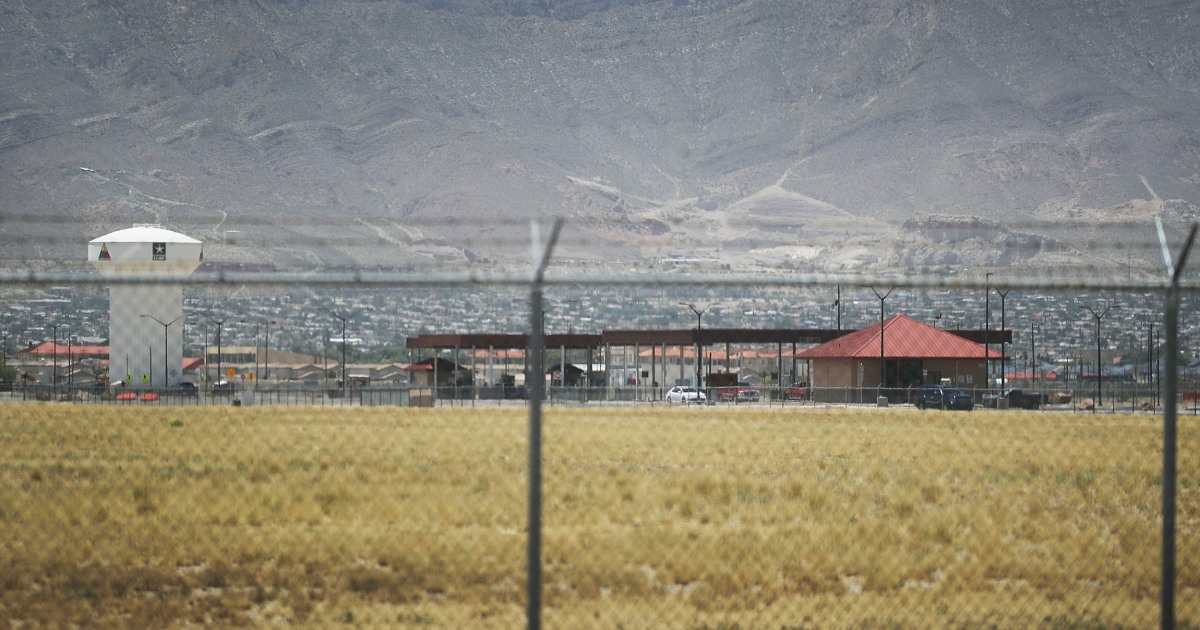 The contractor taking care of thousands of migrant children had no experience in child care, said the federal workers. The contractor taking care of thousands of migrant children had no experience in child care, said the federal workers. | |
Submitted at 07-07-2021, 03:45 PM by sleeppoor | |
/cloudfront-us-east-2.images.arcpublishing.com/reuters/LA3YSAXUFBKRVEB56QLYDI2JKY.jpg) Haitian President Jovenel Moise was shot dead by unidentified attackers in his private residence overnight in a "barbaric act", the government said on Wednesday, stirring fears of escalating turmoil in the impoverished Caribbean nation. Haitian President Jovenel Moise was shot dead by unidentified attackers in his private residence overnight in a "barbaric act", the government said on Wednesday, stirring fears of escalating turmoil in the impoverished Caribbean nation. | |
Submitted at 07-07-2021, 03:05 PM by John Holmes Boxxyfucker | |
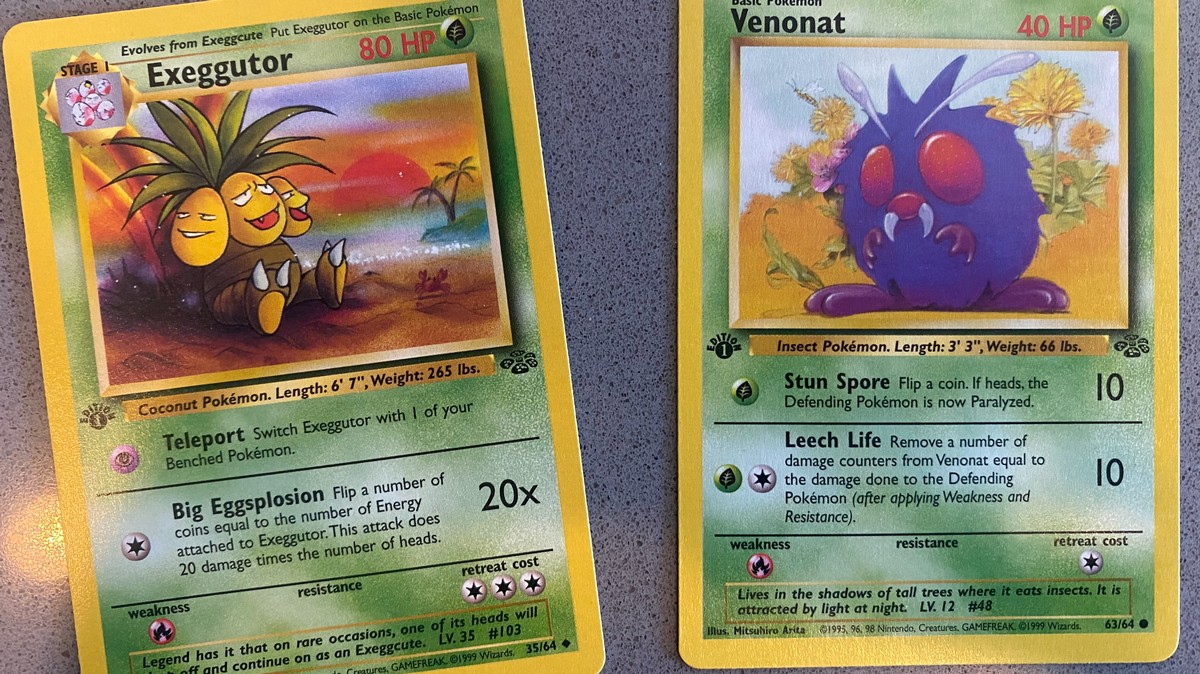 Private equity firm that's snatching up houses has now also bought a collectibles grading giant. Private equity firm that's snatching up houses has now also bought a collectibles grading giant. | |
Submitted at 07-07-2021, 01:23 AM by sleeppoor | |
 Gettr, the new social media site aimed at conservatives, went live on July 4 and is already a security mess. Gettr, the new social media site aimed at conservatives, went live on July 4 and is already a security mess. | |
Submitted at 07-07-2021, 12:07 AM by Forensic | |
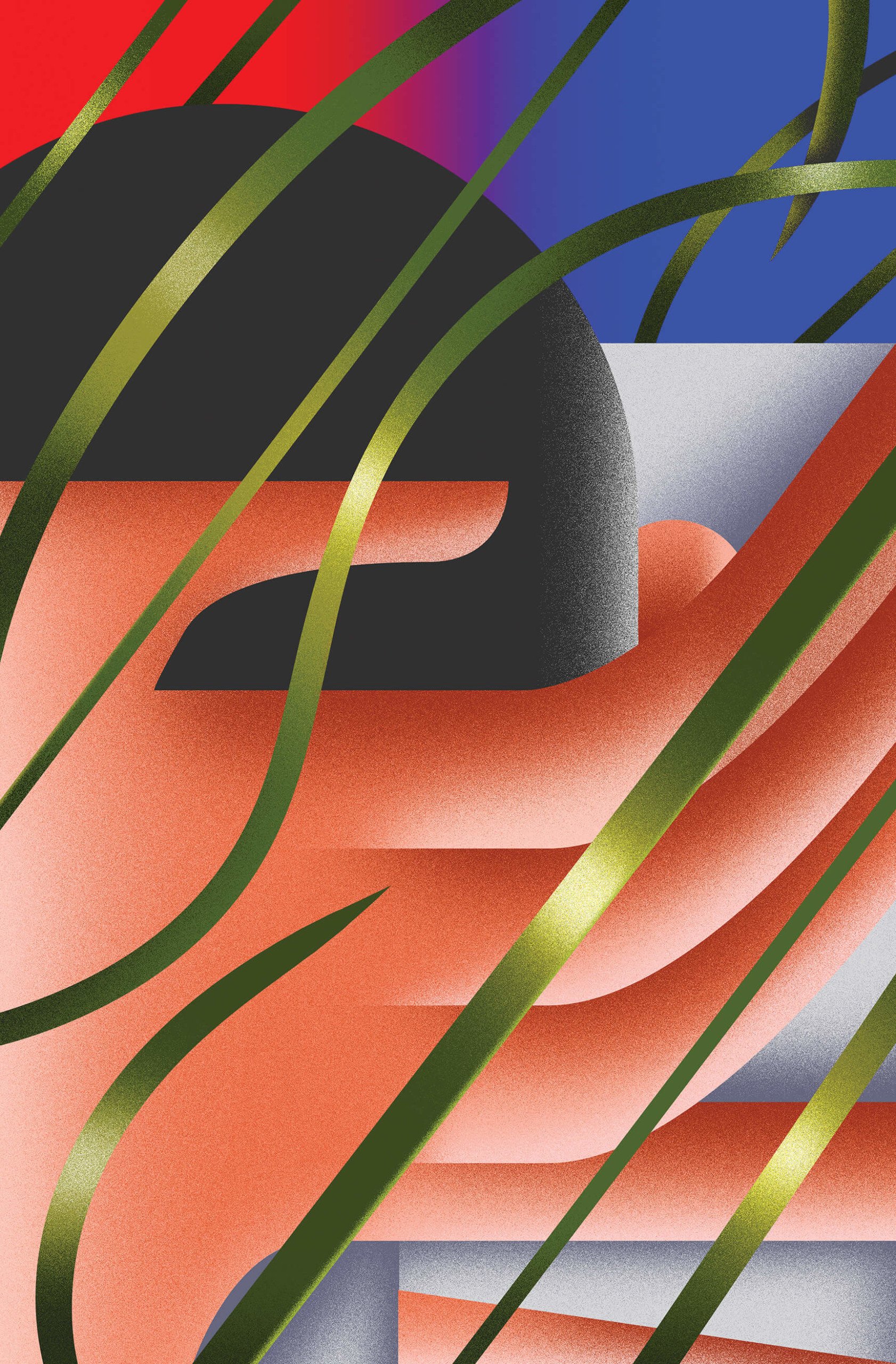 THE JAIL IN LETCHER COUNTY, KENTUCKY, is tucked away at the back of the courthouse in downtown Whitesburg, invisible to pedestrians except for an open-air concrete structure on the roof where prisoners are allowed to exercise. Its size—fifty-four beds stacked inside a space the size of a three- or four-bedroom house—reflects the size of the rural Appalachian county it serves. Its population, however, far exceeds its official capacity: on any given day, there may be more than a hundred people inside. “When I got to the Letcher County Jail,” says Emily Estep, a recent detainee, “they didn’t have any cells open, so they put me in a closet. Like a locked-in closet. It didn’t have a toilet in it. It was so cold, I was froze to death. . . . They came and got me like if I needed to go to the bathroom or whatever, but it was just very inhumane.” Local news reports corroborate her account. In July 2020, a woman detainee was found dead inside the Letcher County Jail; the cause of her death—whether from Covid-19, a drug overdose, neglect, or something else—was never announced.
Municipalities in this former coal mining area of eastern Kentucky have built or expanded at least half a dozen jails like Letcher County’s in the last twenty years. The reason is the drug war. Beginning in 2001, law enforcement agencies in the region poured millions of dollars into fighting one class of drugs in particular: prescription pain killers. This event is now known as the “opioid epidemic,” and every year it attracts a great deal of coverage and commentary in books, articles, documentaries, and even TV shows. These accounts all tell the same basic story, with the same characters. On one side are the villains: Purdue Pharma and other large pharmaceutical companies, drug sales representatives, “pill mill” pain specialists, and street dealers. On the other side are the heroes: primary care physicians, parents, civic and faith leaders, scientists, and law enforcement officials. The accounts nearly always frame the epidemic as a static battle of good vs. evil, the chain of events comprising it as a linear, causal path of injury and response. Big Pharma targeted places like central Appalachia because they were poor and deindustrialized, and opioids became rampant there for those very same reasons. In response to the influx, civilian heroes banded together to fight back against the villains, using their tools of community action and litigation.
While well-intentioned, this narrative is incorrect. Communities in central Appalachia did not band together to fight Big Pharma; many of them were in fact torn apart by the punitive response to the epidemic, which came at a crucial moment in political and economic history. Community activists targeted their own neighbors for punishment and labeled them public enemies, creating a social atmosphere in which recovery was nearly impossible. Thousands of people were disappeared into cages, some never to emerge again; if and when they did get out, they were often still addicted, or marked with felonies, and thus cycled back into what one public defender described to me as the “felony trap.” The result has been an epidemic not suppressed but inflamed. THE JAIL IN LETCHER COUNTY, KENTUCKY, is tucked away at the back of the courthouse in downtown Whitesburg, invisible to pedestrians except for an open-air concrete structure on the roof where prisoners are allowed to exercise. Its size—fifty-four beds stacked inside a space the size of a three- or four-bedroom house—reflects the size of the rural Appalachian county it serves. Its population, however, far exceeds its official capacity: on any given day, there may be more than a hundred people inside. “When I got to the Letcher County Jail,” says Emily Estep, a recent detainee, “they didn’t have any cells open, so they put me in a closet. Like a locked-in closet. It didn’t have a toilet in it. It was so cold, I was froze to death. . . . They came and got me like if I needed to go to the bathroom or whatever, but it was just very inhumane.” Local news reports corroborate her account. In July 2020, a woman detainee was found dead inside the Letcher County Jail; the cause of her death—whether from Covid-19, a drug overdose, neglect, or something else—was never announced.
Municipalities in this former coal mining area of eastern Kentucky have built or expanded at least half a dozen jails like Letcher County’s in the last twenty years. The reason is the drug war. Beginning in 2001, law enforcement agencies in the region poured millions of dollars into fighting one class of drugs in particular: prescription pain killers. This event is now known as the “opioid epidemic,” and every year it attracts a great deal of coverage and commentary in books, articles, documentaries, and even TV shows. These accounts all tell the same basic story, with the same characters. On one side are the villains: Purdue Pharma and other large pharmaceutical companies, drug sales representatives, “pill mill” pain specialists, and street dealers. On the other side are the heroes: primary care physicians, parents, civic and faith leaders, scientists, and law enforcement officials. The accounts nearly always frame the epidemic as a static battle of good vs. evil, the chain of events comprising it as a linear, causal path of injury and response. Big Pharma targeted places like central Appalachia because they were poor and deindustrialized, and opioids became rampant there for those very same reasons. In response to the influx, civilian heroes banded together to fight back against the villains, using their tools of community action and litigation.
While well-intentioned, this narrative is incorrect. Communities in central Appalachia did not band together to fight Big Pharma; many of them were in fact torn apart by the punitive response to the epidemic, which came at a crucial moment in political and economic history. Community activists targeted their own neighbors for punishment and labeled them public enemies, creating a social atmosphere in which recovery was nearly impossible. Thousands of people were disappeared into cages, some never to emerge again; if and when they did get out, they were often still addicted, or marked with felonies, and thus cycled back into what one public defender described to me as the “felony trap.” The result has been an epidemic not suppressed but inflamed. | |
Submitted at 07-06-2021, 08:52 PM by Forensic | |
 Writer who announced Republican run for Senate in Ohio last week tells Fox News he now thinks Trump was ‘a good president’. Writer who announced Republican run for Senate in Ohio last week tells Fox News he now thinks Trump was ‘a good president’. | |
Submitted at 07-06-2021, 07:39 PM by lurk on my face | |
 after about a week I wanted back in. I knew the place was still hopping, because friends would email me updates that drove me wild with the need to comment. The writer Naomi Wolf was permanently banned from Twitter for her imperious anti-vaxxing during my absence. It was as though Twitter had thrown a cloth over her parrot cage—the chattering suddenly stopped, and she was silent. But I had thrown a cloth over my own parrot cage, so I couldn't crow about it. Someone sent me news that the New York Times columnist Paul Krugman had written about “leprechaun economics” and the Irish ambassador to America had taken the bait and complained. It was a cultural moment that (in my opinion) screamed out for Caitlin Flanagan, but where was she? I texted the editor of this magazine: “Paul Krugman's after me lucky charms!” The editor texted back, “I wish I knew what this meant.” I tried patching through to Old Media, sending the Times a letter to the editor in which I directed Krugman to W. B. Yeats’s Fairy and Folktales on the Irish Peasantry and its menacing description of leprechauns as “sluttish, slouching, jeering, mischievous phantoms,” suggesting that he should watch his back. Crickets from the Times. Did I even exist anymore? after about a week I wanted back in. I knew the place was still hopping, because friends would email me updates that drove me wild with the need to comment. The writer Naomi Wolf was permanently banned from Twitter for her imperious anti-vaxxing during my absence. It was as though Twitter had thrown a cloth over her parrot cage—the chattering suddenly stopped, and she was silent. But I had thrown a cloth over my own parrot cage, so I couldn't crow about it. Someone sent me news that the New York Times columnist Paul Krugman had written about “leprechaun economics” and the Irish ambassador to America had taken the bait and complained. It was a cultural moment that (in my opinion) screamed out for Caitlin Flanagan, but where was she? I texted the editor of this magazine: “Paul Krugman's after me lucky charms!” The editor texted back, “I wish I knew what this meant.” I tried patching through to Old Media, sending the Times a letter to the editor in which I directed Krugman to W. B. Yeats’s Fairy and Folktales on the Irish Peasantry and its menacing description of leprechauns as “sluttish, slouching, jeering, mischievous phantoms,” suggesting that he should watch his back. Crickets from the Times. Did I even exist anymore? | |
Submitted at 07-06-2021, 04:07 PM by somedongus | |
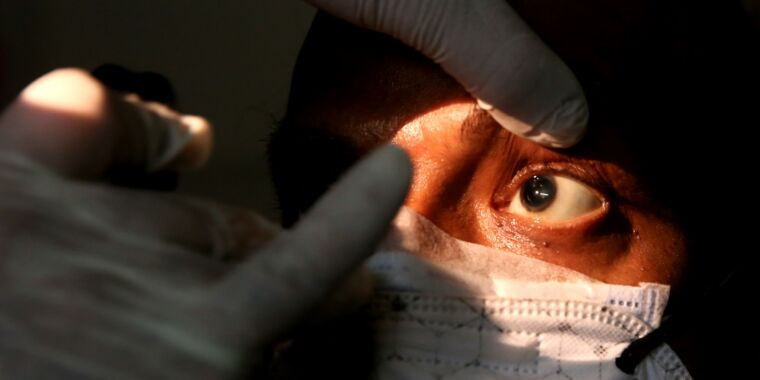 Past medical reviews have estimated that the fungal infection—mucormycosis—has an overall fatality rate of around 50 percent. However, mortality rates vary by patients’ underlying condition and what part of the body the mucormycetes fungi invade. Infection can take hold in the gastrointestinal tract, skin breaks, lungs, and the blood.
In India, the fungi appear to be mainly taking root in the nose and sinuses, where they can spread to facial bones, eyes, and even the brain. Once an infection is established, it can quickly become aggressive and lead to tissue death. If it spreads to the eye, many patients end up permanently losing vision and, in some cases, need to have their eye entirely removed to keep the infection from spreading.
Mucormycetes are a ubiquitous group of molds, and they typically only strike immunocompromised patients, such as those with diabetes. The soil-lurking molds love acidic conditions, making patients with diabetic ketoacidosis—a complication in which the blood becomes acidic—particularly vulnerable. Past medical reviews have estimated that the fungal infection—mucormycosis—has an overall fatality rate of around 50 percent. However, mortality rates vary by patients’ underlying condition and what part of the body the mucormycetes fungi invade. Infection can take hold in the gastrointestinal tract, skin breaks, lungs, and the blood.
In India, the fungi appear to be mainly taking root in the nose and sinuses, where they can spread to facial bones, eyes, and even the brain. Once an infection is established, it can quickly become aggressive and lead to tissue death. If it spreads to the eye, many patients end up permanently losing vision and, in some cases, need to have their eye entirely removed to keep the infection from spreading.
Mucormycetes are a ubiquitous group of molds, and they typically only strike immunocompromised patients, such as those with diabetes. The soil-lurking molds love acidic conditions, making patients with diabetic ketoacidosis—a complication in which the blood becomes acidic—particularly vulnerable. | |
Submitted at 07-06-2021, 01:47 PM by droog | |
 The toe bone of a prehistoric deer carved with lines by Neanderthals 51,000 years ago is one of the oldest works of art ever found, according to a study released Monday.
The discovery is further evidence that Neanderthals — Homo neanderthalensis — were able to express symbolism through art — which was once attributed only to our own species, Homo sapiens. The toe bone of a prehistoric deer carved with lines by Neanderthals 51,000 years ago is one of the oldest works of art ever found, according to a study released Monday.
The discovery is further evidence that Neanderthals — Homo neanderthalensis — were able to express symbolism through art — which was once attributed only to our own species, Homo sapiens. | |
Submitted at 07-05-2021, 11:02 PM by sleeppoor | |
 Richard Donner, the prolific Hollywood director and producer whose helming credits include some of the most iconic movies of the 1970s and ’80s including the Christopher Reeve-starring Superman, The Goonies and the Mel Gibson-Danny Glover buddy cop series Lethal Weapon, has died. He was 91.
Donner died Monday, according to his wife, the producer Lauren Schuler Donner, and his business manager. No cause of death has been revealed.
The Bronx-born Donner, a genial man with a booming voice, started his career directing for television, like his film credits a laundry list of staple shows including Route 66, The Rifleman, The Twilight Zone, The Man From U.N.C.L.E., Gilligan’s Island, Perry Mason and The Wild Wild West. After his debut feature, the 1968 crime comedy Salt & Pepper starring Sammy Davis Jr. and Peter Lawford, and 1969’s Lola with Charles Bronson and Susan George, Donner segued to films full time with 1976’s spooky The Omen. Richard Donner, the prolific Hollywood director and producer whose helming credits include some of the most iconic movies of the 1970s and ’80s including the Christopher Reeve-starring Superman, The Goonies and the Mel Gibson-Danny Glover buddy cop series Lethal Weapon, has died. He was 91.
Donner died Monday, according to his wife, the producer Lauren Schuler Donner, and his business manager. No cause of death has been revealed.
The Bronx-born Donner, a genial man with a booming voice, started his career directing for television, like his film credits a laundry list of staple shows including Route 66, The Rifleman, The Twilight Zone, The Man From U.N.C.L.E., Gilligan’s Island, Perry Mason and The Wild Wild West. After his debut feature, the 1968 crime comedy Salt & Pepper starring Sammy Davis Jr. and Peter Lawford, and 1969’s Lola with Charles Bronson and Susan George, Donner segued to films full time with 1976’s spooky The Omen. | |
Submitted at 07-05-2021, 09:48 PM by sleeppoor | |
 By unanimous vote, Honduras' Sentencing Court found Roberto Castillo guilty as co-perpetrator of the murder of environmentalist Berta Caceres. By unanimous vote, Honduras' Sentencing Court found Roberto Castillo guilty as co-perpetrator of the murder of environmentalist Berta Caceres. | |
Submitted at 07-05-2021, 09:00 PM by Disruptive Emotional-Support Pig | |
 Locals living near a Bitcoin mining facility on the shores of Seneca Lake, in upstate New York, have reported rises in the water temperature. Locals living near a Bitcoin mining facility on the shores of Seneca Lake, in upstate New York, have reported rises in the water temperature. | |
Submitted at 07-05-2021, 09:46 PM by Mr.Piss | |
 More than 115 still unaccounted for after remaining structure is brought down More than 115 still unaccounted for after remaining structure is brought down | |
Submitted at 07-05-2021, 06:57 PM by Forensic | |
 In late May, SBA stopped processing relief applications from women, veterans, and people of color. Then the agency started rescinding their offers. In late May, SBA stopped processing relief applications from women, veterans, and people of color. Then the agency started rescinding their offers. | |
Submitted at 07-04-2021, 06:40 PM by sleeppoor | |
 They said, “You cast a Black guy in this part, you’re going to kill foreign [box office].” Our argument was, “Well, the movie is about space aliens. It’s going to do fine foreign.” It was a big war, and Roland really stood up for [Smith] — and we ultimately won that war. They said, “You cast a Black guy in this part, you’re going to kill foreign [box office].” Our argument was, “Well, the movie is about space aliens. It’s going to do fine foreign.” It was a big war, and Roland really stood up for [Smith] — and we ultimately won that war. | |
Submitted at 07-04-2021, 04:32 PM by dienerinlb | |
Submitted at 07-04-2021, 09:26 AM by AnOverlyFriendlyHippo | |
 “It was insane”: Placer County floodplain restored by beavers in just three years “It was insane”: Placer County floodplain restored by beavers in just three years | |
Submitted at 07-04-2021, 06:59 AM by Forensic | |
 Kendell Cooks has been sentenced to 30 years in prison after attacking a McDonald's manager with a rake, causing serious injuries. Kendell Cooks has been sentenced to 30 years in prison after attacking a McDonald's manager with a rake, causing serious injuries. | |
Submitted at 07-03-2021, 11:52 PM by wintermute | |
 Protesters have toppled statues of Queen Victoria and Queen Elizabeth II in the Canadian city of Winnipeg as anger grows over the discovery of the remains of hundreds of children in unmarked graves at former indigenous schools.
A crowd chanted "no pride in genocide" before pulling down the statues of the monarchs.
The action took place on Canada Day on Thursday, when traditionally celebrations take place across the country. Protesters have toppled statues of Queen Victoria and Queen Elizabeth II in the Canadian city of Winnipeg as anger grows over the discovery of the remains of hundreds of children in unmarked graves at former indigenous schools.
A crowd chanted "no pride in genocide" before pulling down the statues of the monarchs.
The action took place on Canada Day on Thursday, when traditionally celebrations take place across the country. | |
Submitted at 07-03-2021, 10:11 PM by Grief Bacon | |