

| News | |||||||||||||||||||||||||||||||||||||||||||||||||||||||||||||||||||||||||||||||||||||||||||||||||||||||||||||||||||||||||||||||||||||||||||||||||||||||||||||||
 Five California tribes will reclaim their right to manage coastal land significant to their history under a first-in-the-nation program backed with $3.6 million in state money.
The tribes will rely on their traditional knowledge to protect more than 200 miles of coastline in the state, as climate change and human activity have impacted the vast area.
Some of the tribes’ work will include monitoring salmon after the removal of a century-old defunct dam in the redwood forests in the Santa Cruz mountains and testing for toxins in shellfish, while also educating future generations on traditional practices.
The partnership comes three years after Democratic Gov. Gavin Newsom apologized for the state’s previous violence and mistreatment against Indigenous peoples. Newsom said the state should allow for more co-management of tribes’ ancestral lands. | |
Submitted at 10-09-2022, 09:14 PM by sleeppoor | |
3 Comments | |
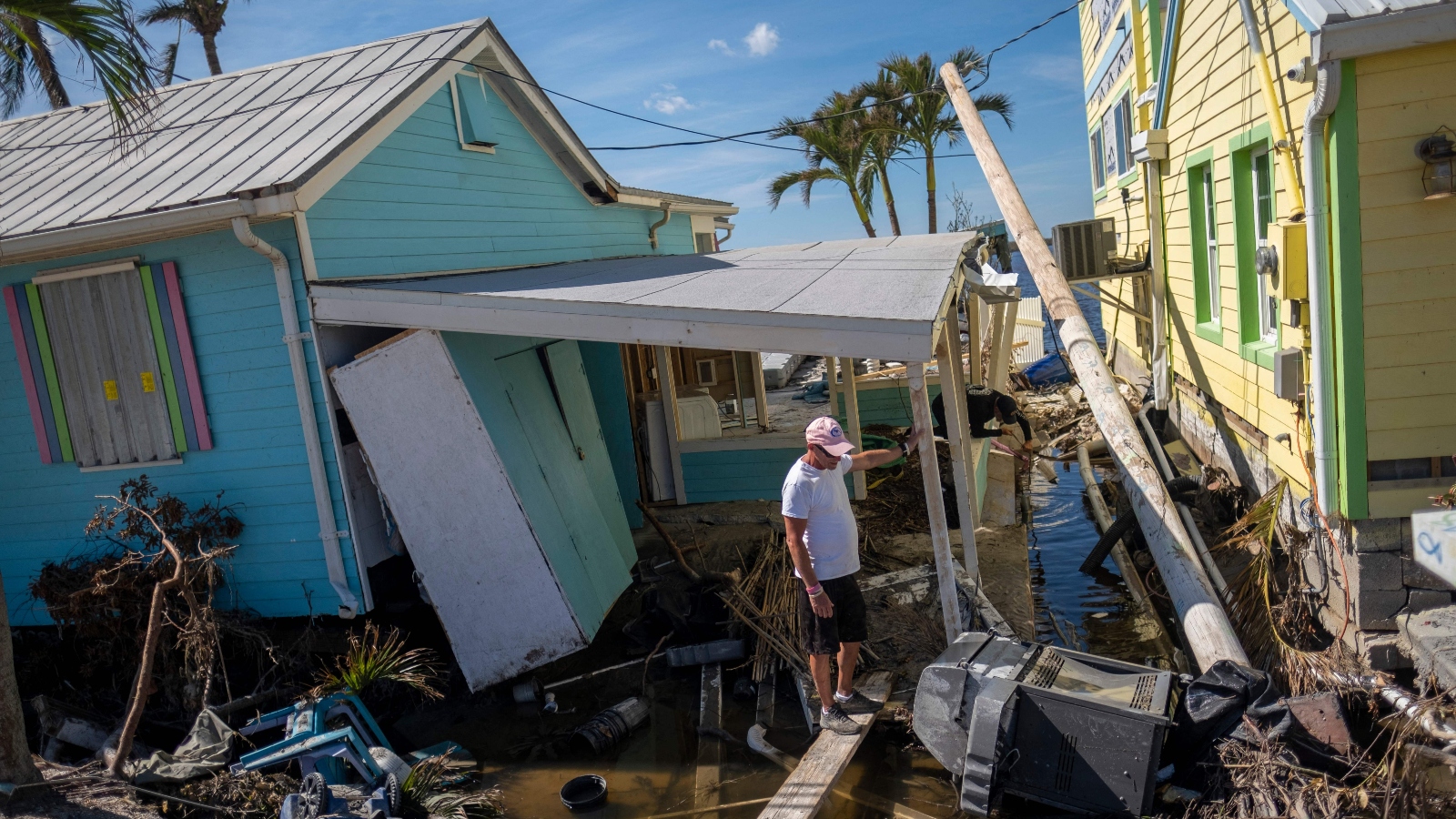 The storm is poised to be one of the largest insured loss events in U.S. history. | |
Submitted at 10-09-2022, 09:27 PM by sleeppoor | |
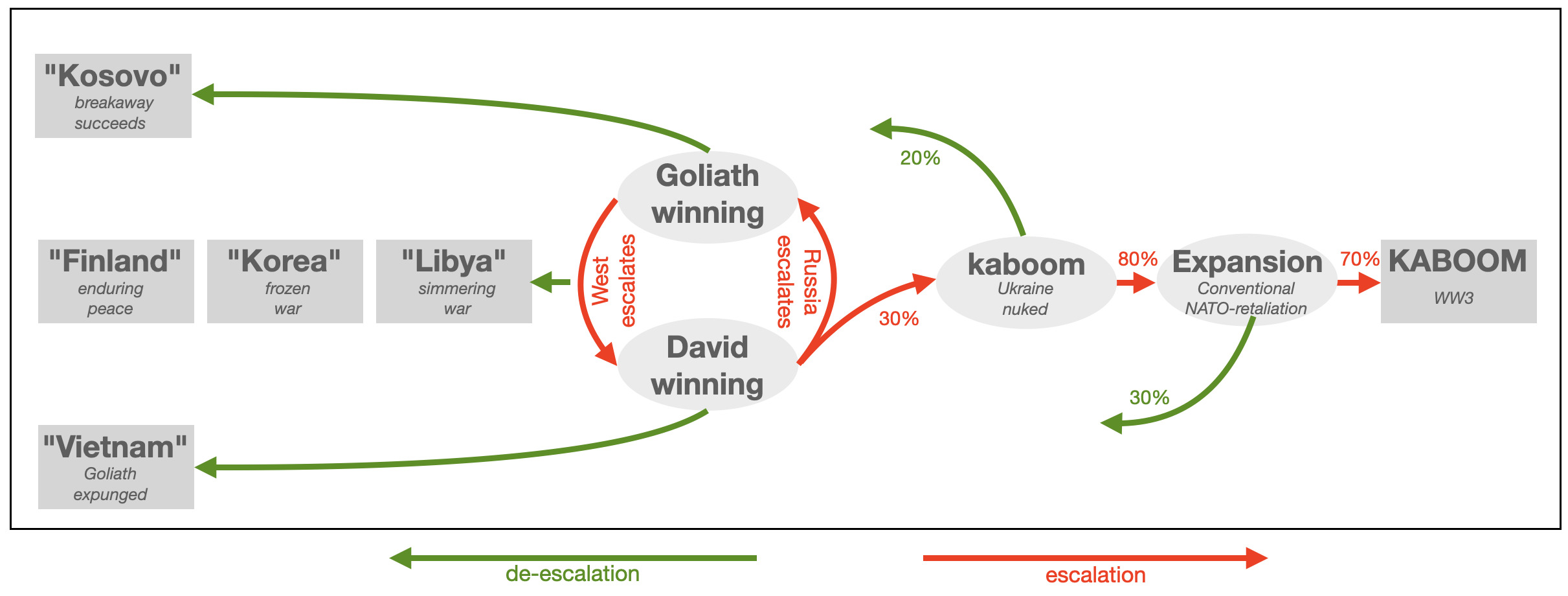 Many people have asked me what I think the odds are of an imminent major US-Russia nuclear war. My current estimate is about the same as losing in Russian roulette: one in six. The goal of this post… | |
Submitted at 10-09-2022, 08:14 PM by Forensic | |
 A number of Easter Island's iconic 'Moai' stone statues suffered irreparable damage after a wildfire swept through the island earlier this week, the island's mayor told Reuters on Friday. | |
Submitted at 10-09-2022, 03:59 PM by sleeppoor | |
 A historian wants to name a new East Harlem parklet for the New York sewer alligator legend, which was inspired by a real-life neighborhood incident. | |
Submitted at 10-09-2022, 02:02 AM by deadpan | |
 I was interviewed by many journalists in 2020 about the pandemic, and the question they kept asking me was some version of, “What exactly is going on here?” They were not clueless about COVID-19. Rather, they were trying to make sense of a strange fraternization they were witnessing in the middle of this public health crisis. Listening to these journalists, beards were being scratched over the phone, voices were hesitant, connections were painfully being enunciated in a sort of disbelief. They were witnessing a phenomenon for which they didn’t have a word. They were seeing right-wing libertarians protesting alongside yoga studio owners, who themselves were sharing in the chants for more “freedom.” The denunciation of public health measures and the fear of so-called “rushed” vaccines were coming from both MAGA Trumpists and wellness influencers. | |
Submitted at 10-08-2022, 11:24 PM by sleeppoor | |
Submitted at 10-08-2022, 09:14 PM by canyoudigit? | |
 How a Decades-long Battle for Federal Recognition May Be the United Houma Nation’s Last Chance at Survival
On August 28, 2021, as Hurricane Ida barreled toward her hometown, Lois Salinas, an elder of the United Houma Nation remained unfazed. When her daughter called from her house in Houma, urging her to evacuate, she managed to improvise a reassuring tone: “I'm getting ready to leave right now,” Lois told her. In reality, she hadn’t packed anything yet. “I wasn’t really ready to leave,” she remembers with a mischievous smile. She wasn’t scared.
Like many of her Houma ancestors, 82-year-old Lois had spent most of her life in Dulac, a small community on Bayou Grand Caillou, 70 miles south of New Orleans near the Gulf of Mexico. While she was growing up, her father, a passionate tribal leader and activist, owned a small net shop where he sold and repaired fishing nets, and in 1955, her mother opened Annie’s, a cozy waterfront shack, located next to the home of Lois’s grandparents. Lois left Dulac only for a few years, when she got married and followed her husband to Texas but, after the marriage fell apart, she returned to her hometown with her five children to raise them near the water, surrounded by her siblings, nieces, and nephews. She went on to inherit her grandparents’ crumbling house and take over her mother’s restaurant. | |
Submitted at 10-08-2022, 07:49 PM by sleeppoor | |
 In 1996, ecologist Debal Deb approached the West Bengal State Directorate of Agriculture’s Rice Research Station, where native or heirloom rice varieties are conserved. Deb had collected 152 traditional folk rice varieties by travelling to remote and mostly tribal villages of Odisha, West Bengal and some other states and wanted the institute to maintain the seeds. The institute, however, refused to accept the seeds, saying he was pursuing the “unscientific and retrogressive” goal of reviving the forgotten folk rice varieties. | |
Submitted at 10-08-2022, 07:30 PM by sleeppoor | |
 On July 4, Independence Day, Alejandro Suarez packed his laptop, camera and some clothes into a book bag. He placed a handwritten note in the glove box of his blue Honda Civic and left the car in the parking lot of a Kendall church. He then hopped a Greyhound bus to Chicago to begin a new life.
“I refuse to be helpless,” he wrote. “Be assured I am safe.”
Odalys Heredia, the 20-year-old’s mother, wanted him back. She filed a report with Miami-Dade police saying Suarez was missing and endangered. She told news reporters Suarez functions at the level of a small child due to a diagnosis of autism in his childhood. And that he was friendless, and largely helpless. To authorities, she and her sister, Suarez’s aunt, offered a more outlandish sounding theory: that he may have been abducted by a dangerous band of transgender individuals seeking to harvest and sell his body organs.
The result was a missing persons drama on steroids — TV spots, police bulletins and online articles, a GoFundMe account that raised thousands, the involvement of a probate judge and a lawyer-turned-university professor who specializes in the rights of people with disabilities — a reflection of how a compelling narrative can be amplified by media, social and otherwise. It was the kind of attention that missing persons reports don’t always get.
All of it swirled around a 20-year-old college student who agreed with none of the characterizations of him and said he just wanted to quietly, unobtrusively follow his own path. | |
Submitted at 10-08-2022, 07:13 PM by sleeppoor | |
 WASHINGTON (Reuters) -Billionaire Elon Musk, days after floating a possible deal to end the war between Russia and Ukraine that drew condemnation in Ukraine, suggested that tensions between China and Taiwan could be resolved by handing over some control of Taiwan to Beijing. Musk was responding to a question about China, where his Tesla electric car company operates a large factory in Shanghai. | |
Submitted at 10-08-2022, 06:16 PM by Forensic | |
 When I returned home to San Francisco, where I was living at the time, I experienced my first pang of taco anger. At a house party, the conversation turned to where to get quesabirria tacos in town. To be honest, I’ve never liked birria tacos, at least not the way they’re done in the U.S.: lathered like an oil slick and over-cheesed. But it wasn’t just the choice of taco. Something about the whole experience felt jarring to me. Days before, I’d met with Mexicans so desperate for refuge in this country they were sleeping out on concrete in a city with one of the highest murder rates in the hemisphere. Now, in San Francisco, one of the richest cities in the world, I was surrounded by non–Mexican Americans obsessed with trying Mexican food gone viral.
It was a stark reminder of a fact I’ve recognized since I was a child: Americans can love Mexican food but hate Mexican people. The same kids I knew at school who used words like “beaner” would also talk excitedly about where to buy the best burritos in town.
I think it’s perhaps because of this bitter paradox that the taco is both loved and ridiculed. Tacos are often the butt of jokes. At a relay race in which I ran this summer, there were at least two teams with taco puns as names—one of them was “Don’t Look at Our Tacos.” On Halloween, people wear taco costumes.
I’m not the only one bothered by the taco obsession. When New York magazine did a review of a decade of swiping (Tinder was first released ten years ago) this August, writer Danielle Cohen proclaimed liking tacos to be one of the more odious facts people included in their bios. “The inclusion of tacos in your profile — whether in emoji form or under your list of hobbies — was supposed to indicate that you were laid-back but mildly cultured: cool enough to know about food beyond pizza and burgers but not so weird that you would stray outside the mainstream,” Connolly wrote. Liking tacos does to one’s personality what a jalapeño does for pico de gallo: it adds a bit of spice, but not enough to alienate white people. | |
Submitted at 10-08-2022, 06:05 PM by Forensic | |
 The health system Kaiser Permanente called doctors in during lunch and after work and urged them to add additional illnesses to the medical records of patients they hadn’t seen in weeks. Doctors who found enough new diagnoses could earn bottles of Champagne, or a bonus in their paycheck.
Anthem, a large insurer now called Elevance Health, paid more to doctors who said their patients were sicker. And executives at UnitedHealth Group, the country’s largest insurer, told their workers to mine old medical records for more illnesses — and when they couldn’t find enough, sent them back to try again.
Each of the strategies — which were described by the Justice Department in lawsuits against the companies — led to diagnoses of serious diseases that might have never existed. But the diagnoses had a lucrative side effect: They let the insurers collect more money from the federal government’s Medicare Advantage program.
Medicare Advantage, a private-sector alternative to traditional Medicare, was designed by Congress two decades ago to encourage health insurers to find innovative ways to provide better care at lower cost. If trends hold, by next year, more than half of Medicare recipients will be in a private plan.
But a New York Times review of dozens of fraud lawsuits, inspector general audits and investigations by watchdogs shows how major health insurers exploited the program to inflate their profits by billions of dollars.
The government pays Medicare Advantage insurers a set amount for each person who enrolls, with higher rates for sicker patients. And the insurers, among the largest and most prosperous American companies, have developed elaborate systems to make their patients appear as sick as possible, often without providing additional treatment, according to the lawsuits. | |
Submitted at 10-08-2022, 05:11 PM by sleeppoor | |
 It is too hard to become a doctor in the United States. | |
Submitted at 10-08-2022, 04:48 PM by Forensic | |
 While metaverse platforms Decentraland and The Sandbox both have below 1,000 daily active users, they each have over $1 billion in valuation. So who's actually using the metaverse right now? | |
Submitted at 10-08-2022, 03:40 PM by Disruptive Emotional-Support Pig | |
 The sound of gentrification is silence.
New York in the summer is a noisy place, especially if you don’t have money. The rich run off to the Hamptons or Maine. The bourgeoisie are safely shielded by the hum of their central air, their petite cousins by the roar of their window units. But for the broke—the have-littles and have-nots—summer means an open window, through which the clatter of the city becomes the soundtrack to life: motorcycles revving, buses braking, couples squabbling, children summoning one another out to play, and music. Ceaseless music.
I remember, the summer before I left for college, lying close to my bedroom box fan, taking it all in. Thanks to a partial scholarship (and a ton of loans), I was on my way to an Ivy League college. I was counting down the days, eager to ditch the concrete sidewalks and my family’s cramped railroad apartment and to start living life on my own terms, against a backdrop of lush, manicured lawns and stately architecture.
I didn’t yet know that you don’t live on an Ivy League campus. You reside on one. Living is loud and messy, but residing? Residing is quiet business.
Within a few weeks, the comfort that I and many of my fellow minority students had felt during those early cacophonous days had been eroded, one chastisement at a time. The passive-aggressive signals to wind our gatherings down were replaced by point-blank requests to make less noise, have less fun, do our living somewhere else, even though these rooms belonged to us, too. A boisterous conversation would lead to a classmate knocking on the door with a “Please quiet down.” A laugh that went a bit too loud or long in a computer cluster would be met with an admonishment.
In those moments, I felt hot with shame and anger, yet unable to articulate why. It took me years to understand that, in demanding my friends and I quiet down, these students were implying that their comfort superseded our joy. And in acquiescing, I accepted that. | |
Submitted at 10-08-2022, 01:06 AM by sleeppoor | |
 The Uvalde school district said Friday that it's suspending the entire district police department. | |
Submitted at 10-07-2022, 09:58 PM by Nibbles | |
 Four men have died in one Alabama prison since last Thursday. Two of the deaths are being investigated as homicides. | |
Submitted at 10-07-2022, 09:41 PM by sleeppoor | |
 In New York, the battle is currently raging through the West Village. Parents have compared the pickleball players to invaders. | |
Submitted at 10-07-2022, 07:29 PM by crote | |
 The public has largely stopped paying attention to what’s happening inside shelters and other facilities that house immigrant children since President Donald Trump left office, and particularly since the end of his administration’s zero tolerance policy, which separated families at the southern border.
But the shelter system remains in place under President Joe Biden. The numbers can fluctuate but, as of earlier this week, more than 9,000 unaccompanied immigrant children were in custody, according to data from the federal Office of Refugee Resettlement, which oversees the privately run shelters.
The vast majority are children and teens from Central America who entered the country through the U.S.-Mexico border without a parent or legal guardian. The shelter system is designed to house these children temporarily — the average length of stay is about a month — until they can be placed with a relative or family friend or, in some cases, in foster care.
Last fall, ProPublica reported on one Chicago shelter’s failure to meet the language and mental health needs of dozens of traumatized Afghan children and teens who’d been brought to the country without family by the U.S. during its widely criticized military pullout from Afghanistan. Many of them had no one who could take them in; some tried to kill themselves, harmed others or ran away. | |
Submitted at 10-07-2022, 05:11 PM by sleeppoor | |