

| News | |||||||||||||||||||||||||||||||||||||||||||||||||||||||||||||||||||||||||||||||||||||||||||||||||||||||||||||||||||||||||||||||||||||||||||||||||||||||||||||||
 Since the dawn of computing one question has plagued humanity's collective brain, a question with seemingly unlimited answers: can it run DOOM? Since the dawn of computing one question has plagued humanity's collective brain, a question with seemingly unlimited answers: can it run DOOM? | |
Submitted at 09-15-2020, 04:46 PM by nocash | |
8 Comments | |
 A decade and a half after the tragic and senseless death of drummer Michael Dahlquist, MAGNET’s Andrew Earles reflects on the savage beauty of Silkworm and picks 20 must-hear tracks from one of the best indie-rock bands of the ’90s It’s been 15 years since a suicidal woman deliberately crashed her car into three strangers—Douglas … Continue reading "Do Look Back: A Brief History Of Silkworm, One Of ’90s Indie Rock’s Most Underrated Bands—Essential Playlist Included" A decade and a half after the tragic and senseless death of drummer Michael Dahlquist, MAGNET’s Andrew Earles reflects on the savage beauty of Silkworm and picks 20 must-hear tracks from one of the best indie-rock bands of the ’90s It’s been 15 years since a suicidal woman deliberately crashed her car into three strangers—Douglas … Continue reading "Do Look Back: A Brief History Of Silkworm, One Of ’90s Indie Rock’s Most Underrated Bands—Essential Playlist Included" | |
Submitted at 09-15-2020, 04:37 PM by nocash | |
 As fires ravaged Oregon and displaced thousands of people, State Fire Marshal Jim Walker made an offer Thursday to a distraught employee that he says ultimately led to his resignation.
The employee, Walker told the Statesman Journal, was worried about a relative who lived in the Santiam Canyon where four people have died since the Beachie Creek Fire roared through Monday night.
Five people were still missing as of Saturday.
Walker, who had been the state fire marshal since 2014, said his deputies often have to search for people who have been burned or killed by fires. As fires ravaged Oregon and displaced thousands of people, State Fire Marshal Jim Walker made an offer Thursday to a distraught employee that he says ultimately led to his resignation.
The employee, Walker told the Statesman Journal, was worried about a relative who lived in the Santiam Canyon where four people have died since the Beachie Creek Fire roared through Monday night.
Five people were still missing as of Saturday.
Walker, who had been the state fire marshal since 2014, said his deputies often have to search for people who have been burned or killed by fires.
| |
Submitted at 09-15-2020, 03:53 PM by sleeppoor | |
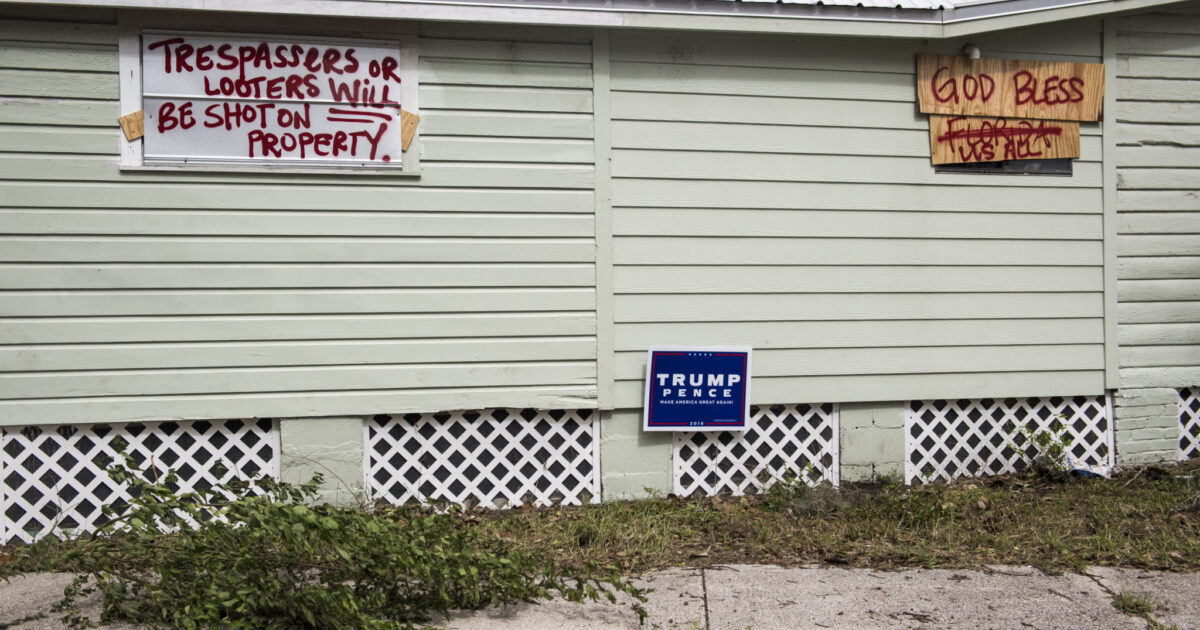 It is not the unflappable perspective of the true beach people that lends Florida its reputation for insanity. The state’s interior is a sweltering, buggy patchwork of small country towns anchored by Walt Disney World, the black hole of the Florida universe, which pulls tourists towards it, filtering and squeezing them for money as they approach like a blue whale sucking in krill. South Florida is the trash can of America’s upper middle class, attracting that part of the nation’s population that is both rich enough to make life decisions based upon minimizing income tax rates, and vacuous enough to believe that an aggressively air conditioned model home on a golf course in a housing development built on what was recently a swamp is the ideal embodiment of the American dream. North Florida is indistinguishable from Georgia or Alabama or Mississippi, a deep South bastion with better beaches attached. In this huge and disconnected state, many tribes — rich Yankee golfers, surf bums, tourist-fleecing business moguls, immigrant farmworkers, stone cold rednecks, and millions of poor people whose best prospects are a job dressing up as Goofy at the Magic Kingdom — coexist without mingling.
Pundits seeking easy political narratives in Florida will always fail, because there is no coherent defining thread that unites all of these factions. (Not even the beach itself — a shocking number of Floridians refuse to ever venture outside of a space that is air conditioned down to “New Jersey in October” temperatures.) The one value that comes closest to doing so is racism, which accounts for its wonderful utility as a political tool. For someone like Donald Trump, who doesn’t care to dig too deeply into the intricacies of any situation, racism will do. As Confederate flags slowly become less socially acceptable, Trump banners have taken their place. They communicate the same sentiments. In Florida I have seen several trucks flying both of those flags at once, as if making explicit the bridge from one to the other. No one here misunderstands the point.
St. Augustine, where I grew up, is “the nation’s oldest city,” claimed for the Spanish by the explorer Pedro Menendez in 1565. He celebrated his discovery by massacring hundreds of French people at an inlet called Matanzas, now a popular local surf spot. A century later the Spanish built a big fort, the Castillo de San Marcos, which traded hands between colonial powers in various wars over the next several hundred years. The fort served as a prison for the famous Seminole leader Osceola, and today serves as the anchor of downtown St. Augustine’s many tourist attractions. Across the street from the fort, on the bayfront, Martin Luther King Jr. was arrested in June of 1964, while trying to integrate a local motel, the Monson Motor Lodge. (There is a famous photo of the motel’s owner pouring acid into its swimming pool in response to an integrated group of protesters jumping in.) A house that King was renting near Crescent Beach was riddled with bullets during his time here. When civil rights leaders tried to march into the plaza downtown, they were beaten unconscious by white mobs. King called St. Augustine “the most violent and lawless racial situation in the South.” It is not the unflappable perspective of the true beach people that lends Florida its reputation for insanity. The state’s interior is a sweltering, buggy patchwork of small country towns anchored by Walt Disney World, the black hole of the Florida universe, which pulls tourists towards it, filtering and squeezing them for money as they approach like a blue whale sucking in krill. South Florida is the trash can of America’s upper middle class, attracting that part of the nation’s population that is both rich enough to make life decisions based upon minimizing income tax rates, and vacuous enough to believe that an aggressively air conditioned model home on a golf course in a housing development built on what was recently a swamp is the ideal embodiment of the American dream. North Florida is indistinguishable from Georgia or Alabama or Mississippi, a deep South bastion with better beaches attached. In this huge and disconnected state, many tribes — rich Yankee golfers, surf bums, tourist-fleecing business moguls, immigrant farmworkers, stone cold rednecks, and millions of poor people whose best prospects are a job dressing up as Goofy at the Magic Kingdom — coexist without mingling.
Pundits seeking easy political narratives in Florida will always fail, because there is no coherent defining thread that unites all of these factions. (Not even the beach itself — a shocking number of Floridians refuse to ever venture outside of a space that is air conditioned down to “New Jersey in October” temperatures.) The one value that comes closest to doing so is racism, which accounts for its wonderful utility as a political tool. For someone like Donald Trump, who doesn’t care to dig too deeply into the intricacies of any situation, racism will do. As Confederate flags slowly become less socially acceptable, Trump banners have taken their place. They communicate the same sentiments. In Florida I have seen several trucks flying both of those flags at once, as if making explicit the bridge from one to the other. No one here misunderstands the point.
St. Augustine, where I grew up, is “the nation’s oldest city,” claimed for the Spanish by the explorer Pedro Menendez in 1565. He celebrated his discovery by massacring hundreds of French people at an inlet called Matanzas, now a popular local surf spot. A century later the Spanish built a big fort, the Castillo de San Marcos, which traded hands between colonial powers in various wars over the next several hundred years. The fort served as a prison for the famous Seminole leader Osceola, and today serves as the anchor of downtown St. Augustine’s many tourist attractions. Across the street from the fort, on the bayfront, Martin Luther King Jr. was arrested in June of 1964, while trying to integrate a local motel, the Monson Motor Lodge. (There is a famous photo of the motel’s owner pouring acid into its swimming pool in response to an integrated group of protesters jumping in.) A house that King was renting near Crescent Beach was riddled with bullets during his time here. When civil rights leaders tried to march into the plaza downtown, they were beaten unconscious by white mobs. King called St. Augustine “the most violent and lawless racial situation in the South.” | |
Submitted at 09-15-2020, 02:43 PM by Xiphias | |
 For more than three decades, the Gwich’in Native community has helped to fight off repeated attempts by Republican administrations and fossil fuel companies to drill for oil and gas in the Arctic National Wildlife Refuge in Alaska, the largest remaining stretch of wilderness in the United States. For more than three decades, the Gwich’in Native community has helped to fight off repeated attempts by Republican administrations and fossil fuel companies to drill for oil and gas in the Arctic National Wildlife Refuge in Alaska, the largest remaining stretch of wilderness in the United States. | |
Submitted at 09-15-2020, 02:18 PM by Xiphias | |
 Michael Scheuer used to hunt Osama bin Laden, whom he now says he admires. Now his quarry is Donald Trump’s enemies, whom he equates with terrorists. Michael Scheuer used to hunt Osama bin Laden, whom he now says he admires. Now his quarry is Donald Trump’s enemies, whom he equates with terrorists. | |
Submitted at 09-15-2020, 02:17 PM by Xiphias | |
 J.K. Rowling, who has been criticized in recent months for transphobic comments, faced renewed criticism following reviews of her new book 'Troubled Blood.' J.K. Rowling, who has been criticized in recent months for transphobic comments, faced renewed criticism following reviews of her new book 'Troubled Blood.' | |
Submitted at 09-15-2020, 02:04 PM by nocash | |
Submitted at 09-15-2020, 02:04 PM by Xiphias | |
 A segment of Sinclair Broadcast Group’s Full Measure with Sharyl Attkisson promoted the idea that vigilantes -- residents blockading their neighborhoods and patrolling at night with guns -- are “needed” in cities seeing protests against police brutality. The segment did not explore whether such roadblocks are illegal and made no mention that a gunman who claimed to be protecting local businesses during protests in Kenosha, Wisconsin, engaged in vigilante violence and killed two people.
This segment on Full Measure began airing September 12, during the first episode of the new season. According to a transcript search of the Kinetiq video database, the episode was shown on at least 96 Sinclair-owned or -operated stations in 41 states and Washington, D.C. -- including in Wisconsin, where the vigilante gunman allegedly murdered two people and severely wounded a third during the protests against the August 23 police shooting of Jacob Blake. The show’s verified Twitter and Facebook accounts promoted the segment with claims that some cities are “on the edge of a race war not seen since the sixties.” On the Full Measure website, the online post of the segment also used the exact same language in its introduction. A segment of Sinclair Broadcast Group’s Full Measure with Sharyl Attkisson promoted the idea that vigilantes -- residents blockading their neighborhoods and patrolling at night with guns -- are “needed” in cities seeing protests against police brutality. The segment did not explore whether such roadblocks are illegal and made no mention that a gunman who claimed to be protecting local businesses during protests in Kenosha, Wisconsin, engaged in vigilante violence and killed two people.
This segment on Full Measure began airing September 12, during the first episode of the new season. According to a transcript search of the Kinetiq video database, the episode was shown on at least 96 Sinclair-owned or -operated stations in 41 states and Washington, D.C. -- including in Wisconsin, where the vigilante gunman allegedly murdered two people and severely wounded a third during the protests against the August 23 police shooting of Jacob Blake. The show’s verified Twitter and Facebook accounts promoted the segment with claims that some cities are “on the edge of a race war not seen since the sixties.” On the Full Measure website, the online post of the segment also used the exact same language in its introduction. | |
Submitted at 09-15-2020, 02:01 PM by Xiphias | |
Submitted at 09-15-2020, 01:57 PM by Xiphias | |
 he media mogul stated the Black Lives Matter initiative aims to end Christianity because of “being racist.”
The denouncement on BLM was stated by televangelist Pat Robertson who said the result of it would be a “lesbian, anti-family, anti-capitalist, Marxist revolution.”
Robertson stated this during his long-running show, The 700 Club, in a rant about athletes who protested institutionalized racism and police brutality. He specifically cited Colin Kaepernick, the NFL player.
“Of course Black lives matter,” he stated then. “But that legitimate thing has been hijacked by radicals.”
Robertson made an accusation that BLM aims to “destroy the nuclear family” and “destroying, essentially, Christianity as being racist.”
“They want to up-end the capitalist structure and destroy America.”
“This is a stalking horse for a very, very radical anti-family, anti-God agenda,” said Robertson. “We don’t want to go along with a lesbian, anti-family, anti-capitalist Marxist revolution.” he media mogul stated the Black Lives Matter initiative aims to end Christianity because of “being racist.”
The denouncement on BLM was stated by televangelist Pat Robertson who said the result of it would be a “lesbian, anti-family, anti-capitalist, Marxist revolution.”
Robertson stated this during his long-running show, The 700 Club, in a rant about athletes who protested institutionalized racism and police brutality. He specifically cited Colin Kaepernick, the NFL player.
“Of course Black lives matter,” he stated then. “But that legitimate thing has been hijacked by radicals.”
Robertson made an accusation that BLM aims to “destroy the nuclear family” and “destroying, essentially, Christianity as being racist.”
“They want to up-end the capitalist structure and destroy America.”
“This is a stalking horse for a very, very radical anti-family, anti-God agenda,” said Robertson. “We don’t want to go along with a lesbian, anti-family, anti-capitalist Marxist revolution.” | |
Submitted at 09-15-2020, 05:09 AM by A Fistful Of Double Downs | |
 The Trump Make America Great Again Committee is run by both the Republican National Committee and the campaign. The Trump Make America Great Again Committee is run by both the Republican National Committee and the campaign. | |
Submitted at 09-15-2020, 04:20 AM by Spöklika | |
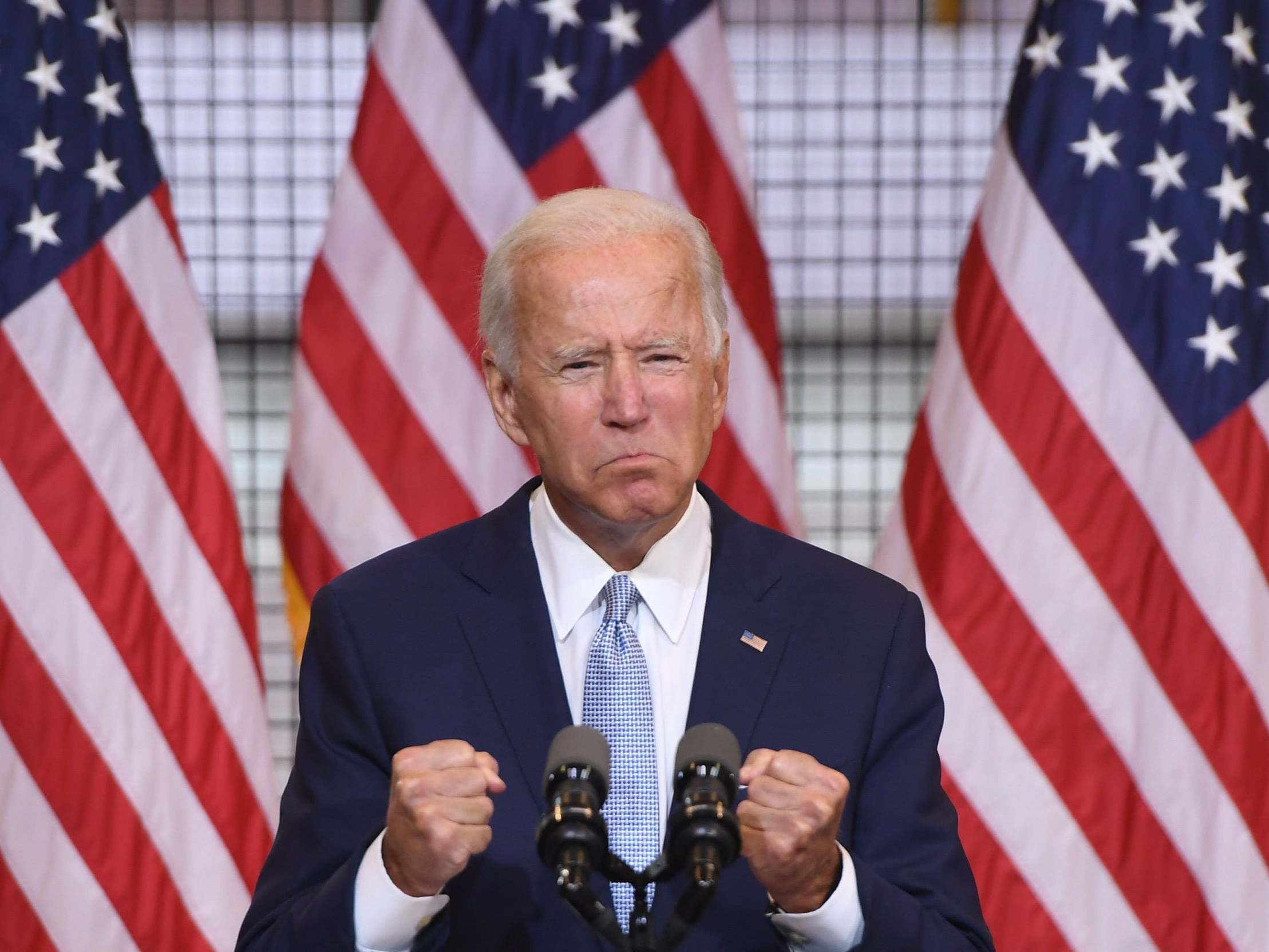 Men who refer to themselves as 'moderate' or 'centrist' score basically the same on values and opinions as people who identify themselves as 'conservative' Men who refer to themselves as 'moderate' or 'centrist' score basically the same on values and opinions as people who identify themselves as 'conservative' | |
Submitted at 09-15-2020, 04:13 AM by katheudo | |
 Before the pandemic, Tilly Tsang, owner of Washington Bakery and Restaurant in San Francisco’s Chinatown, says breakfast was always the busiest. Each morning, a rotation of regular customers would enter the restaurant, order their usual – sometimes a bun or a pastry from the bakery counter – and sit down to survey who else from the neighborhood was around.
“A lot of people, mostly older people, come every day to sit down and just have a cup of coffee, or a cup of lai chai,” Tsang said. “They just want to see if they know anybody so they can chat, chat, chat.”
Lai chai, or milk tea, is one of the many Hong Kong staples that Tsang has offered at her restaurant, a local favorite, for over two decades, along with their beloved baked pork chop rice plates and salt and pepper chicken wings. Her loyal customers include Chinatown residents who live in single-room occupancy hotels (SROs). They treat Tsang’s restaurant, and other immigrant and family-owned businesses, as an essential place to catch up and socialize with one another because many of their cramped buildings lack common areas.
But since the COVID-19 pandemic, small business owners like Tsang are facing the devastating reality that many will not survive. Tens of thousands have already permanently closed in the United States, and it is uncertain when another round of federal government assistance will arrive. Aid from the federal Paycheck Protection Program has largely run out for those who could get it.
Eviction moratoriums have prevented more San Francisco businesses from folding, but the city’s commercial eviction moratorium ends on Sept. 14. That means commercial tenants will have until Monday to pay back missed rent payments – which for many add up to six months rent – or else landlords can start evicting them as early as October. Locals fear that once commercial evictions begin, those who depend on the businesses for jobs, culture and community will be displaced, and the cultural landscape of San Francisco will be irreparably harmed. Before the pandemic, Tilly Tsang, owner of Washington Bakery and Restaurant in San Francisco’s Chinatown, says breakfast was always the busiest. Each morning, a rotation of regular customers would enter the restaurant, order their usual – sometimes a bun or a pastry from the bakery counter – and sit down to survey who else from the neighborhood was around.
“A lot of people, mostly older people, come every day to sit down and just have a cup of coffee, or a cup of lai chai,” Tsang said. “They just want to see if they know anybody so they can chat, chat, chat.”
Lai chai, or milk tea, is one of the many Hong Kong staples that Tsang has offered at her restaurant, a local favorite, for over two decades, along with their beloved baked pork chop rice plates and salt and pepper chicken wings. Her loyal customers include Chinatown residents who live in single-room occupancy hotels (SROs). They treat Tsang’s restaurant, and other immigrant and family-owned businesses, as an essential place to catch up and socialize with one another because many of their cramped buildings lack common areas.
But since the COVID-19 pandemic, small business owners like Tsang are facing the devastating reality that many will not survive. Tens of thousands have already permanently closed in the United States, and it is uncertain when another round of federal government assistance will arrive. Aid from the federal Paycheck Protection Program has largely run out for those who could get it.
Eviction moratoriums have prevented more San Francisco businesses from folding, but the city’s commercial eviction moratorium ends on Sept. 14. That means commercial tenants will have until Monday to pay back missed rent payments – which for many add up to six months rent – or else landlords can start evicting them as early as October. Locals fear that once commercial evictions begin, those who depend on the businesses for jobs, culture and community will be displaced, and the cultural landscape of San Francisco will be irreparably harmed. | |
Submitted at 09-15-2020, 02:37 AM by sleeppoor | |
 When nine killer whales surrounded the 46ft boat that Victoria Morris was crewing in Spain on the afternoon of 29 July, she was elated. The biology graduate taught sailing in New Zealand and is used to friendly orca encounters. But the atmosphere quickly changed when they started ramming the hull, spinning the boat 180 degrees, disabling the autohelm and engine. The 23-year-old watched broken bits of the rudder float off, leaving the four-person crew without steering, drifting into the Gibraltar Straits shipping lane between Cape Trafalgar and the small town of Barbate. When nine killer whales surrounded the 46ft boat that Victoria Morris was crewing in Spain on the afternoon of 29 July, she was elated. The biology graduate taught sailing in New Zealand and is used to friendly orca encounters. But the atmosphere quickly changed when they started ramming the hull, spinning the boat 180 degrees, disabling the autohelm and engine. The 23-year-old watched broken bits of the rudder float off, leaving the four-person crew without steering, drifting into the Gibraltar Straits shipping lane between Cape Trafalgar and the small town of Barbate. | |
Submitted at 09-15-2020, 01:36 AM by guest | |
Submitted at 09-15-2020, 12:45 AM by Xiphias | |
 This past Wednesday, popular Oakland pop-up Broke Ass Cooks was shut down by the health department of Alameda County, which sent a letter to their landlord insisting that they cease operations immediately. This past Wednesday, popular Oakland pop-up Broke Ass Cooks was shut down by the health department of Alameda County, which sent a letter to their landlord insisting that they cease operations immediately. | |
Submitted at 09-14-2020, 11:21 PM by Nibbles | |
 Far too many homeless Oaklanders have no good options for escaping the smoke blanketing our skies and city. Tiny dangerous particles from fires burning hundreds of miles away easily leak into their tents, shelters, and vehicles. Oakland’s skies have been “unhealthy” for 30 days straight, and over the past month, we’ve seen lots of advisories about how Californians can protect themselves from the hazardous air: stay inside with the doors and windows shut, buy an air purifier, and so on. Very little of this advice is relevant to people who don’t have secure housing.
Mahnaz has been homeless for three years and currently lives in the Wood Street encampment in West Oakland. She’s had asthma since she was born, and was hospitalized each of the last three years with pneumonia due to fire-related smoke. She noted that it’s hard for unsheltered people to take precautions right now because of all the other problems they’re dealing with.
“We’re just out here trying to survive, and I think the wildfire smoke is just something that isn’t really on our minds,” said Mahnaz outside her home in the Wood Street encampment on Saturday afternoon, surrounded by dozens of bicycles she and her brother fix up. “Our bodies are just used to this treatment in general.” Far too many homeless Oaklanders have no good options for escaping the smoke blanketing our skies and city. Tiny dangerous particles from fires burning hundreds of miles away easily leak into their tents, shelters, and vehicles. Oakland’s skies have been “unhealthy” for 30 days straight, and over the past month, we’ve seen lots of advisories about how Californians can protect themselves from the hazardous air: stay inside with the doors and windows shut, buy an air purifier, and so on. Very little of this advice is relevant to people who don’t have secure housing.
Mahnaz has been homeless for three years and currently lives in the Wood Street encampment in West Oakland. She’s had asthma since she was born, and was hospitalized each of the last three years with pneumonia due to fire-related smoke. She noted that it’s hard for unsheltered people to take precautions right now because of all the other problems they’re dealing with.
“We’re just out here trying to survive, and I think the wildfire smoke is just something that isn’t really on our minds,” said Mahnaz outside her home in the Wood Street encampment on Saturday afternoon, surrounded by dozens of bicycles she and her brother fix up. “Our bodies are just used to this treatment in general.”
| |
Submitted at 09-14-2020, 11:12 PM by Forensic | |
 David Legates, a University of Delaware professor of climatology who has spent much of his career questioning basic tenets of climate science, has been hired for a top position at the National Oceanic and Atmospheric Administration.
Legates confirmed to NPR that he was recently hired as NOAA's deputy assistant secretary of commerce for observation and prediction. The position suggests that he reports directly to Neil Jacobs, the acting head of the agency that is in charge of the federal government's sprawling weather and climate prediction work.
Neither Legates nor NOAA representatives responded to questions about Legates' specific responsibilities or why he was hired. The White House also declined to comment. David Legates, a University of Delaware professor of climatology who has spent much of his career questioning basic tenets of climate science, has been hired for a top position at the National Oceanic and Atmospheric Administration.
Legates confirmed to NPR that he was recently hired as NOAA's deputy assistant secretary of commerce for observation and prediction. The position suggests that he reports directly to Neil Jacobs, the acting head of the agency that is in charge of the federal government's sprawling weather and climate prediction work.
Neither Legates nor NOAA representatives responded to questions about Legates' specific responsibilities or why he was hired. The White House also declined to comment. | |
Submitted at 09-14-2020, 09:58 PM by Xiphias | |
 Discussing the recent police killing of a self-described anti-fascist suspected of fatally shooting a far-right activist in Portland, Oregon, President Donald Trump openly endorsed extrajudicial executions in a Fox News interview Saturday, declaring that “there has to be retribution.”
“I put out, ‘When are you going to go get him?’ And the U.S. Marshals went in to get him,” the president told Fox News host Jeanine Pirro, referring to Michael Forest Reinoehl. “This guy was a violent criminal, and the U.S. Marshals killed him. And I’ll tell you something—that’s the way it has to be. There has to be retribution.” Discussing the recent police killing of a self-described anti-fascist suspected of fatally shooting a far-right activist in Portland, Oregon, President Donald Trump openly endorsed extrajudicial executions in a Fox News interview Saturday, declaring that “there has to be retribution.”
“I put out, ‘When are you going to go get him?’ And the U.S. Marshals went in to get him,” the president told Fox News host Jeanine Pirro, referring to Michael Forest Reinoehl. “This guy was a violent criminal, and the U.S. Marshals killed him. And I’ll tell you something—that’s the way it has to be. There has to be retribution.” | |
Submitted at 09-14-2020, 09:57 PM by Xiphias | |