

| News | |||||||||||||||||||||||||||||||||||||||||||||||||||||||||||||||||||||||||||||||||||||||||||||||||||||||||||||||||||||||||||||||||||||||||||||||||||||||||||||||
 Whenever President Donald Trump is confronted with polls he does not like, especially the torrent of national data showing him trailing Democratic challenger Joe Biden in public support, the president’s response is usually the same: Fake news.
If the polls were always right, his thinking goes, Hillary Clinton should be running for re-election, not him. The former Democratic presidential candidate consistently led Trump in state and national polls in 2016 before he won the White House, just like Biden does now.
But opinion poll experts say there are good reasons to trust this year’s polls more than those of 2016.
Here are a few of them. | |
Submitted at 10-29-2020, 06:39 PM by Xiphias | |
10 Comments | |
 Federal agents on Thursday arrested two men, including the self-proclaimed leader of the Base, a violent white supremacist group, as part of a continuing crackdown on extremism in Michigan three weeks after the FBI said it thwarted a plot to kidnap Gov. Gretchen Whitmer.
A team of FBI agents arrested Justen Watkins, 25, of Bad Axe, the self-proclaimed leader of the Base, and Alfred Gorman, 35, of Taylor, during a pair of raids.
They are linked to a December 2019 incident in Dexter in which a local family was terrorized by the men, who tried to intimidate a husband and wife and shared their address with members of the Base, Michigan Attorney General Dana Nessel said in a statement. | |
Submitted at 10-29-2020, 05:33 PM by Xiphias | |
 Three people were stabbed during a demonstration Wednesday night near River Park Shopping Center in northeast Fresno.
Fresno police said a man got upset around 6:30 p.m. that some of the demonstrators from the “Stand with Armenia” rally were causing standstill traffic, blocking the flow of the road by parking a couple of cars in the northbound lanes of Blackstone Avenue near Nees Avenue.
A confrontation and violence ensued. | |
Submitted at 10-29-2020, 06:20 PM by sleeppoor | |
 There’s been buzz about the Princeton Election Consortium’s win probability for Clinton, which for some time has been in the 98-99% range. Tonight let me walk everyone through how we arrive at this level of confidence. tl;dr: With a more conservative assumption (see discussion) the PEC approach gives a probability of more like 95%. I will also give a caveat on how it is difficult to estimate win probabilities above 90% – and why fine adjustments at this level might not matter for my goals in running this site. | |
Submitted at 10-29-2020, 05:41 PM by Xiphias | |
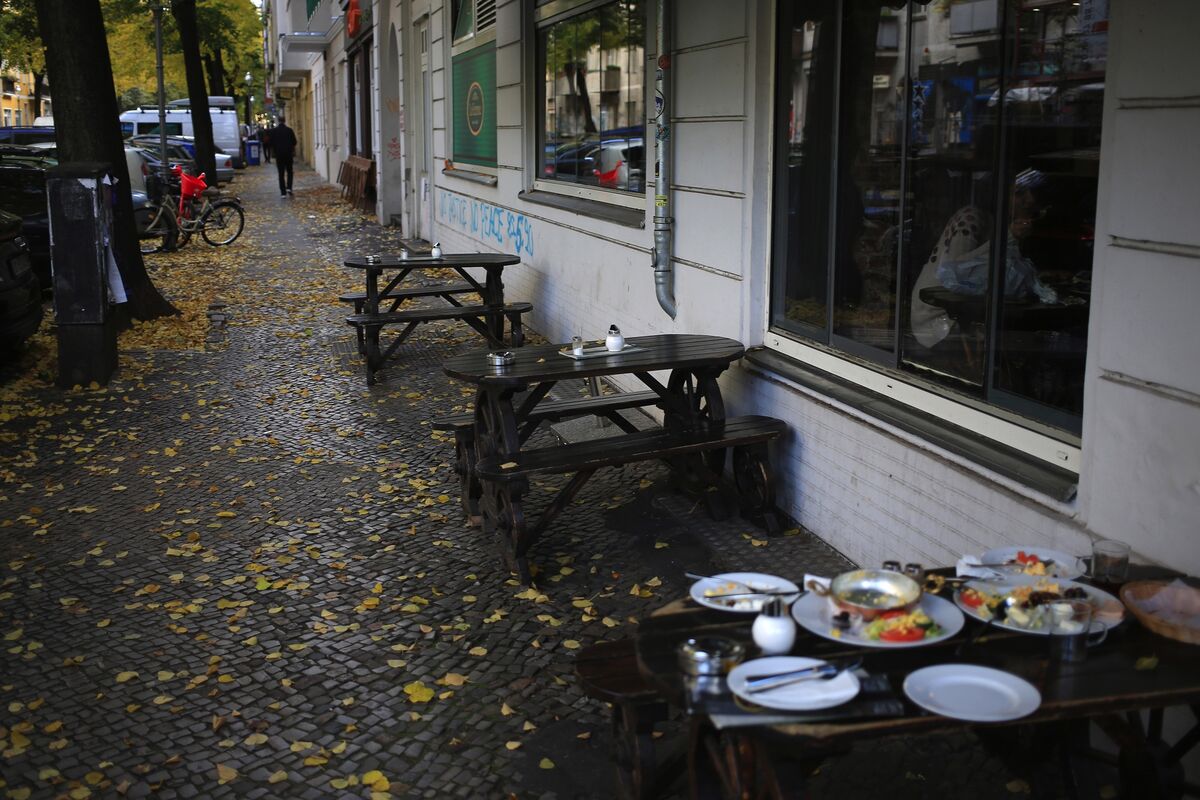 Chancellor Angela Merkel will impose the toughest restrictions on Germany since a national lockdown in the spring, closing bars and restaurants in Europe’s largest economy to regain control of the rapid spread of the coronavirus.
The one-month partial shutdown, which will go into effect on Monday, is designed to keep most businesses operating, Merkel said Wednesday after tense talks with the leaders of the country’s 16 states. Officials will gather again in two weeks to assess the impact of the measures.
“Today is a difficult day, for policy makers as well,” Merkel said at a press conference in Berlin as she called for a concerted national effort to fight the pandemic. “We know what we’re demanding of the people.”
With the public weary of pandemic measures and protests increasing, the government sought to ease pressure by making available up to 10 billion euros ($11.7 billion) in aid for companies affected by the measures, including reimbursing as much as 75% of lost sales in November. | |
Submitted at 10-29-2020, 05:37 PM by Xiphias | |
 One caller asked whether President Trump’s comments hinting at rampant voter fraud in Philadelphia were true. Another yelled about the inaccurate rumor that poll watchers were being barred from polling places. Still another demanded to know what the city was trying to hide.
It was just another day at the office for Al Schmidt, one of Philadelphia’s three city commissioners, a job that includes supervising voter registration and elections. Hundreds of people have called in every day for months, many parroting conspiracy theories about the election and lies about how partisan megadonors own the voting machines. Staff members spend hours shooting down the rumors, he said.
“It’s not like we have tens of millions of dollars to spend on communications to battle tsunamis of misinformation that come our way,” said Mr. Schmidt, 49, whose team has been working up to 17-hour days ahead of Election Day on Tuesday. “It wears on all of us.” | |
Submitted at 10-29-2020, 05:34 PM by Xiphias | |
 Earlier this month, national security officials from the FBI announced that both Russian and Iranian operatives had obtained voter registration data in order to interfere in the U.S. elections. Similar to the tactics employed by Russia during the 2016 election, both countries reportedly hacked information that would aid in sowing doubt, and in at least one case, strike fear, in American voters. So far, there’s no evidence of actual tampering with the voting system itself — but the same can’t be said for Nickelodeon’s recent mock election.
On Wednesday night, Nickelodeon announced former Vice President Joe Biden was the winner of the 2020 Kids Pick the President “Kids’ Vote,” despite a bot-driven effort to cheat the results. According to the network, nearly 90,000 kids cast their virtual ballot in the poll, which ran from Oct. 20 to Oct. 26. Biden received 53% of the vote, while the incumbent, President Donald J. Trump, wound up with 47%.
But on Wednesday, Oct. 21, Nickelodeon employees overseeing the Kids’ Vote caught wind of an effort to corrupt the authenticity of the results. Murmurs on “online forums” laid out plans to pack the Kids Pick the President site with votes. Nickelodeon subsequently utilized a voter certification tool in order to weed out any bot-generated entries; in the end, more than 130,000 fraudulent votes were discovered. | |
Submitted at 10-29-2020, 05:38 PM by Xiphias | |
 A new report says five states, including several that are presidential battlegrounds, are at a high risk for activity by armed groups of civilians around the Nov. 3 election.
The Armed Conflict Location and Event Data Project (ACLED) and MilitiaWatch warned about such movements leading up to and following the election in Pennsylvania, Georgia, Michigan, Wisconsin and Oregon, especially in state capitals and surrounding towns, medium-sized cities and suburban areas.
“Militia groups and other armed non-state actors pose a serious threat to the safety and security of American voters,” the report said. “Throughout the summer and leading up to the general election, these groups have become more assertive, with activities ranging from intervening in protests to organizing kidnapping plots targeting elected officials.”
The report, titled “Standing By: Right-Wing Militia Groups and the US Election,” takes its name from President Donald Trump’s response in a recent debate when he was asked to condemn white nationalist groups and militias. Instead, Trump told one group, the Proud Boys, to “stand back and stand by,” which several right-wing groups took as encouragement.
Armed groups use “hybrid tactics” ranging from training for urban and rural combat to using public relations and propaganda to acting as “security operations” for events. | |
Submitted at 10-29-2020, 05:36 PM by Xiphias | |
 Two right-wing political operatives at the center of a robocall scam in Detroit and other U.S. cities have been ordered to call their victims back with a corrective message.
Jack Burkman, 54, from Arlington, Virginia and Jacob Wohl, 22, from Los Angeles were ordered by a U.S. district court Wednesday to issue “curative” robocalls to individuals that were previously targeted by an alleged voter-intimidation scheme.
The two men have been accused of orchestrating robocalls to suppress votes in multiple U.S. cities -- specifically those with significant minority populations, like Detroit -- for the November election. | |
Submitted at 10-29-2020, 05:32 PM by Xiphias | |
 FOR THOSE SEARCHING for something loftier than traditional self-help, trade books about Stoicism, an ancient philosophy of individual resilience, have become popular in recent years. The titles that belong to this non-fiction genre are explanatory, self-assured, and optimized for the all-seeing eyes of search engines: Stoicism: How to Stop Fearing and Start Living; The Stoic CEO; The Obstacle Is the Way; How to Think Like a Roman Emperor; How to Be a Stoic; A Guide to the Good Life; The Stoic Challenge: A Philosopher’s Guide to Becoming Tougher, Calmer and More Resilient; How to Keep Your Cool (Ancient Wisdom for Modern Readers); Stoicism and the Art of Happiness: Practical Wisdom for Everyday Life. While these books differ in content and style, certain features apply across the board: pithy aphorisms about the power of resilience, rationality and fortitude apply primarily to those with plenty of freedom to make choices already; readers are presumed empty vessels for authors’ edifying wisdom; and emotions are treated as imaginary things that reside only in your head. | |
Submitted at 10-29-2020, 05:05 PM by blicero | |
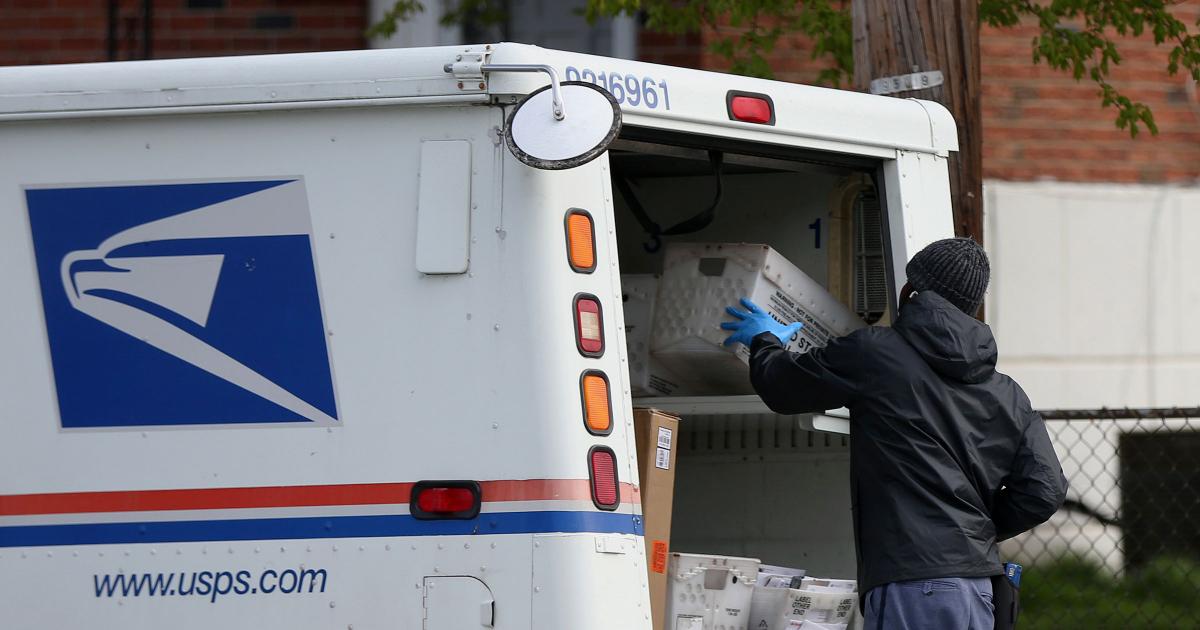 Butler County has the worst return rate for mail ballots in the state, and the U.S. Postal Service has been asked to investigate. | |
Submitted at 10-29-2020, 05:47 PM by Xiphias | |
 I spent my middle and high school years in a small town on Colorado's Western Slope — the sparsely-populated, rugged section of the state across the Continental Divide from Denver, Boulder, and Fort Collins. It's a spectacularly beautiful piece of country, full of ski hamlets, deep river canyons, little farm towns, and vast mountain ranges.
It's also likely to be represented in Congress next year by a complete maniac. Lauren Boebert, a far right-wing restaurateur who has never held elected office, successfully primaried the incumbent Republican Scott Tipton, who has represented the 3rd District since 2010, back in July. Now, in the general election, she faces Democrat Diane Mitsch Bush, who lost to Tipton in 2018 by eight points.
Though Boebert is probably more likely to lose than Tipton would have been, she has rallied the conservative Western Slope base far more than he ever did. It's a window into the present and probable future of the Republican Party — a movement in which grievance politics have completely swallowed any kind of substantive agenda. | |
Submitted at 10-29-2020, 03:33 PM by sleeppoor | |
 The court ruled that a federal judge was incorrect to block an administration policyallowing the government to quickly deport unauthorized immigrants without going through immigration courts. | |
Submitted at 10-29-2020, 05:04 PM by Xiphias | |
 A so-called 'spritural science foundation' has found that 85 per cent of LGBT+ are, in fact, possesed by 'murderous, often nude ghosts'. | |
Submitted at 10-29-2020, 03:00 PM by Xiphias | |
 Former leader stripped of Labour whip after refusing to accept findings of antisemitism report. | |
Submitted at 10-29-2020, 02:53 PM by Xiphias | |
 In early September, the City Council in Portland, Ore., met virtually to consider sweeping legislation outlawing the use of facial recognition technology. The bills would not only bar the police from using it to unmask protesters and individuals captured in surveillance imagery; they would also prevent companies and a variety of other organizations from using the software to identify an unknown person.
During the time for public comments, a local man, Christopher Howell, said he had concerns about a blanket ban. He gave a surprising reason.
“I am involved with developing facial recognition to in fact use on Portland police officers, since they are not identifying themselves to the public,” Mr. Howell said. Over the summer, with the city seized by demonstrations against police violence, leaders of the department had told uniformed officers that they could tape over their name. Mr. Howell wanted to know: Would his use of facial recognition technology become illegal?
Portland’s mayor, Ted Wheeler, told Mr. Howell that his project was “a little creepy,” but a lawyer for the city clarified that the bills would not apply to individuals. The Council then passed the legislation in a unanimous vote.
Mr. Howell was offended by Mr. Wheeler’s characterization of his project but relieved he could keep working on it. “There’s a lot of excessive force here in Portland,” he said in a phone interview. “Knowing who the officers are seems like a baseline.”
Mr. Howell, 42, is a lifelong protester and self-taught coder; in graduate school, he started working with neural net technology, an artificial intelligence that learns to make decisions from data it is fed, such as images. He said that the police had tear-gassed him during a midday protest in June, and that he had begun researching how to build a facial recognition product that could defeat officers’ attempts to shield their identity.
“This was, you know, kind of a ‘shower thought’ moment for me, and just kind of an intersection of what I know how to do and what my current interests are,” he said. “Accountability is important. We need to know who is doing what, so we can deal with it.”
Mr. Howell is not alone in his pursuit. Law enforcement has used facial recognition to identify criminals, using photos from government databases or, through a company called Clearview AI, from the public internet. But now activists around the world are turning the process around and developing tools that can unmask law enforcement in cases of misconduct.
“It doesn’t surprise me in the least,” said Clare Garvie, a lawyer at Georgetown University’s Center on Privacy and Technology. “I think some folks will say, ‘All’s fair in love and war,’ but it highlights the risk of developing this technology without thinking about its use in the hands of all possible actors.”
The authorities targeted so far have not been pleased. The New York Times reported in July 2019 that Colin Cheung, a protester in Hong Kong, had developed a tool to identify police officers using online photos of them. After he posted a video about the project on Facebook, he was arrested. Mr. Cheung ultimately abandoned the work.
This month, the artist Paolo Cirio published photos of 4,000 faces of French police officers online for an exhibit called “Capture,” which he described as the first step in developing a facial recognition app. He collected the faces from 1,000 photos he had gathered from the internet and from photographers who attended protests in France. Mr. Cirio, 41, took the photos down after France’s interior minister threatened legal action but said he hoped to republish them.
“It’s about the privacy of everyone,” said Mr. Cirio, who believes facial recognition should be banned. “It’s childish to try to stop me, as an artist who is trying to raise the problem, instead of addressing the problem itself.”
Many police officers around the world cover their faces, in whole or in part, as captured in recent videos of police violence in Belarus. Last month, Andrew Maximov, a technologist from the country who is now based in Los Angeles, uploaded a video to YouTube that demonstrated how facial recognition technology could be used to digitally strip away the masks.
In the simulated footage, software matches masked officers to full images of officers taken from social media channels. The two images are then merged so the officers are shown in uniform, with their faces on display. It’s unclear if the matches are accurate. The video, which was reported earlier by a news site about Russia called Meduza, has been viewed more than one million times.
“For a while now, everyone was aware the big guys could use this to identify and oppress the little guys, but we’re now approaching the technological threshold where the little guys can do it to the big guys,” Mr. Maximov, 30, said. “It’s not just the loss of anonymity. It’s the threat of infamy.”
These activists say it has become relatively easy to build facial recognition tools thanks to off-the-shelf image recognition software that has been made available in recent years. In Portland, Mr. Howell used a Google-provided platform, TensorFlow, which helps people build machine-learning models.
“The technical process — I’m not inventing anything new,” he said. “The big problem here is getting quality images.”
Mr. Howell gathered thousands of images of Portland police officers from news articles and social media after finding their names on city websites. He also made a public records request for a roster of police officers, with their names and personnel numbers, but it was denied.
Facebook has been a particularly helpful source of images. “Here they all are at a barbecue or whatever, in uniform sometimes,” Mr. Howell said. “It’s few enough people that I can reasonably do it as an individual.”
Mr. Howell said his tool remained a work in progress and could recognize only about 20 percent of Portland’s police force. He hasn’t made it publicly available, but he said it had already helped a friend confirm an officer’s identity. He declined to provide more details.
Derek Carmon, a public information officer at the Portland Police Bureau, said that “name tags were changed to personnel numbers during protests to help eliminate the doxxing of officers,” but that officers are required to wear name tags for “non-protest-related duties.” Mr. Carmon said people could file complaints using an officer’s personnel number. He declined to comment on Mr. Howell’s software.
Older attempts to identify police officers have relied on crowdsourcing. The news service ProPublica asks readers to identify officers in a series of videos of police violence. In 2016, an anti-surveillance group in Chicago, the Lucy Parsons Lab, started OpenOversight, a “public searchable database of law enforcement officers.” It asks people to upload photos of uniformed officers and match them to the officers’ names or badge numbers.
“We were careful about what information we were soliciting. We don’t want to encourage people to follow officers to playgrounds with their kids,” said Jennifer Helsby, OpenOversight’s lead developer. “It has resulted in officers being identified.”
For example, the database helped journalists at the Invisible Institute, a local news organization, identify Chicago officers who struck protesters with batons this summer, according to the institute’s director of public strategy, Maira Khwaja.
Photos of more than 1,000 officers have been uploaded to the site, Ms. Helsby said, adding that versions of the open-source database have been started in other cities, including Portland. That version is called Cops.Photo, and is one of the places from which Mr. Howell obtained identified photos of police officers.
Mr. Howell originally wanted to make his work publicly available, but is now concerned that distributing his tool to others would be illegal under the city’s new facial recognition laws, he said.
“I have sought some legal advice and will seek more,” Mr. Howell said. He described it as “unwise” to release an illegal facial recognition app because the police “are not going to appreciate it to begin with.”
“I’d be naïve not to be a little concerned about it,” he added. “But I think it’s worth doing.” | |
Submitted at 10-29-2020, 10:24 AM by A Fistful Of Double Downs | |
 I wonder if anyone but me remembers that during the years after the end of World War II, there were a lot of US Army jeeps on the streets of New York. I was a very little boy at the time, and I remember being lifted up to sit in them by friendly GIs. And do you remember those photographs of the American soldiers as they were being hugged and kissed by the thin, desperate-looking Europeans whose cities they’d liberated? Do you remember those warm, sunny American faces? Those sincere, open faces? Those boys looked like gods or angels who had swooped down from the sky on their jeeps to save the terrified world. Everything they’d actually done during the war, everything they’d seen—the hand-to-hand combat, the firebombing of cities, the piles of corpses—it was all swept away in the glow of victory.
And for the next twenty years, we were dazzled by the never-abating, mind-boggling cascade of prosperity and consumer magic lifting up the middle class. Political speeches overflowed with generosity and altruism. Were people said to be suffering somewhere in America? Were people suffering anywhere on earth? Our politicians won votes by promising to help them. Americans seemed addicted to the feeling that their country represented goodness, decency, and kindness in a world where evil had almost prevailed.
Simultaneously, on the very same days that our generous politicians made those altruistic speeches, they huddled for hours with scientific geniuses, working out plans for nuclear war. They would often declare that they hoped they would never be forced to make the terrible decision to carry out those plans. Still, day after day, they carefully decided which missiles to build, they chose the targets and tried to estimate the number of people who’d be killed by each strike. And also at the same time—though this was less well known then—they made some plans that actually were carried out in foreign countries, governments to be overthrown, leaders to be assassinated, dissidents and rebels to be quietly disappeared. | |
Submitted at 10-29-2020, 06:33 AM by sleeppoor | |
 Huge if true bro. | |
Submitted at 10-29-2020, 06:05 AM by Mordant | |
 AhHAHAHAHAReaganNationalUniversityhahahahawhoo | |
Submitted at 10-29-2020, 05:25 AM by B. Weed | |
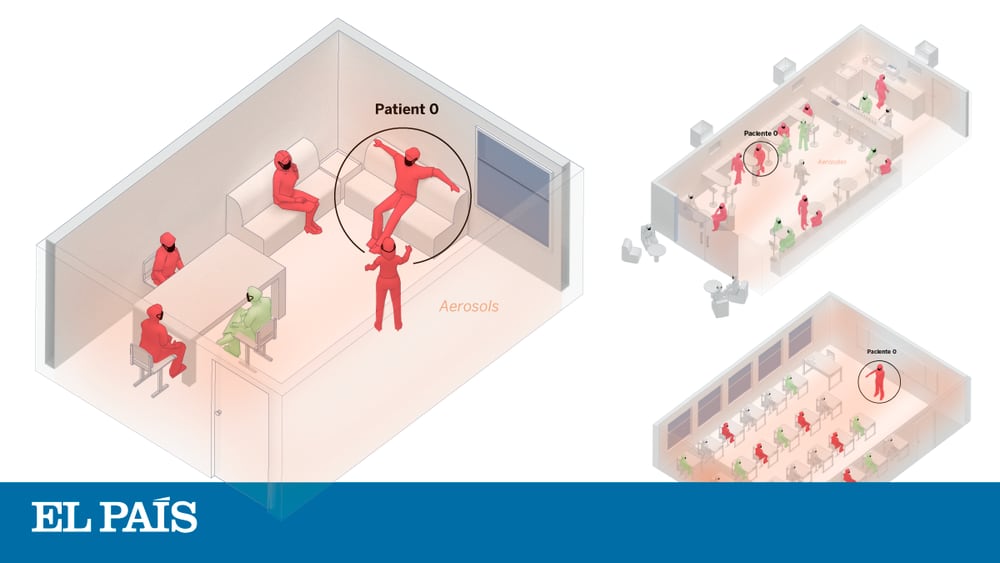 The risk of contagion is highest in indoor spaces but can be reduced by applying all available measures to combat infection via aerosols. Here is an overview of the likelihood of infection in three everyday scenarios, based on the safety measures used and the length of exposure | |
Submitted at 10-29-2020, 04:48 AM by sleeppoor | |