

| News | |||||||||||||||||||||||||||||||||||||||||||||||||||||||||||||||||||||||||||||||||||||||||||||||||||||||||||||||||||||||||||||||||||||||||||||||||||||||||||||||
 This summer, while hiking with his father through Horseshoe Canyon in the Badlands region, Nathan made a discovery at the top of a hill that would excite even the most seasoned paleontologist.
"When I looked at it, it was very, very obviously a bone. It looked like a bone you'd see in a TV show," Nathan said.
"I was basically just breathless. I was so excited that I didn't feel that excited, I was just so in shock." This summer, while hiking with his father through Horseshoe Canyon in the Badlands region, Nathan made a discovery at the top of a hill that would excite even the most seasoned paleontologist.
"When I looked at it, it was very, very obviously a bone. It looked like a bone you'd see in a TV show," Nathan said.
"I was basically just breathless. I was so excited that I didn't feel that excited, I was just so in shock." | |
Submitted at 10-16-2020, 04:03 PM by Noobër | |
4 Comments | |
 Some entertainment concepts are too strong to ever be made, their potential producers knowing that audiences aren’t ready to handle what they have in mind. Consider Poochinski, a TV show about Peter Boyle as an animatronic bulldog possessed by a dead detective’s spirit that was cancelled after a pilot episode showed it was simply too powerful an idea to continue. Some entertainment concepts are too strong to ever be made, their potential producers knowing that audiences aren’t ready to handle what they have in mind. Consider Poochinski, a TV show about Peter Boyle as an animatronic bulldog possessed by a dead detective’s spirit that was cancelled after a pilot episode showed it was simply too powerful an idea to continue. | |
Submitted at 10-16-2020, 01:47 PM by droog | |
Submitted at 10-16-2020, 09:33 AM by read a tv | |
 Ninety-three years ago, a scientist trapped a mouse in a stream in Ethiopia. Of all the mice, rats, and gerbils in Africa, it stood out as the one most adapted for living in water, with water-resistant fur and long, broad feet. That specimen, housed at Chicago's Field Museum, is the only one of its genus ever collected, and scientists think it may now be extinct. But in a new study in the Zoological Journal of the Linnean Society, researchers have verified this semi-aquatic mouse's closest cousins, including two species new to science. Ninety-three years ago, a scientist trapped a mouse in a stream in Ethiopia. Of all the mice, rats, and gerbils in Africa, it stood out as the one most adapted for living in water, with water-resistant fur and long, broad feet. That specimen, housed at Chicago's Field Museum, is the only one of its genus ever collected, and scientists think it may now be extinct. But in a new study in the Zoological Journal of the Linnean Society, researchers have verified this semi-aquatic mouse's closest cousins, including two species new to science. | |
Submitted at 10-16-2020, 03:00 AM by sleeppoor | |
:no_upscale()/cdn.vox-cdn.com/uploads/chorus_image/image/67636715/srybak_201014_1047_leadingminds.0.png) Science fiction is going through an era of rapid change and expansion. Just as fantasy television, superhero movies, comics, cosplay, and other traditionally marginalized fan pursuits have moved into the mainstream, science fiction media has become much more visible over the last decade, reaching a wider audience, and changing to accommodate that audience.
In America in particular, what was once a nerdy subgenre, dominated by pulp writers and amateur scientists and philosophers, has become vibrant and wildly divergent, running the gamut from old-school sprawling space opera to heady alternate-history philosophy to pop adventure-novel bestsellers to a growing wave of Afrofuturism. What’s next?
Polygon recently sat down with a group of gatekeepers and tastemakers in science fiction literature to talk about the biggest changes they’ve seen in the books field over the last decade, and what science fiction novels they most recommend for hungry readers right now. Science fiction is going through an era of rapid change and expansion. Just as fantasy television, superhero movies, comics, cosplay, and other traditionally marginalized fan pursuits have moved into the mainstream, science fiction media has become much more visible over the last decade, reaching a wider audience, and changing to accommodate that audience.
In America in particular, what was once a nerdy subgenre, dominated by pulp writers and amateur scientists and philosophers, has become vibrant and wildly divergent, running the gamut from old-school sprawling space opera to heady alternate-history philosophy to pop adventure-novel bestsellers to a growing wave of Afrofuturism. What’s next?
Polygon recently sat down with a group of gatekeepers and tastemakers in science fiction literature to talk about the biggest changes they’ve seen in the books field over the last decade, and what science fiction novels they most recommend for hungry readers right now. | |
Submitted at 10-16-2020, 01:14 AM by Xiphias | |
 The Federal Communications Commission (FCC) will draft regulations intended for social media companies following a petition earlier this year by the Trump administration, the agency's chairman said Thursday.
In a tweet, FCC Chairman Ajit Pai indicated he will move forward with a rulemaking to "clarify" Section 230 of the Communications Act of 1934, which currently acts as a legal shield for tech companies' handling of user generated content.
The move could inflame a national debate over the law, which has been spurred by numerous conservative complaints that tech platforms are systematically biased against right-wing views. The tech industry has strenuously denied the claim.
Pai said the FCC's general counsel had informed him that the agency has the legal authority to issue regulations interpreting Section 230. The Federal Communications Commission (FCC) will draft regulations intended for social media companies following a petition earlier this year by the Trump administration, the agency's chairman said Thursday.
In a tweet, FCC Chairman Ajit Pai indicated he will move forward with a rulemaking to "clarify" Section 230 of the Communications Act of 1934, which currently acts as a legal shield for tech companies' handling of user generated content.
The move could inflame a national debate over the law, which has been spurred by numerous conservative complaints that tech platforms are systematically biased against right-wing views. The tech industry has strenuously denied the claim.
Pai said the FCC's general counsel had informed him that the agency has the legal authority to issue regulations interpreting Section 230. | |
Submitted at 10-15-2020, 08:36 PM by Xiphias | |
 On Saturday, lines to vote early in Fairfax County, Virginia — an affluent, left-trending area including the suburbs of Washington, D.C. — reached enormous lengths, with many voters telling reporters that they were spurred to vote by the passing of Supreme Court Justice Ruth Bader Ginsburg.
But Trump supporters showed up at the early voting site to protest, as well.
Photos and videos by Washington Informer reporter Anthony Tilghman show Trump supporters blocking the path to the early voting site, standing together waving Trump flags and chanting "Four more years!" On Saturday, lines to vote early in Fairfax County, Virginia — an affluent, left-trending area including the suburbs of Washington, D.C. — reached enormous lengths, with many voters telling reporters that they were spurred to vote by the passing of Supreme Court Justice Ruth Bader Ginsburg.
But Trump supporters showed up at the early voting site to protest, as well.
Photos and videos by Washington Informer reporter Anthony Tilghman show Trump supporters blocking the path to the early voting site, standing together waving Trump flags and chanting "Four more years!"
| |
Submitted at 10-15-2020, 08:34 PM by Forensic | |
 C-SPAN suspended its political editor Steve Scully indefinitely Thursday after he admitted to lying about his Twitter feed being hacked when he was confronted about a questionable exchange with former Trump aide Anthony Scaramucci.
The news came on the day of what was supposed to be a career highlight for the 30-year C-SPAN veteran. Scully was to moderate the second debate between President Donald Trump and Democrat Joe Biden, which was canceled after Trump would not agree to a virtual format because of his COVID-19 diagnosis.
A week ago, after Trump had criticized him as a “never Trumper," Scully tweeted “@Scaramucci should I respond to Trump.” Scaramucci, a former Trump communications director and now a critic of the president, advised Scully to ignore him.
Scully said that when he saw his tweet had created a controversy, “I falsely claimed that my Twitter account had been hacked.” C-SPAN suspended its political editor Steve Scully indefinitely Thursday after he admitted to lying about his Twitter feed being hacked when he was confronted about a questionable exchange with former Trump aide Anthony Scaramucci.
The news came on the day of what was supposed to be a career highlight for the 30-year C-SPAN veteran. Scully was to moderate the second debate between President Donald Trump and Democrat Joe Biden, which was canceled after Trump would not agree to a virtual format because of his COVID-19 diagnosis.
A week ago, after Trump had criticized him as a “never Trumper," Scully tweeted “@Scaramucci should I respond to Trump.” Scaramucci, a former Trump communications director and now a critic of the president, advised Scully to ignore him.
Scully said that when he saw his tweet had created a controversy, “I falsely claimed that my Twitter account had been hacked.” | |
Submitted at 10-15-2020, 07:51 PM by Xiphias | |
 Welcome to Alaska Update, the first of what we hope is an occasional series in which the Defector Alaska News Team, Maitreyi Anantharaman and Chris Thompson, try to explain to you just what the hell is going on in Alaska. Chris Thompson: We would like to share the story of an insane scandal, set in […] Welcome to Alaska Update, the first of what we hope is an occasional series in which the Defector Alaska News Team, Maitreyi Anantharaman and Chris Thompson, try to explain to you just what the hell is going on in Alaska. Chris Thompson: We would like to share the story of an insane scandal, set in […] | |
Submitted at 10-15-2020, 08:00 PM by nocash | |
 Barrett said Wednesday that she believed two Supreme Court decisions outlawing racial discrimination were correctly decided but declined to say the same for other landmark opinions involving gay rights and access to contraceptives. Those responses came under questioning from Sen. Richard Blumenthal (D-Conn.), who asked her whether Brown v. Board of Education, which outlawed the “separate but equal” doctrine, and Loving v. Virginia, which legalized interracial marriage, were correctly decided.
Then Blumenthal pressed Barrett on Griswold v. Connecticut, which allowed married couples to use birth control, as well as Lawrence v. Texas, which invalidated sodomy laws, and Obergefell v. Hodges, which legalized same-sex marriage. “Again, I’ve said throughout the hearing, I can’t grade precedent,” Barrett said. “I can’t give a yes or a no, and my declining to give an answer doesn’t suggest disagreement or an agreement.” Barrett said Wednesday that she believed two Supreme Court decisions outlawing racial discrimination were correctly decided but declined to say the same for other landmark opinions involving gay rights and access to contraceptives. Those responses came under questioning from Sen. Richard Blumenthal (D-Conn.), who asked her whether Brown v. Board of Education, which outlawed the “separate but equal” doctrine, and Loving v. Virginia, which legalized interracial marriage, were correctly decided.
Then Blumenthal pressed Barrett on Griswold v. Connecticut, which allowed married couples to use birth control, as well as Lawrence v. Texas, which invalidated sodomy laws, and Obergefell v. Hodges, which legalized same-sex marriage. “Again, I’ve said throughout the hearing, I can’t grade precedent,” Barrett said. “I can’t give a yes or a no, and my declining to give an answer doesn’t suggest disagreement or an agreement.” | |
Submitted at 10-15-2020, 07:51 PM by Xiphias | |
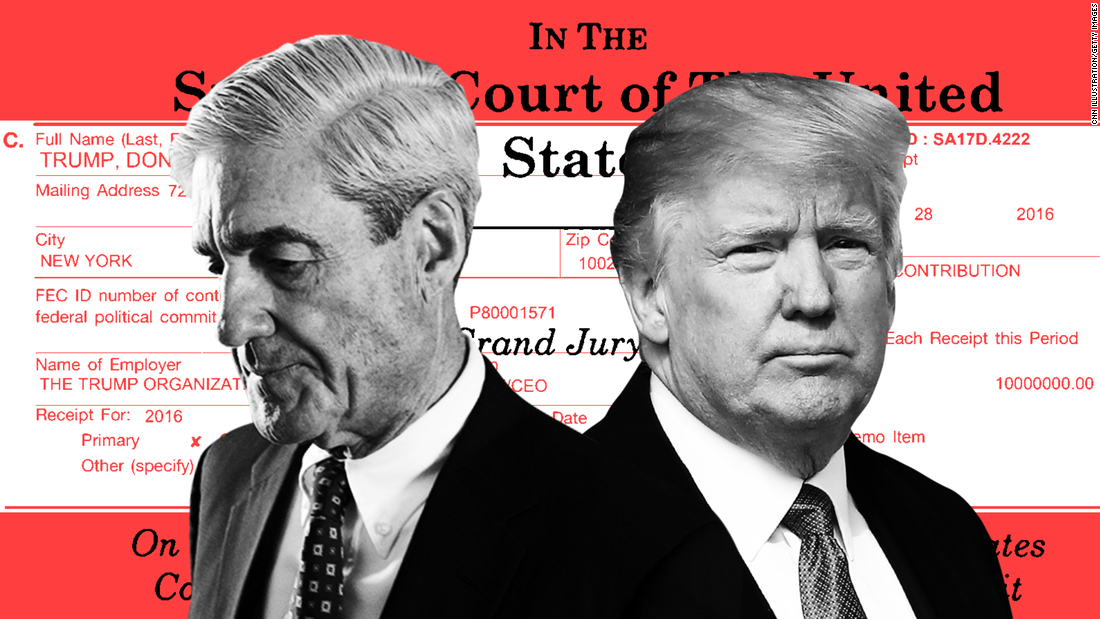 For more than three years, federal prosecutors investigated whether money flowing through an Egyptian state-owned bank could have backed millions of dollars Donald Trump donated to his own campaign days before he won the 2016 election, multiple sources familiar with the investigation told CNN.
The investigation, which both predated and outlasted special counsel Robert Mueller's probe, examined whether there was an illegal foreign campaign contribution. It represents one of the most prolonged efforts by federal investigators to understand the President's foreign financial ties, and became a significant but hidden part of the special counsel's pursuits.
The investigation was kept so secret that at one point investigators locked down an entire floor of a federal courthouse in Washington, DC, so Mueller's team could fight for the Egyptian bank's records in closed-door court proceedings following a grand jury subpoena. The probe, which closed this summer with no charges filed, has never before been described publicly. For more than three years, federal prosecutors investigated whether money flowing through an Egyptian state-owned bank could have backed millions of dollars Donald Trump donated to his own campaign days before he won the 2016 election, multiple sources familiar with the investigation told CNN.
The investigation, which both predated and outlasted special counsel Robert Mueller's probe, examined whether there was an illegal foreign campaign contribution. It represents one of the most prolonged efforts by federal investigators to understand the President's foreign financial ties, and became a significant but hidden part of the special counsel's pursuits.
The investigation was kept so secret that at one point investigators locked down an entire floor of a federal courthouse in Washington, DC, so Mueller's team could fight for the Egyptian bank's records in closed-door court proceedings following a grand jury subpoena. The probe, which closed this summer with no charges filed, has never before been described publicly. | |
Submitted at 10-15-2020, 07:50 PM by Xiphias | |
 A federal judge on Wednesday ruled that absentee ballots in the presidential battleground state of North Carolina must have a witness signature, a boost for Republican groups seeking to enforce stricter rules on mail-in voting.
U.S. District Judge William Osteen in Greensboro issued an injunction essentially barring voters from being able to “fix” an absentee ballot they had already sent in if it lacked a third-party signature attesting that the voter, and not somebody else, signed the ballot.
The judge was reversing a previous directive by state officials that had allowed voters to remedy the lack of a witness signature by returning an affidavit verifying that it was their ballot. A federal judge on Wednesday ruled that absentee ballots in the presidential battleground state of North Carolina must have a witness signature, a boost for Republican groups seeking to enforce stricter rules on mail-in voting.
U.S. District Judge William Osteen in Greensboro issued an injunction essentially barring voters from being able to “fix” an absentee ballot they had already sent in if it lacked a third-party signature attesting that the voter, and not somebody else, signed the ballot.
The judge was reversing a previous directive by state officials that had allowed voters to remedy the lack of a witness signature by returning an affidavit verifying that it was their ballot.
| |
Submitted at 10-15-2020, 07:47 PM by Xiphias | |
 Wisconsin and other states in the U.S. Midwest are battling a surge in COVID-19 cases, with new infections and hospitalizations rising to record levels in an ominous sign of a nationwide resurgence as temperatures get colder. Wisconsin and other states in the U.S. Midwest are battling a surge in COVID-19 cases, with new infections and hospitalizations rising to record levels in an ominous sign of a nationwide resurgence as temperatures get colder. | |
Submitted at 10-15-2020, 07:46 PM by Xiphias | |
 While President Trump hit the trail on Wednesday night in Des Moines, the Iowa Supreme Court ruled in his favor, determining that the state’s top election official had the authority to invalidate about 70,000 absentee ballot applications because they had been filled out in advance with voters’ personal information.
The ruling upheld a contentious directive of Secretary of State Paul D. Pate, a Republican, that required the applications to be blank when they were sent to voters.
Democrats and immigrant groups had challenged the constitutionality of the directive, which Mr. Pate used to nullify ballot requests from three counties.
Election officials in Linn, Johnson and Woodbury counties ignored the directive and sent out tens of thousands of applications to voters with their names, addresses, birth dates and voter personal identification numbers already filled out.
The wrangling over absentee ballots in Iowa came as polls showed a tight race between Mr. Trump and former Vice President Joseph R. Biden Jr. in the state, which Mr. Trump carried by nearly 10 percentage points in 2016. While President Trump hit the trail on Wednesday night in Des Moines, the Iowa Supreme Court ruled in his favor, determining that the state’s top election official had the authority to invalidate about 70,000 absentee ballot applications because they had been filled out in advance with voters’ personal information.
The ruling upheld a contentious directive of Secretary of State Paul D. Pate, a Republican, that required the applications to be blank when they were sent to voters.
Democrats and immigrant groups had challenged the constitutionality of the directive, which Mr. Pate used to nullify ballot requests from three counties.
Election officials in Linn, Johnson and Woodbury counties ignored the directive and sent out tens of thousands of applications to voters with their names, addresses, birth dates and voter personal identification numbers already filled out.
The wrangling over absentee ballots in Iowa came as polls showed a tight race between Mr. Trump and former Vice President Joseph R. Biden Jr. in the state, which Mr. Trump carried by nearly 10 percentage points in 2016. | |
Submitted at 10-15-2020, 07:49 PM by Xiphias | |
 On the afternoon of Feb. 24, President Trump declared on Twitter that the coronavirus was “very much under control” in the United States, one of numerous rosy statements that he and his advisers made at the time about the worsening epidemic. He even added an observation for investors: “Stock market starting to look very good to me!”
But hours earlier, senior members of the president’s economic team, privately addressing board members of the conservative Hoover Institution, were less confident. Tomas J. Philipson, a senior economic adviser to the president, told the group he could not yet estimate the effects of the virus on the American economy. To some in the group, the implication was that an outbreak could prove worse than Mr. Philipson and other Trump administration advisers were signaling in public at the time.
The next day, board members — many of them Republican donors — got another taste of government uncertainty from Larry Kudlow, the director of the National Economic Council. Hours after he had boasted on CNBC that the virus was contained in the United States and “it’s pretty close to airtight,” Mr. Kudlow delivered a more ambiguous private message. He asserted that the virus was “contained in the U.S., to date, but now we just don’t know,” according to a document describing the sessions obtained by The New York Times.
The document, written by a hedge fund consultant who attended the three-day gathering of Hoover’s board, was stark. “What struck me,” the consultant wrote, was that nearly every official he heard from raised the virus “as a point of concern, totally unprovoked.” On the afternoon of Feb. 24, President Trump declared on Twitter that the coronavirus was “very much under control” in the United States, one of numerous rosy statements that he and his advisers made at the time about the worsening epidemic. He even added an observation for investors: “Stock market starting to look very good to me!”
But hours earlier, senior members of the president’s economic team, privately addressing board members of the conservative Hoover Institution, were less confident. Tomas J. Philipson, a senior economic adviser to the president, told the group he could not yet estimate the effects of the virus on the American economy. To some in the group, the implication was that an outbreak could prove worse than Mr. Philipson and other Trump administration advisers were signaling in public at the time.
The next day, board members — many of them Republican donors — got another taste of government uncertainty from Larry Kudlow, the director of the National Economic Council. Hours after he had boasted on CNBC that the virus was contained in the United States and “it’s pretty close to airtight,” Mr. Kudlow delivered a more ambiguous private message. He asserted that the virus was “contained in the U.S., to date, but now we just don’t know,” according to a document describing the sessions obtained by The New York Times.
The document, written by a hedge fund consultant who attended the three-day gathering of Hoover’s board, was stark. “What struck me,” the consultant wrote, was that nearly every official he heard from raised the virus “as a point of concern, totally unprovoked.” | |
Submitted at 10-15-2020, 07:48 PM by Xiphias | |
/static.texastribune.org/media/files/63bb871761622ca67c767b18fc3c968b/ATX%20LBGTQ%20Stonewall%20Rally%20AP%20TT%2005.jpg) Texas social workers are criticizing a state regulatory board’s decision this week to remove protections for LGBTQ clients and clients with disabilities who seek social work services.
The Texas State Board of Social Work Examiners voted unanimously Monday to change a section of its code of conduct that establishes when a social worker may refuse to serve someone. The code will no longer prohibit social workers from turning away clients on the basis of disability, sexual orientation or gender identity.
Gov. Greg Abbott’s office recommended the change, board members said, because the code’s nondiscrimination protections went beyond protections laid out in the state law that governs how and when the state may discipline social workers. Texas social workers are criticizing a state regulatory board’s decision this week to remove protections for LGBTQ clients and clients with disabilities who seek social work services.
The Texas State Board of Social Work Examiners voted unanimously Monday to change a section of its code of conduct that establishes when a social worker may refuse to serve someone. The code will no longer prohibit social workers from turning away clients on the basis of disability, sexual orientation or gender identity.
Gov. Greg Abbott’s office recommended the change, board members said, because the code’s nondiscrimination protections went beyond protections laid out in the state law that governs how and when the state may discipline social workers. | |
Submitted at 10-15-2020, 07:45 PM by Xiphias | |
 Secret recordings of a militant neo-Nazi organization called The Base reveal that the group is recruiting people with military expertise in the U.S. and Canada to train in military operations and prepare to take advantage of what they believe is impending societal collapse.
The audio recordings are from calls between the leader of The Base and more than 100 prospective recruits using the encrypted app Wire. The Southern Poverty Law Center, or SPLC, which monitors hate groups, says that it obtained more than 80 hours of audio recorded starting in November 2018 and that the recordings are featured in a new three-part podcast titled "Baseless" that is being released as part of the SPLC's "Sounds Like Hate" podcast series.
According to the SPLC, a confidential source provided the recordings to the organization unsolicited, and it confirmed their authenticity with subject matter experts. The SPLC says the audio does not appear to have been edited.
Twenty percent of the prospective recruits who were recorded said they were active-duty military or had served in the military in some capacity, said documentary filmmaker Jamila Paksima, a co-host of the podcast. NBC News has listened to a significant part of the audio but could not independently verify their identities or their claims. Secret recordings of a militant neo-Nazi organization called The Base reveal that the group is recruiting people with military expertise in the U.S. and Canada to train in military operations and prepare to take advantage of what they believe is impending societal collapse.
The audio recordings are from calls between the leader of The Base and more than 100 prospective recruits using the encrypted app Wire. The Southern Poverty Law Center, or SPLC, which monitors hate groups, says that it obtained more than 80 hours of audio recorded starting in November 2018 and that the recordings are featured in a new three-part podcast titled "Baseless" that is being released as part of the SPLC's "Sounds Like Hate" podcast series.
According to the SPLC, a confidential source provided the recordings to the organization unsolicited, and it confirmed their authenticity with subject matter experts. The SPLC says the audio does not appear to have been edited.
Twenty percent of the prospective recruits who were recorded said they were active-duty military or had served in the military in some capacity, said documentary filmmaker Jamila Paksima, a co-host of the podcast. NBC News has listened to a significant part of the audio but could not independently verify their identities or their claims. | |
Submitted at 10-15-2020, 07:45 PM by Xiphias | |
 For years, Republicans across the country have decried the use of so-called “ballot harvesting,” arguing that laws that allow a third party to collect voters’ completed ballots serve as a breeding ground for election fraud. In California, the state’s Republican Party has taken Gov. Gavin Newsom and other officials to court over the practice.
Now, California’s GOP is defending its use of the very ballot collection law it once sued over.
In recent weeks, gray metal containers labeled as ballot drop boxes have been placed at various locations — including gun shops, shooting ranges, churches and Republican Party offices — in several California counties.
California Republican Party officials have acknowledged responsibility for the boxes and have rejected allegations of wrongdoing, in defiance of what the state’s top election official and attorney general say is an illegal practice.
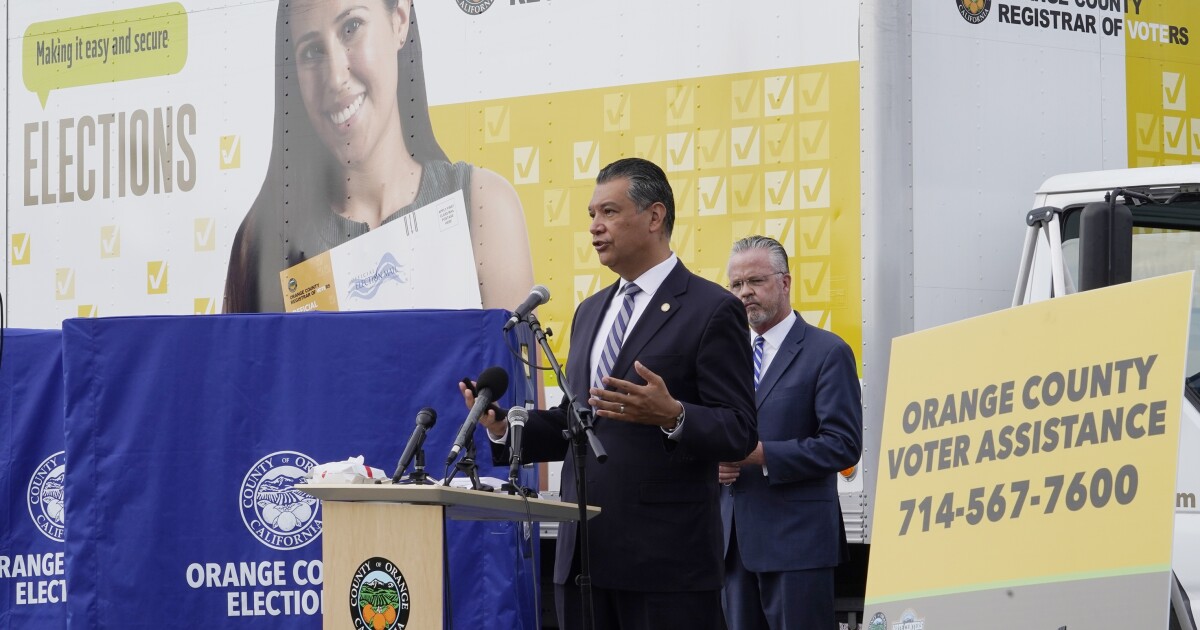
Atty. Gen. Xavier Becerra and Secretary of State Alex Padilla on Monday sent a cease-and-desist letter to Republican Party officials demanding that they immediately stop using the private ballot collection containers marked as “official” drop boxes. For years, Republicans across the country have decried the use of so-called “ballot harvesting,” arguing that laws that allow a third party to collect voters’ completed ballots serve as a breeding ground for election fraud. In California, the state’s Republican Party has taken Gov. Gavin Newsom and other officials to court over the practice.
Now, California’s GOP is defending its use of the very ballot collection law it once sued over.
In recent weeks, gray metal containers labeled as ballot drop boxes have been placed at various locations — including gun shops, shooting ranges, churches and Republican Party offices — in several California counties.
California Republican Party officials have acknowledged responsibility for the boxes and have rejected allegations of wrongdoing, in defiance of what the state’s top election official and attorney general say is an illegal practice.
Atty. Gen. Xavier Becerra and Secretary of State Alex Padilla on Monday sent a cease-and-desist letter to Republican Party officials demanding that they immediately stop using the private ballot collection containers marked as “official” drop boxes. | |
Submitted at 10-15-2020, 07:44 PM by Xiphias | |
 New research could make it possible to spot the genetic patterns associated with educational performance. But scientists are urging caution. New research could make it possible to spot the genetic patterns associated with educational performance. But scientists are urging caution. | |
Submitted at 10-15-2020, 07:40 PM by sleeppoor | |
Submitted at 10-15-2020, 07:04 PM by Xiphias | |