

| News | |||||||||||||||||||||||||||||||||||||||||||||||||||||||||||||||||||||||||||||||||||||||||||||||||||||||||||||||||||||||||||||||||||||||||||||||||||||||||||||||
 A new translation of the epic takes its cues from ‘Road House’ — proving Beowulf really was literature’s original guy’s guy A new translation of the epic takes its cues from ‘Road House’ — proving Beowulf really was literature’s original guy’s guy | |
Submitted at 11-12-2020, 02:19 PM by nocash | |
1 Comment | |
 Chimére felt like she was losing her mind. Then she found a community of people with the same surprising symptoms. Chimére felt like she was losing her mind. Then she found a community of people with the same surprising symptoms. | |
Submitted at 11-12-2020, 02:18 PM by nocash | |
 Joe Biden supports raising the federal minimum wage to $15 per hour. I know this because I follow political news for a living, but also because he said so, on television, in one of his two nationally televised debates with President Donald Trump. In fact, the two men argued about it, making it clear that one person on that stage wished to raise the minimum wage and the other didn’t.
In Florida, on Tuesday, 60 percent of voters overwhelmingly voted to raise the state’s minimum wage to $15 per hour. And on the same day, in Florida, Joe Biden won around 48 percent of the vote and lost decisively to Donald Trump.
It was a long and often brutal slog to get Democrats on board with a $15 minimum wage—so long, in fact, that it should probably now be called the “Fight for $17.22”—but tireless organizing finally convinced Joe Biden, the Democratic nominee for president, to support the proposal. It was not a centerpiece of his platform, but it was something he talked about and campaigned on. Joe Biden was the candidate of a $15 minimum wage. And it simply didn’t matter.
Now it is clearly true that people decide their votes based on many complicated, contradictory ideas, impulses, and biases. It is also probably true that even working-class voters most directly concerned with their own personal economic security may have been grateful to Trump for presiding over an economy that was humming at the start of the year, without assigning him blame for the pandemic that upended it.
But when a ballot measure that is ostensibly a central part of a candidate’s economic agenda runs 12 points ahead of the candidate, something is screwy in the electoral process.
Early Tuesday evening, left-of-center Twitter users began sharing images of polling results taken from Fox News, out of a sense of amusement at seeing this particular data on that particular channel. In the words of The Daily Dot, the polls “accidentally show Americans are liberal.” And indeed, the conclusion one would draw from these polls is not just that America is a liberal country but that it is a robustly left-of-center one.
Huge percentages of voters support government-sponsored health care, more state intervention in the economy, and more government support for clean energy. We have, of course, just learned some important lessons about the limitations of public opinion polling, but these majorities are too large to be completely dismissed as mere polling errors. That Democrats cannot translate robust support for their central policies into consistent electoral victories suggests that something is amiss in the democratic accountability feedback loop. It is of course true that on many of these issues, like health care, the Democratic Party firmly rejected the left’s popular proposals in favor of a confusing and diluted alternative. That is what Democrats nearly always do. Perhaps that is what the electorate punishes them for. But that same electorate also regularly elects Republicans, who are very vocally opposed to all of those fine, popular ideas.
This highlights the special challenge Democrats have faced in running against Donald Trump, who constantly backtracks and contradicts himself on policy, especially when he grasps that certain policies are broadly popular. (Trump has said in the past, in fact, that he supports a $15 minimum wage.) There is also the wider problem that many Americans (as Ryan Cooper has written) simply do not believe the Republican Party is as extreme as it is, based on the (logical!) belief that such a party would never win elections.
I doubt voters embrace Republicans because they believe the GOP is better than Democrats on economic fairness (as opposed to overall stewardship of “the economy”)—they simply can’t believe how reactionary Republicans actually are.
Faced with this dilemma, some commentators have insisted that Democrats just need to shut up about everything else in their great big platform and talk solely of dollars and cents. There is a liberal version of this argument, articulated by people like Mark Lilla: that Democrats should abandon their commitment to “identity” issues. And there is a left-wing version of this argument (caricatured by its opponents as “class reductionism”): that leftist politicians should focus on material concerns to the exclusion of all else.
But what if the argument itself is moot? What if it barely matters what Democrats “talk about” or “campaign on”? What if this is less a problem of political messaging or positioning than of political education, information access, and ubiquitous propaganda? In other words, if the Democrats actively try to abandon “identity issues,” will anyone in this political environment actually stop associating them with “identity issues”? If they ran a strictly class-focused campaign, how many marginal voters would hear their messaging and believe it?
It seems possible, in other words, that voters no longer believe that the Democratic Party represents a coalition that includes the working class, and that even if the party puts forward Democratic candidates who support pro-worker policy, it simply will not suffice to reach or convince voters.
This is not uncharted territory. Writing, in 1979, about the United Kingdom’s “swing to the Right,” the sociologist Stuart Hall argued that it could be explained (in part) by the fact that, once in power, social democratic parties became parties of the state, rather than parties of labor, as the state intervened to put the “national interest” above the “class struggle,” disciplining labor on behalf of the markets.
“In the absence of any fuller mobilization of democratic initiatives,” he wrote, “the state is increasingly encountered and experienced by ordinary working people as, indeed, not a beneficiary but a powerful, bureaucratic imposition. And this ‘experience’ is not misguided since, in its effective operations with respect to the popular classes, the state is less and less present as a welfare institution and more and more present as the state of ‘state monopoly capital.’”
The Democratic Party, unlike most of its left-of-center brethren in the developed world, has never been a true labor party, but it seems plausible that many voters view it as a party representing a state that never helps them, even as they, personally, practically beg for a large and powerful state that would step in to improve their lives.
The question Democrats now face is whether saying they will empower the state to improve people’s lives will actually work on anyone.
Hall’s thesis couldn’t account for the advances of communications technology and retreats in mass organizational politics and civil engagement that have taken place since the late 1970s. Workers have drifted away from the fraternal organizations, unions, and even churches that once bound individuals together and helped shape their political commitments. Simultaneously, many people either intentionally tune out political news or receive it filtered through social networks heavily biased in favor of right-wing perspectives. A blow to the argument that Democrats should fight for the support of the alienated and disengaged is that the alienated and disengaged may be unreachable—except by, in Hall’s words, fuller mobilization of democratic initiatives. It would take making the state work for people to convince the masses that the state can work for people.
At a time when great masses of voters support obvious contradictions like raising the minimum wage and viciously anti-worker state legislatures, or decriminalizing drugs and politicians who think of prison construction as the only legitimate form of local government stimulus, it’s hard to believe anyone, at least in the short term, has a compelling or even plausible strategy for consistently winning elections. The mission to build power for the left—or, much more modestly, to help an improved Democratic Party consolidate power—will not come down to simply announcing support for the right policies, while decrying or downplaying the wrong ones. It will, unfortunately, be much longer and harder work.
Alex Pareene @pareene
Alex Pareene is a staff writer at The New Republic. Joe Biden supports raising the federal minimum wage to $15 per hour. I know this because I follow political news for a living, but also because he said so, on television, in one of his two nationally televised debates with President Donald Trump. In fact, the two men argued about it, making it clear that one person on that stage wished to raise the minimum wage and the other didn’t.
In Florida, on Tuesday, 60 percent of voters overwhelmingly voted to raise the state’s minimum wage to $15 per hour. And on the same day, in Florida, Joe Biden won around 48 percent of the vote and lost decisively to Donald Trump.
It was a long and often brutal slog to get Democrats on board with a $15 minimum wage—so long, in fact, that it should probably now be called the “Fight for $17.22”—but tireless organizing finally convinced Joe Biden, the Democratic nominee for president, to support the proposal. It was not a centerpiece of his platform, but it was something he talked about and campaigned on. Joe Biden was the candidate of a $15 minimum wage. And it simply didn’t matter.
Now it is clearly true that people decide their votes based on many complicated, contradictory ideas, impulses, and biases. It is also probably true that even working-class voters most directly concerned with their own personal economic security may have been grateful to Trump for presiding over an economy that was humming at the start of the year, without assigning him blame for the pandemic that upended it.
But when a ballot measure that is ostensibly a central part of a candidate’s economic agenda runs 12 points ahead of the candidate, something is screwy in the electoral process.
Early Tuesday evening, left-of-center Twitter users began sharing images of polling results taken from Fox News, out of a sense of amusement at seeing this particular data on that particular channel. In the words of The Daily Dot, the polls “accidentally show Americans are liberal.” And indeed, the conclusion one would draw from these polls is not just that America is a liberal country but that it is a robustly left-of-center one.
Huge percentages of voters support government-sponsored health care, more state intervention in the economy, and more government support for clean energy. We have, of course, just learned some important lessons about the limitations of public opinion polling, but these majorities are too large to be completely dismissed as mere polling errors. That Democrats cannot translate robust support for their central policies into consistent electoral victories suggests that something is amiss in the democratic accountability feedback loop. It is of course true that on many of these issues, like health care, the Democratic Party firmly rejected the left’s popular proposals in favor of a confusing and diluted alternative. That is what Democrats nearly always do. Perhaps that is what the electorate punishes them for. But that same electorate also regularly elects Republicans, who are very vocally opposed to all of those fine, popular ideas.
This highlights the special challenge Democrats have faced in running against Donald Trump, who constantly backtracks and contradicts himself on policy, especially when he grasps that certain policies are broadly popular. (Trump has said in the past, in fact, that he supports a $15 minimum wage.) There is also the wider problem that many Americans (as Ryan Cooper has written) simply do not believe the Republican Party is as extreme as it is, based on the (logical!) belief that such a party would never win elections.
I doubt voters embrace Republicans because they believe the GOP is better than Democrats on economic fairness (as opposed to overall stewardship of “the economy”)—they simply can’t believe how reactionary Republicans actually are.
Faced with this dilemma, some commentators have insisted that Democrats just need to shut up about everything else in their great big platform and talk solely of dollars and cents. There is a liberal version of this argument, articulated by people like Mark Lilla: that Democrats should abandon their commitment to “identity” issues. And there is a left-wing version of this argument (caricatured by its opponents as “class reductionism”): that leftist politicians should focus on material concerns to the exclusion of all else.
But what if the argument itself is moot? What if it barely matters what Democrats “talk about” or “campaign on”? What if this is less a problem of political messaging or positioning than of political education, information access, and ubiquitous propaganda? In other words, if the Democrats actively try to abandon “identity issues,” will anyone in this political environment actually stop associating them with “identity issues”? If they ran a strictly class-focused campaign, how many marginal voters would hear their messaging and believe it?
It seems possible, in other words, that voters no longer believe that the Democratic Party represents a coalition that includes the working class, and that even if the party puts forward Democratic candidates who support pro-worker policy, it simply will not suffice to reach or convince voters.
This is not uncharted territory. Writing, in 1979, about the United Kingdom’s “swing to the Right,” the sociologist Stuart Hall argued that it could be explained (in part) by the fact that, once in power, social democratic parties became parties of the state, rather than parties of labor, as the state intervened to put the “national interest” above the “class struggle,” disciplining labor on behalf of the markets.
“In the absence of any fuller mobilization of democratic initiatives,” he wrote, “the state is increasingly encountered and experienced by ordinary working people as, indeed, not a beneficiary but a powerful, bureaucratic imposition. And this ‘experience’ is not misguided since, in its effective operations with respect to the popular classes, the state is less and less present as a welfare institution and more and more present as the state of ‘state monopoly capital.’”
The Democratic Party, unlike most of its left-of-center brethren in the developed world, has never been a true labor party, but it seems plausible that many voters view it as a party representing a state that never helps them, even as they, personally, practically beg for a large and powerful state that would step in to improve their lives.
The question Democrats now face is whether saying they will empower the state to improve people’s lives will actually work on anyone.
Hall’s thesis couldn’t account for the advances of communications technology and retreats in mass organizational politics and civil engagement that have taken place since the late 1970s. Workers have drifted away from the fraternal organizations, unions, and even churches that once bound individuals together and helped shape their political commitments. Simultaneously, many people either intentionally tune out political news or receive it filtered through social networks heavily biased in favor of right-wing perspectives. A blow to the argument that Democrats should fight for the support of the alienated and disengaged is that the alienated and disengaged may be unreachable—except by, in Hall’s words, fuller mobilization of democratic initiatives. It would take making the state work for people to convince the masses that the state can work for people.
At a time when great masses of voters support obvious contradictions like raising the minimum wage and viciously anti-worker state legislatures, or decriminalizing drugs and politicians who think of prison construction as the only legitimate form of local government stimulus, it’s hard to believe anyone, at least in the short term, has a compelling or even plausible strategy for consistently winning elections. The mission to build power for the left—or, much more modestly, to help an improved Democratic Party consolidate power—will not come down to simply announcing support for the right policies, while decrying or downplaying the wrong ones. It will, unfortunately, be much longer and harder work.
Alex Pareene @pareene
Alex Pareene is a staff writer at The New Republic. | |
Submitted at 11-12-2020, 06:04 AM by somedongus | |
 Hungary's government proposed a constitutional amendment on Tuesday requiring children to be raised with a Christian interpretation of gender roles, as Prime Minister Viktor Orban's ruling nationalists turn to anti-LGBT rhetoric to shore up support. Hungary's government proposed a constitutional amendment on Tuesday requiring children to be raised with a Christian interpretation of gender roles, as Prime Minister Viktor Orban's ruling nationalists turn to anti-LGBT rhetoric to shore up support. | |
Submitted at 11-12-2020, 03:53 AM by sleeppoor | |
 Shocking news! In an incredible breakthrough for American mass-transit engineering, the transportation technology company Virgin Hyperloop this past weekend successfully moved two people 500 meters across the barren Las Vegas desert at a top speed of just over 100 mph, setting a new world record for the absolute most pitiful thing anyone not named “Elon Musk” has ever tried to pass off as “high-speed rail...”
CNN’s article about this event paraphrases a Virgin Hyperloop executive claiming that the hyperloop pods “can travel at the speed of aircraft.” Which is true, in the sense that commercial aircraft with dozens if not hundreds of people aboard do sometimes travel at 100 miles per hour, on the ground, for seconds at a time, during takeoff or landing, when they are going only a fraction as fast as they’re capable of going. It is also true in the sense that, strictly speaking, a paper airplane is a form of “aircraft,” and you can really whip some of those suckers across a room. A more accurate but perhaps less flattering claim would be that my Honda Odyssey can travel at the fastest speed Virgin Hyperloop has yet attained, and with four times as many people riding in it.
Hell, for that matter, as a Twitter user helpfully pointed out, a freaking steam locomotive hit 126 miles per hour in England, 82 years ago, in 1938. Shocking news! In an incredible breakthrough for American mass-transit engineering, the transportation technology company Virgin Hyperloop this past weekend successfully moved two people 500 meters across the barren Las Vegas desert at a top speed of just over 100 mph, setting a new world record for the absolute most pitiful thing anyone not named “Elon Musk” has ever tried to pass off as “high-speed rail...”
CNN’s article about this event paraphrases a Virgin Hyperloop executive claiming that the hyperloop pods “can travel at the speed of aircraft.” Which is true, in the sense that commercial aircraft with dozens if not hundreds of people aboard do sometimes travel at 100 miles per hour, on the ground, for seconds at a time, during takeoff or landing, when they are going only a fraction as fast as they’re capable of going. It is also true in the sense that, strictly speaking, a paper airplane is a form of “aircraft,” and you can really whip some of those suckers across a room. A more accurate but perhaps less flattering claim would be that my Honda Odyssey can travel at the fastest speed Virgin Hyperloop has yet attained, and with four times as many people riding in it.
Hell, for that matter, as a Twitter user helpfully pointed out, a freaking steam locomotive hit 126 miles per hour in England, 82 years ago, in 1938. | |
Submitted at 11-12-2020, 03:40 AM by sleeppoor | |
:strip_exif(true):strip_icc(true):no_upscale(true):quality(65)/d1vhqlrjc8h82r.cloudfront.net/11-10-2020/t_fb4cedd18b8d46cb8a6fa16d10b10dc0_name_image.jpg) The race for a state senate seat is going to a recount, with the candidates separated by just 31 votes, but there is a lot more to this intriguing political race. The race for a state senate seat is going to a recount, with the candidates separated by just 31 votes, but there is a lot more to this intriguing political race. | |
Submitted at 11-12-2020, 02:11 AM by sleeppoor | |
 Monday's news that pharmaceutical company Pfizer's early results on a new COVID-19 vaccine showed a 90% efficacy rate on an initial clinical trial have given concert professionals hope that the business can start mounting a return in 2021. As part of that preparation, Ticketmaster has been working on a framework for post-pandemic fan safety that uses smart phones to verify fans' vaccination status or whether they've tested negative for the coronavirus within a 24 to 72 hour window.
Many details of the plan, which is still in development phase, will rely on three separate components -- the Ticketmaster digital ticket app, third party health information companies like CLEAR Health Pass or IBM's Digital Health Pass and testing and vaccine distribution providers like Labcorp and the CVS Minute Clinic.
Here's how it would work, if approved: After purchasing a ticket for a concert, fans would need to verify that they have already been vaccinated (which would provide approximately one year of COVID-19 protection) or test negative for coronavirus approximately 24 to 72 hours prior to the concert. The length of coverage a test would provide would be governed by regional health authorities -- if attendees of a Friday night concert had to be tested 48 hours in advance, most could start the testing process the day before the event. If it was a 24-hour window, most people would likely be tested the same day of the event at a lab or a health clinic. Monday's news that pharmaceutical company Pfizer's early results on a new COVID-19 vaccine showed a 90% efficacy rate on an initial clinical trial have given concert professionals hope that the business can start mounting a return in 2021. As part of that preparation, Ticketmaster has been working on a framework for post-pandemic fan safety that uses smart phones to verify fans' vaccination status or whether they've tested negative for the coronavirus within a 24 to 72 hour window.
Many details of the plan, which is still in development phase, will rely on three separate components -- the Ticketmaster digital ticket app, third party health information companies like CLEAR Health Pass or IBM's Digital Health Pass and testing and vaccine distribution providers like Labcorp and the CVS Minute Clinic.
Here's how it would work, if approved: After purchasing a ticket for a concert, fans would need to verify that they have already been vaccinated (which would provide approximately one year of COVID-19 protection) or test negative for coronavirus approximately 24 to 72 hours prior to the concert. The length of coverage a test would provide would be governed by regional health authorities -- if attendees of a Friday night concert had to be tested 48 hours in advance, most could start the testing process the day before the event. If it was a 24-hour window, most people would likely be tested the same day of the event at a lab or a health clinic. | |
Submitted at 11-12-2020, 03:17 AM by sleeppoor | |
 Trump-like visage grafted on to a carving in Palencia recalls earlier inept restoration Trump-like visage grafted on to a carving in Palencia recalls earlier inept restoration | |
Submitted at 11-12-2020, 02:27 AM by sleeppoor | |
 More than 30 people connected to the Trump White House and campaign have had Covid-19 in the past two months. More than 30 people connected to the Trump White House and campaign have had Covid-19 in the past two months. | |
Submitted at 11-12-2020, 01:28 AM by Forensic | |
 COBOL is a coding language older than Weird Al Yankovic. The people who know how to use it are often just as old. It underpins the entire financial system. And it can’t be removed. How a computer language controls the financial life of the world. COBOL is a coding language older than Weird Al Yankovic. The people who know how to use it are often just as old. It underpins the entire financial system. And it can’t be removed. How a computer language controls the financial life of the world. | |
Submitted at 11-12-2020, 01:17 AM by Forensic | |
 Dave Altman, a longtime Berkeley climber known as the "Mayor of Indian Rock," died early Tuesday morning after his SUV caught fire. Dave Altman, a longtime Berkeley climber known as the "Mayor of Indian Rock," died early Tuesday morning after his SUV caught fire. | |
Submitted at 11-12-2020, 01:02 AM by Forensic | |
 Food Network star Alton Brown has apologized after making a reference to the Holocaust on social media Tuesday night.
The Nov. 10 tweet read: "Do you think the camp uniforms will be striped, like the ones at Auschwitz or will plaid be in vogue?" according to screenshots from other Twitter users. He apparently was referencing how afraid he was for the country, and used the Holocaust in an attempt to make light of the moment. Six million Jews died in the Holocaust, not to mention millions of other people.
"I apologize for the flippant reference I made to the Holocaust in my tweet last night. It was not a reference I made for humorous effect but rather to reflect how deeply frightened I am for our country," Brown tweeted Wednesday. "It was a very poor use of judgement and in poor taste." Food Network star Alton Brown has apologized after making a reference to the Holocaust on social media Tuesday night.
The Nov. 10 tweet read: "Do you think the camp uniforms will be striped, like the ones at Auschwitz or will plaid be in vogue?" according to screenshots from other Twitter users. He apparently was referencing how afraid he was for the country, and used the Holocaust in an attempt to make light of the moment. Six million Jews died in the Holocaust, not to mention millions of other people.
"I apologize for the flippant reference I made to the Holocaust in my tweet last night. It was not a reference I made for humorous effect but rather to reflect how deeply frightened I am for our country," Brown tweeted Wednesday. "It was a very poor use of judgement and in poor taste."
| |
Submitted at 11-11-2020, 11:41 PM by blicero | |
 “Endless war” and “forever wars” are both terms that are casually used to characterize U.S. military operations abroad. These characterizations appeal strongly to audiences inclined to oppose military operations, but the use of these expressions imply intellectual laziness. People who use them typically toss them out without addressing either why the military is engaged in the action or the potential consequences of ending the operation prematurely. “Endless war” and “forever wars” are both terms that are casually used to characterize U.S. military operations abroad. These characterizations appeal strongly to audiences inclined to oppose military operations, but the use of these expressions imply intellectual laziness. People who use them typically toss them out without addressing either why the military is engaged in the action or the potential consequences of ending the operation prematurely. | |
Submitted at 11-11-2020, 11:56 PM by Forensic | |
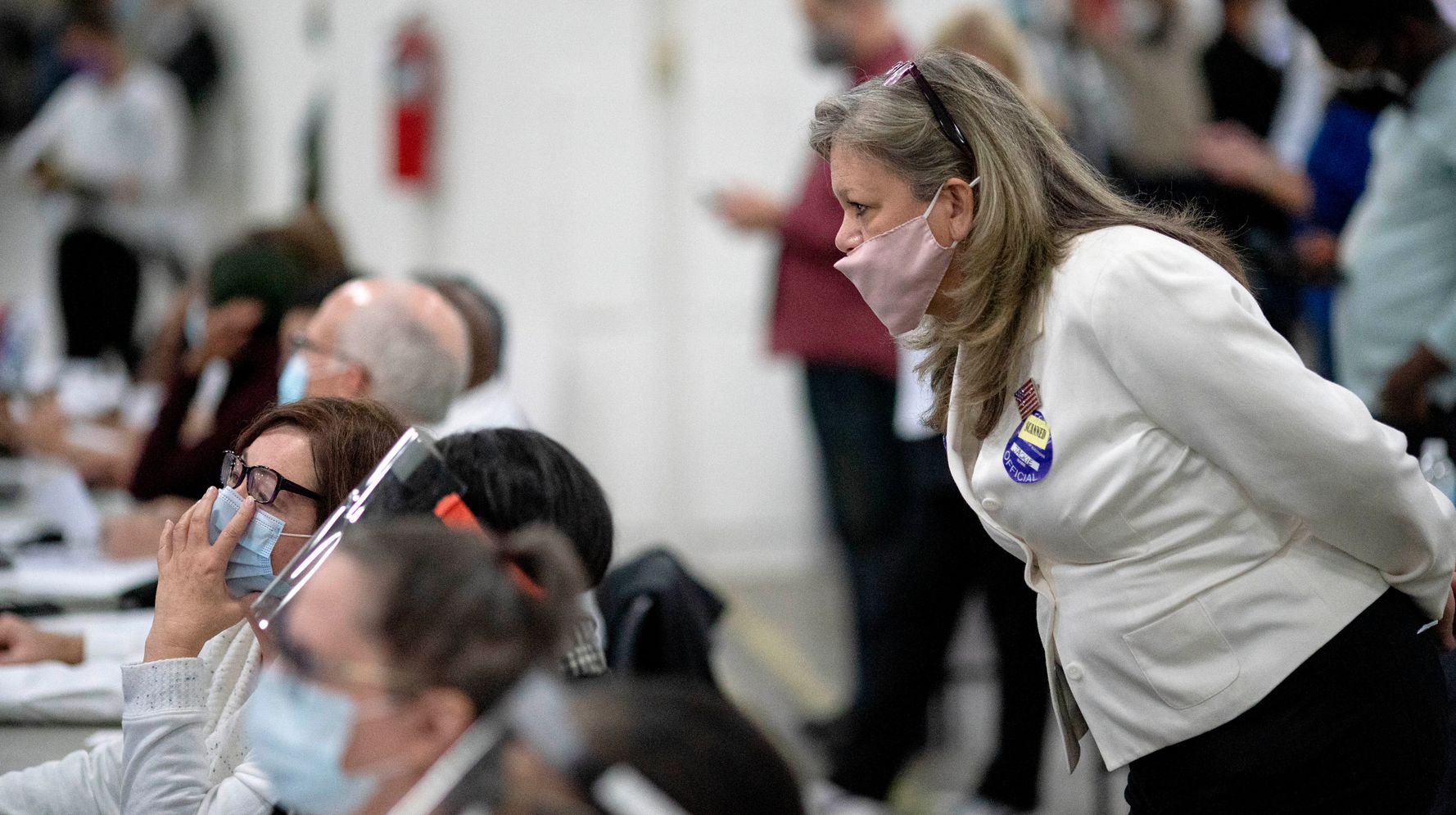 Late Tuesday, President Donald Trump’s campaign announced a lawsuit focused on “irregularities, incompetence, and unlawful vote counting” in Detroit, a city that helped President-elect Joe Biden win Michigan and the presidency.
But HuffPost’s review of 234 pages of affidavits released by the Trump campaign — which White House press secretary Kayleigh McEnany was waving around on Fox News Monday night — found only a mix of routine election issues, complaints about lines of sight and social distancing measures, and an environment supposedly hostile to white Republican poll watchers who seemed ready to treat any and all actions by election workers as nefarious criminal activity. Late Tuesday, President Donald Trump’s campaign announced a lawsuit focused on “irregularities, incompetence, and unlawful vote counting” in Detroit, a city that helped President-elect Joe Biden win Michigan and the presidency.
But HuffPost’s review of 234 pages of affidavits released by the Trump campaign — which White House press secretary Kayleigh McEnany was waving around on Fox News Monday night — found only a mix of routine election issues, complaints about lines of sight and social distancing measures, and an environment supposedly hostile to white Republican poll watchers who seemed ready to treat any and all actions by election workers as nefarious criminal activity. | |
Submitted at 11-11-2020, 11:44 PM by Forensic | |
 The deadline to sell US assets expires this week The deadline to sell US assets expires this week | |
Submitted at 11-11-2020, 09:25 PM by Forensic | |
 BuzzFeed's name and signature bright red color will be used to sell a new vibrator in an effort to become the authority on sex and wellness. BuzzFeed's name and signature bright red color will be used to sell a new vibrator in an effort to become the authority on sex and wellness. | |
Submitted at 11-11-2020, 09:09 PM by sleeppoor | |
 President Donald Trump's administration is taking on the characteristics of a tottering regime -- with its loyalty tests, destabilizing attacks on the military chain of command, a deepening bunker mentality and increasingly delusional claims of political victory. President Donald Trump's administration is taking on the characteristics of a tottering regime -- with its loyalty tests, destabilizing attacks on the military chain of command, a deepening bunker mentality and increasingly delusional claims of political victory. | |
Submitted at 11-11-2020, 07:22 PM by wintermute | |
 Trump refuses to acknowledge Biden’s win, but experts say there isn’t a constitutional path forward for him to remain president Trump refuses to acknowledge Biden’s win, but experts say there isn’t a constitutional path forward for him to remain president | |
Submitted at 11-11-2020, 07:10 PM by wintermute | |
 Maj. Danny Sjursen offers an anecdotal but instructive, peek through the “revolving door” between senior military&corporate defense contracting jobs. Maj. Danny Sjursen offers an anecdotal but instructive, peek through the “revolving door” between senior military&corporate defense contracting jobs. | |
Submitted at 11-11-2020, 05:18 PM by somedongus | |
 Conventional wisdom suggests that the best-case scenario for President-elect Joe Biden is for Democrats to sweep the two Senate runoffs in Georgia in January, wins that would hand Democrats control of both sides of the US Capitol, not to mention the White House. Conventional wisdom suggests that the best-case scenario for President-elect Joe Biden is for Democrats to sweep the two Senate runoffs in Georgia in January, wins that would hand Democrats control of both sides of the US Capitol, not to mention the White House. | |
Submitted at 11-11-2020, 05:43 PM by Xiphias | |