

| News | |||||||||||||||||||||||||||||||||||||||||||||||||||||||||||||||||||||||||||||||||||||||||||||||||||||||||||||||||||||||||||||||||||||||||||||||||||||||||||||||
 Verizon offloaded its media business to Apollo Global Management in a deal valued at $5 billion as the mobile phone giant focuses on building out its 5G network. Verizon offloaded its media business to Apollo Global Management in a deal valued at $5 billion as the mobile phone giant focuses on building out its 5G network. | |
Submitted at 05-03-2021, 06:11 PM by Xiphias | |
5 Comments | |
 The Biden administration is considering using outside firms to track extremist chatter by Americans online, an effort that would expand the government's ability to gather intelligence but could draw criticism over surveillance of US citizens. The Biden administration is considering using outside firms to track extremist chatter by Americans online, an effort that would expand the government's ability to gather intelligence but could draw criticism over surveillance of US citizens. | |
Submitted at 05-03-2021, 07:18 PM by Forensic | |
 Long ago, in that distant universe that was the 1960s, John Waters, now seventy-five, burst onto the underground film scene amid a blaze of bad taste and fun. His early movies had provocative titles like Hag in a Black Leather Jacket, Mondo Trasho, and Multiple Maniacs. In an era that celebrated subversion and irreverence, Waters soon gained a reputation as an offbeat auteur.
In 1972, he released Pink Flamingos, a transgressive comedy starring the drag queen Divine. Violating virtually every taboo imaginable, it included scenes of sodomy, masturbation, and a finale in which a character ate dog feces while the soundtrack played the 1950s pop tune “How Much Is That Doggie in the Window?” Waters’s profane sense of humor was lost on Variety, which declared the film “one of the most vile, stupid and repulsive films ever made.”
Already with a loyal following among the downtown crowd, Waters went on to write and directed ten more features, several of which scored with mainstream audiences. Hairspray, his 1988 comedy about a chubby Baltimore teen who finds salvation and a gorgeous boyfriend through rock and roll and the civil rights movement, also became a Tony-winning Broadway musical.
For his 1994 suburban farce Serial Mom, Kathleen Turner played a homicidal housewife who kills people offending her sense of order and propriety. Under Waters’s direction, she delivered what may well be her best screen performance.
Over the decades, Waters himself acted in numerous roles—in movies like Seed of Chucky and Alvin and the Chipmunks: The Road Chip, and TV shows like 21 Jump Street and Law & Order: Special Victims Unit. On top of which, he has gained growing recognition as a visual artist—two years ago, the Baltimore Museum of Art mounted a show of his work—and as an author of memoir and cultural critique. His most recent book, Mr. Know-It-All: The Tarnished Wisdom of a Filth Elder, appeared in 2019.
He spoke to me via Zoom and telephone from his home in Baltimore; an edited and condensed version of our conversations follows.
Claudia Dreifus: How have you been getting through the pandemic?
John Waters: Doing what I always do: I write every morning Monday through Friday.
It’s a sad time. Everyone misses their life.
Honestly, my life is just like everybody else’s. I cook more than ever. I’m sick of looking at computers. I’m sick of watching stuff on television. I’m getting through it, though.
Have you been reading much?
I knew you were going to ask that, so I looked at my table. Where are my glasses? Okay. The last books I’ve read include Glamour Ghoul: The Passions and Pain of the Real Vampira, Maila Nurmi, by Sandra Niemi, and Rachel Cusk’s new book, Second Place. I really liked it. She made me laugh.
I’ve just read The Babysitter: My Summers with a Serial Killer, about the famous Provincetown serial killer. Also, Edmund White’s A Saint from Texas. I thought it was his best book.
Earlier, I read Julian Barnes’s The Man in the Red Coat, which was full of details I didn’t know—during the days of Oscar Wilde, people said you could tell if someone was a gay man because gay men can’t whistle. That’s hysterical.
I’ve asked every gay man I know, and none of them can whistle. So maybe it’s true.
And what are you writing?
A novel, called Liarmouth. It’s bad luck to talk about something before you finish it, but I will tell you that it’s a novel about a very unpleasant woman who steals suitcases at airports. It’s a feel-bad romance.
When your last book, Mr. Know-It-All, was published, the New York Times reviewer declared that “John Waters is a national treasure.” In the 1960s, when you were making scandalous movies, could you have imagined anyone describing you in such terms?
No. But I didn’t not think that was possible, either. I was an ambitious kid.
What was your ambition?
I wanted to be the filthiest person alive.
Yet you grew up in a conservative middle-class household in Baltimore…
I was lucky enough to know what I wanted to do early in life. By the time I was twelve, I had a career: I was a puppeteer at children’s birthday parties.
Many film directors were once puppeteers. That’s why actors say, “We’re not your puppets.” And we think to ourselves, “Oh yes, you are.”
At that same age, I went to summer camp where I wrote a horror story called “Reunion.” I read from it each night at the campfire like a serial. The kids went crazy and had terrible dreams.
Their parents called the camp and everything. I realized, “Wow, all I did was write this story, and it got such a great reaction.”
How did your parents react to having this baby Bram Stoker in the house?
They were appalled, but they supported me—because they knew that I knew what I wanted to do. And if I couldn’t, they were afraid I’d end up in prison.
In fact, in 1966, I got thrown out of NYU for marijuana. It was a big scandal; my mother told me that her so-called friends would send her clippings and unsigned letters, evil things like that. Ten years later, those same people called her when their own children got into drugs. She became the local authority on how to deal with problem children.
Where did you go to school?
I went to a very good private grade school, Calvert. I went to a public junior high and then a Catholic high school.
After the sixth grade, I should have quit. I didn’t learn anything there except how cheap girls dressed and how bad boys looked cute.
Mostly, I learned by reading and being inquisitive. Life magazine was the ultimate bad influence. There, I read about beatniks and drugs and gay people and everything. As soon as I could, I set out to find them.
My parents respected my drive, but they hated the destination. They were horrified when the movies came out because nobody said they were any good.
My mother asked about a film, “What’s this one is about?” I said, “Sex addicts.” She said, “Oh God, maybe we’ll die first.” My father saw Dirty Shame, and afterward said to me the best line: “It was very funny, but I don’t have to see it again.”
I think they were happiest the night the musical version of Hairspray opened on Broadway. Finally, they could say they loved something of mine without their noses growing.
I have to tell you no parent would have been proud of a child who’d made Pink Flamingos. I got arrested for making movies. I got banned. I got hideous reviews. Nobody was saying I was good, except the audiences. I always had an audience.
Books really matter in your life. It’s said you have eight thousand in your home library. You’ve also said, “If you go home with someone and they don’t have any books in their house, don’t fuck them.” Why?
Well, if they’re cute enough, you can violate that rule.
Do you consider yourself a Sixties person?
Well, I was there. And making movies. All that left-wing stuff and everything, I was part of. I loved the Yippies. Using humor as comic terrorism really works. I think we need that again.
Kids today are having just as much fun as we ever did. Back then, the Yippies brought dollar bills onto the stock market floor and tossed them at the traders. Just the other week, kids on Reddit were screwing up the stock market with this GameStop caper. Same thing, more than forty years later.
Do you think someone like John Waters could get a foothold in the movies today?
There’s always room for some smart-ass kid with no money to cause trouble. And today, I would have made the films on my phone.
I think one difference between then and now has to do with distribution. If I made Pink Flamingos today, it might open in the Landmark chain for a week. If it didn’t do well, it would be gone forever. In the 1970s, we went to one city at a time and nursed it there. Pink Flamingos opened in Baltimore in 1972. It didn’t open in New York till much later.
Another thing that’s different: there’s no midnight movie scene anymore. Pink Flamingos developed a following by playing at midnight at the Elgin, now the Joyce Theatre, on Eighth Avenue in Chelsea. The community in the theater was part of it.
Could someone like your Pink Flamingos lead, Harris Glenn Milstead—Divine—become a star today?
Absolutely. When we were coming up, drag queens were so square! They all wanted to be Miss America. They didn’t want to scare people. Divine was the first who did. Divine wanted to be a monster. He wanted to be Godzilla.
Every drag queen today has some anger, even RuPaul; they all have some edge to their act.
Right before he died, Divine was supposed to star on Married…with Children, playing the gay male uncle. That would have been one of the first gay characters on a big hit TV sitcom, and I think it would have worked.
I’m still shocked that he’s dead. I go to his grave every Christmas.
Matter of fact, I’m being buried in the same graveyard. Five of my friends, we bought plots there. We call it “Disgraceland.”
Your books and movies have a consistent theme: a hatred for bourgeois conformity. Do I read you right?
I hate people who aren’t curious. I hate people who judge others without knowing the full story.
In my films, I only made fun of the things I loved. I was never mean-spirited. I tried to flip everything: what used to be the villain was the hero in my movies.
How did you persuade Patty Hearst to appear in Serial Mom?
I’m an obsessive fan of hers. I went to her trial. When I met her later and told her that, she was appalled: “I went to jail because of people like you!” But we met again at the Cannes Festival and I asked her to be in my movie. She came in and read for the part. She wasn’t great at first, but we worked with her. She turned out to be a terrific comedienne.
Your work is also about the pleasures of bad taste. Right now, with hundreds of thousands dying from Covid-19 in the US, can bad taste still be funny?
The pandemic has certainly made irony less appealing. Humor is harder now. You can’t make a joke if someone in the audience has just buried their mother. In the 1950s, people said, “Oh, it’s as funny as an iron lung.” Maybe now we’ll say, “It’s as funny as a Covid test!”
Before the pandemic, I used to go on the road with two different one-man shows: “This Filthy World” and “A John Waters Christmas.” Once the pandemic ends, I’ll have to completely rewrite them both because every single thing is different now.
You lived through the AIDS epidemic of the 1980s. Does this moment remind you of that terrible time?
It is different because everyone in the world has this virus problem. With AIDS, it was not the whole world. It targeted certain segments. Mostly, in the US, it was gay people and heroin users.
About half my friends died. No one can imagine how horrible and frightening it was unless they were there.
AIDS changed everything, especially sex. I’m lucky because I don’t think anybody in this century will ever experience a time when people had sex with a different person every night. In the 1970s, it was normal to do that. I did it, everyone I knew of a certain age did it.
Well, now you need twelve lawyers to ask someone on a date. Back then, it was just the opposite. People would just be walking down the street and have sex, and then just keep going. I don’t know if it’s good or bad, but I’m not sorry that I saw what it was like.
You came of age before Stonewall. Most of the literature and films of that period, if they dealt with gay life at all, were, for want of a better word, “self-hating.” But not in your movies.
I don’t hold with that: Jean Genet, William Burroughs, they weren’t self-hating to me. It’s much better today, but there was a certain excitement to going to a gay bar that got raided because it was illegal. You were an outlaw.
I was thinking about a drama like The Boys in the Band.
Those were the gay people I was rebelling against—because they were so square. I never was a separatist in any way: I didn’t care what people’s sexuality was. And these days, kids don’t either. Maybe they’re straight one day and gay the other. It depends how cute the people they meet are and how smart they are. They change their route.
About getting older: the year you qualified for Medicare, you decided to hitchhike across the country. What were you thinking?
That was a literary stunt. I was working on a book, Carsick. But I used to hitchhike when I was young, so I always wondered what that would be like today.
The first day, I was standing on the corner and my neighbor drove by—and I thought, “Am I really doing this?” In hindsight, it didn’t seem that hard. But while you’re standing for ten hours in Kansas and it’s getting dark and nobody picks you up, it can be nerve-wracking. I would have gotten into Ted Bundy’s car. I was that eager for a ride.
But I never had a scary ride. I think the people who pick you up hitchhiking are genuinely good people who have been through something in their own life. They want to help.
Are you frequently recognized?
Only by the people I want to recognize me. When I’m on the subway, children recognize me from Seed of Chucky, and when I’m in airports, they recognize me for being in the Alvin and the Chipmunks movie.
With that movie, they changed the dialogue we shot. When I went to see it [in a theater], I heard my line, “Don’t judge me,” and then I heard Alvin say, “I saw Pink Flamingos,” which they had dubbed in later. It’s so amazing they put that into a children’s movie!
Now that you’ve been anointed as a “national treasure,” do you think there might ever be a Kennedy Center tribute to you?
Who knows? A lot of surprising things have happened. I got a French medal for promoting French movies. So who knows? The most surprising thing: Multiple Maniacs is on HBO Max. How could that be? Long ago, in that distant universe that was the 1960s, John Waters, now seventy-five, burst onto the underground film scene amid a blaze of bad taste and fun. His early movies had provocative titles like Hag in a Black Leather Jacket, Mondo Trasho, and Multiple Maniacs. In an era that celebrated subversion and irreverence, Waters soon gained a reputation as an offbeat auteur.
In 1972, he released Pink Flamingos, a transgressive comedy starring the drag queen Divine. Violating virtually every taboo imaginable, it included scenes of sodomy, masturbation, and a finale in which a character ate dog feces while the soundtrack played the 1950s pop tune “How Much Is That Doggie in the Window?” Waters’s profane sense of humor was lost on Variety, which declared the film “one of the most vile, stupid and repulsive films ever made.”
Already with a loyal following among the downtown crowd, Waters went on to write and directed ten more features, several of which scored with mainstream audiences. Hairspray, his 1988 comedy about a chubby Baltimore teen who finds salvation and a gorgeous boyfriend through rock and roll and the civil rights movement, also became a Tony-winning Broadway musical.
For his 1994 suburban farce Serial Mom, Kathleen Turner played a homicidal housewife who kills people offending her sense of order and propriety. Under Waters’s direction, she delivered what may well be her best screen performance.
Over the decades, Waters himself acted in numerous roles—in movies like Seed of Chucky and Alvin and the Chipmunks: The Road Chip, and TV shows like 21 Jump Street and Law & Order: Special Victims Unit. On top of which, he has gained growing recognition as a visual artist—two years ago, the Baltimore Museum of Art mounted a show of his work—and as an author of memoir and cultural critique. His most recent book, Mr. Know-It-All: The Tarnished Wisdom of a Filth Elder, appeared in 2019.
He spoke to me via Zoom and telephone from his home in Baltimore; an edited and condensed version of our conversations follows.
Claudia Dreifus: How have you been getting through the pandemic?
John Waters: Doing what I always do: I write every morning Monday through Friday.
It’s a sad time. Everyone misses their life.
Honestly, my life is just like everybody else’s. I cook more than ever. I’m sick of looking at computers. I’m sick of watching stuff on television. I’m getting through it, though.
Have you been reading much?
I knew you were going to ask that, so I looked at my table. Where are my glasses? Okay. The last books I’ve read include Glamour Ghoul: The Passions and Pain of the Real Vampira, Maila Nurmi, by Sandra Niemi, and Rachel Cusk’s new book, Second Place. I really liked it. She made me laugh.
I’ve just read The Babysitter: My Summers with a Serial Killer, about the famous Provincetown serial killer. Also, Edmund White’s A Saint from Texas. I thought it was his best book.
Earlier, I read Julian Barnes’s The Man in the Red Coat, which was full of details I didn’t know—during the days of Oscar Wilde, people said you could tell if someone was a gay man because gay men can’t whistle. That’s hysterical.
I’ve asked every gay man I know, and none of them can whistle. So maybe it’s true.
And what are you writing?
A novel, called Liarmouth. It’s bad luck to talk about something before you finish it, but I will tell you that it’s a novel about a very unpleasant woman who steals suitcases at airports. It’s a feel-bad romance.
When your last book, Mr. Know-It-All, was published, the New York Times reviewer declared that “John Waters is a national treasure.” In the 1960s, when you were making scandalous movies, could you have imagined anyone describing you in such terms?
No. But I didn’t not think that was possible, either. I was an ambitious kid.
What was your ambition?
I wanted to be the filthiest person alive.
Yet you grew up in a conservative middle-class household in Baltimore…
I was lucky enough to know what I wanted to do early in life. By the time I was twelve, I had a career: I was a puppeteer at children’s birthday parties.
Many film directors were once puppeteers. That’s why actors say, “We’re not your puppets.” And we think to ourselves, “Oh yes, you are.”
At that same age, I went to summer camp where I wrote a horror story called “Reunion.” I read from it each night at the campfire like a serial. The kids went crazy and had terrible dreams.
Their parents called the camp and everything. I realized, “Wow, all I did was write this story, and it got such a great reaction.”
How did your parents react to having this baby Bram Stoker in the house?
They were appalled, but they supported me—because they knew that I knew what I wanted to do. And if I couldn’t, they were afraid I’d end up in prison.
In fact, in 1966, I got thrown out of NYU for marijuana. It was a big scandal; my mother told me that her so-called friends would send her clippings and unsigned letters, evil things like that. Ten years later, those same people called her when their own children got into drugs. She became the local authority on how to deal with problem children.
Where did you go to school?
I went to a very good private grade school, Calvert. I went to a public junior high and then a Catholic high school.
After the sixth grade, I should have quit. I didn’t learn anything there except how cheap girls dressed and how bad boys looked cute.
Mostly, I learned by reading and being inquisitive. Life magazine was the ultimate bad influence. There, I read about beatniks and drugs and gay people and everything. As soon as I could, I set out to find them.
My parents respected my drive, but they hated the destination. They were horrified when the movies came out because nobody said they were any good.
My mother asked about a film, “What’s this one is about?” I said, “Sex addicts.” She said, “Oh God, maybe we’ll die first.” My father saw Dirty Shame, and afterward said to me the best line: “It was very funny, but I don’t have to see it again.”
I think they were happiest the night the musical version of Hairspray opened on Broadway. Finally, they could say they loved something of mine without their noses growing.
I have to tell you no parent would have been proud of a child who’d made Pink Flamingos. I got arrested for making movies. I got banned. I got hideous reviews. Nobody was saying I was good, except the audiences. I always had an audience.
Books really matter in your life. It’s said you have eight thousand in your home library. You’ve also said, “If you go home with someone and they don’t have any books in their house, don’t fuck them.” Why?
Well, if they’re cute enough, you can violate that rule.
Do you consider yourself a Sixties person?
Well, I was there. And making movies. All that left-wing stuff and everything, I was part of. I loved the Yippies. Using humor as comic terrorism really works. I think we need that again.
Kids today are having just as much fun as we ever did. Back then, the Yippies brought dollar bills onto the stock market floor and tossed them at the traders. Just the other week, kids on Reddit were screwing up the stock market with this GameStop caper. Same thing, more than forty years later.
Do you think someone like John Waters could get a foothold in the movies today?
There’s always room for some smart-ass kid with no money to cause trouble. And today, I would have made the films on my phone.
I think one difference between then and now has to do with distribution. If I made Pink Flamingos today, it might open in the Landmark chain for a week. If it didn’t do well, it would be gone forever. In the 1970s, we went to one city at a time and nursed it there. Pink Flamingos opened in Baltimore in 1972. It didn’t open in New York till much later.
Another thing that’s different: there’s no midnight movie scene anymore. Pink Flamingos developed a following by playing at midnight at the Elgin, now the Joyce Theatre, on Eighth Avenue in Chelsea. The community in the theater was part of it.
Could someone like your Pink Flamingos lead, Harris Glenn Milstead—Divine—become a star today?
Absolutely. When we were coming up, drag queens were so square! They all wanted to be Miss America. They didn’t want to scare people. Divine was the first who did. Divine wanted to be a monster. He wanted to be Godzilla.
Every drag queen today has some anger, even RuPaul; they all have some edge to their act.
Right before he died, Divine was supposed to star on Married…with Children, playing the gay male uncle. That would have been one of the first gay characters on a big hit TV sitcom, and I think it would have worked.
I’m still shocked that he’s dead. I go to his grave every Christmas.
Matter of fact, I’m being buried in the same graveyard. Five of my friends, we bought plots there. We call it “Disgraceland.”
Your books and movies have a consistent theme: a hatred for bourgeois conformity. Do I read you right?
I hate people who aren’t curious. I hate people who judge others without knowing the full story.
In my films, I only made fun of the things I loved. I was never mean-spirited. I tried to flip everything: what used to be the villain was the hero in my movies.
How did you persuade Patty Hearst to appear in Serial Mom?
I’m an obsessive fan of hers. I went to her trial. When I met her later and told her that, she was appalled: “I went to jail because of people like you!” But we met again at the Cannes Festival and I asked her to be in my movie. She came in and read for the part. She wasn’t great at first, but we worked with her. She turned out to be a terrific comedienne.
Your work is also about the pleasures of bad taste. Right now, with hundreds of thousands dying from Covid-19 in the US, can bad taste still be funny?
The pandemic has certainly made irony less appealing. Humor is harder now. You can’t make a joke if someone in the audience has just buried their mother. In the 1950s, people said, “Oh, it’s as funny as an iron lung.” Maybe now we’ll say, “It’s as funny as a Covid test!”
Before the pandemic, I used to go on the road with two different one-man shows: “This Filthy World” and “A John Waters Christmas.” Once the pandemic ends, I’ll have to completely rewrite them both because every single thing is different now.
You lived through the AIDS epidemic of the 1980s. Does this moment remind you of that terrible time?
It is different because everyone in the world has this virus problem. With AIDS, it was not the whole world. It targeted certain segments. Mostly, in the US, it was gay people and heroin users.
About half my friends died. No one can imagine how horrible and frightening it was unless they were there.
AIDS changed everything, especially sex. I’m lucky because I don’t think anybody in this century will ever experience a time when people had sex with a different person every night. In the 1970s, it was normal to do that. I did it, everyone I knew of a certain age did it.
Well, now you need twelve lawyers to ask someone on a date. Back then, it was just the opposite. People would just be walking down the street and have sex, and then just keep going. I don’t know if it’s good or bad, but I’m not sorry that I saw what it was like.
You came of age before Stonewall. Most of the literature and films of that period, if they dealt with gay life at all, were, for want of a better word, “self-hating.” But not in your movies.
I don’t hold with that: Jean Genet, William Burroughs, they weren’t self-hating to me. It’s much better today, but there was a certain excitement to going to a gay bar that got raided because it was illegal. You were an outlaw.
I was thinking about a drama like The Boys in the Band.
Those were the gay people I was rebelling against—because they were so square. I never was a separatist in any way: I didn’t care what people’s sexuality was. And these days, kids don’t either. Maybe they’re straight one day and gay the other. It depends how cute the people they meet are and how smart they are. They change their route.
About getting older: the year you qualified for Medicare, you decided to hitchhike across the country. What were you thinking?
That was a literary stunt. I was working on a book, Carsick. But I used to hitchhike when I was young, so I always wondered what that would be like today.
The first day, I was standing on the corner and my neighbor drove by—and I thought, “Am I really doing this?” In hindsight, it didn’t seem that hard. But while you’re standing for ten hours in Kansas and it’s getting dark and nobody picks you up, it can be nerve-wracking. I would have gotten into Ted Bundy’s car. I was that eager for a ride.
But I never had a scary ride. I think the people who pick you up hitchhiking are genuinely good people who have been through something in their own life. They want to help.
Are you frequently recognized?
Only by the people I want to recognize me. When I’m on the subway, children recognize me from Seed of Chucky, and when I’m in airports, they recognize me for being in the Alvin and the Chipmunks movie.
With that movie, they changed the dialogue we shot. When I went to see it [in a theater], I heard my line, “Don’t judge me,” and then I heard Alvin say, “I saw Pink Flamingos,” which they had dubbed in later. It’s so amazing they put that into a children’s movie!
Now that you’ve been anointed as a “national treasure,” do you think there might ever be a Kennedy Center tribute to you?
Who knows? A lot of surprising things have happened. I got a French medal for promoting French movies. So who knows? The most surprising thing: Multiple Maniacs is on HBO Max. How could that be? | |
Submitted at 05-03-2021, 06:46 PM by Qfwfq | |
 Officials believe that Specialist Aaron Robinson bludgeoned Specialist Vanessa Guillen to death. He later killed himself. Officials believe that Specialist Aaron Robinson bludgeoned Specialist Vanessa Guillen to death. He later killed himself. | |
Submitted at 05-03-2021, 06:13 PM by Xiphias | |
 Crew-1, which launched to the space station in November, left the space station in the capsule called Resilience. Crew-1, which launched to the space station in November, left the space station in the capsule called Resilience. | |
Submitted at 05-03-2021, 06:14 PM by Xiphias | |
 NHS England calls for a clamp down on the targeting of the "dangerous" unlicensed drug at young women.
Doctors say misuse of the appetite stimulant can cause severe fatigue, jaundice and even liver failure.
However, the syrup is regularly promoted by social media influencers as a quick way to gain weight and develop an extreme hourglass figure, like celebrities Kim Kardashian and Cardi B. NHS England calls for a clamp down on the targeting of the "dangerous" unlicensed drug at young women.
Doctors say misuse of the appetite stimulant can cause severe fatigue, jaundice and even liver failure.
However, the syrup is regularly promoted by social media influencers as a quick way to gain weight and develop an extreme hourglass figure, like celebrities Kim Kardashian and Cardi B. | |
Submitted at 05-03-2021, 04:58 PM by sleeppoor | |
 Rep. Mike Nearman, a Republican from outside Independence, was criminally charged by the Marion County District Attorney's office on Friday with first-degree official misconduct and second-degree criminal trespass. Rep. Mike Nearman, a Republican from outside Independence, was criminally charged by the Marion County District Attorney's office on Friday with first-degree official misconduct and second-degree criminal trespass. | |
Submitted at 05-03-2021, 03:39 PM by sleeppoor | |
 My Octopus Teacher wants to sell the story of this incredible moment where man meets nature and common ground is found. A human finds himself through the magic of a common octopus, while the animal… well, actually, we don’t really know what they’re supposed to get from it. This is all about the homo sapien who doesn’t want to raise his own kid or be around his wife because he’s too busy projecting his emotional nonsense onto an animal. Foster talks about the wonders of the oceans but seems blind to the true power of the sea. For him, it’s just another playground for a mid-life crisis, and the filmmakers seem utterly uninterested in interrogating him as a subject. The result is a surface-level film that reinforces a lot of messy notions about the natural world and its creatures as conduits for human drivel.
In an essay for the London Review of Books, Professor Amia Srinivasan notes that the octopus is probably ‘the closest we can come, on earth, to knowing what it might be like to encounter intelligent aliens.’ They are animals so wholly unlike humans in every conceivable way, harder to anthropomorphize than, say, your pet cat or the majestic horse in the field by your house. Yet for Foster, this octopus he encounters becomes overburdened with the weight of his Disney-esque expectations for its awareness of him and the relationship he craves. Foster bends over backward to humanize this creature as his feminine companion. It’s not just that this animal has to be anthropomorphized: they have to be specifically gendered in order to satisfy his fantasy of the ultimate bond. He is so eager to believe that this octopus, whose life he keeps f**king up to the point where they lose a limb, is grateful for his presence, that they need him as much as he’s grown to become dependent on their imagined love.
The result is a condescending reduction of the wonders of nature to its usefulness as a foundation for human meddling. The octopus itself is denied the incredible complexities of its species, ones that could fill hours’ worth of documentary footage. We desperately want to believe that animals like this can sense our love and reciprocate in some manner because that seems to be the primary way that humans communicate with the wild. I’m not denying the ability to have a bond with an animal. Any pet owner can tell you the wonders of your dog or cat or bird and the joy they bring to your life. What Foster claims, however, doesn’t make sense. The science proves that. My Octopus Teacher wants to sell the story of this incredible moment where man meets nature and common ground is found. A human finds himself through the magic of a common octopus, while the animal… well, actually, we don’t really know what they’re supposed to get from it. This is all about the homo sapien who doesn’t want to raise his own kid or be around his wife because he’s too busy projecting his emotional nonsense onto an animal. Foster talks about the wonders of the oceans but seems blind to the true power of the sea. For him, it’s just another playground for a mid-life crisis, and the filmmakers seem utterly uninterested in interrogating him as a subject. The result is a surface-level film that reinforces a lot of messy notions about the natural world and its creatures as conduits for human drivel.
In an essay for the London Review of Books, Professor Amia Srinivasan notes that the octopus is probably ‘the closest we can come, on earth, to knowing what it might be like to encounter intelligent aliens.’ They are animals so wholly unlike humans in every conceivable way, harder to anthropomorphize than, say, your pet cat or the majestic horse in the field by your house. Yet for Foster, this octopus he encounters becomes overburdened with the weight of his Disney-esque expectations for its awareness of him and the relationship he craves. Foster bends over backward to humanize this creature as his feminine companion. It’s not just that this animal has to be anthropomorphized: they have to be specifically gendered in order to satisfy his fantasy of the ultimate bond. He is so eager to believe that this octopus, whose life he keeps f**king up to the point where they lose a limb, is grateful for his presence, that they need him as much as he’s grown to become dependent on their imagined love.
The result is a condescending reduction of the wonders of nature to its usefulness as a foundation for human meddling. The octopus itself is denied the incredible complexities of its species, ones that could fill hours’ worth of documentary footage. We desperately want to believe that animals like this can sense our love and reciprocate in some manner because that seems to be the primary way that humans communicate with the wild. I’m not denying the ability to have a bond with an animal. Any pet owner can tell you the wonders of your dog or cat or bird and the joy they bring to your life. What Foster claims, however, doesn’t make sense. The science proves that. | |
Submitted at 05-03-2021, 04:45 PM by Xiphias | |
 Ken Haire was devastated when his partner of 33 years, Gerry Schwarz, died in 2012. He was even more distraught when he learned he wouldn't see a dollar of the survivor benefits built into Schwarz'spension because CN Rail'splan did not recognize same-sexrelationshipsat the time of his retirement. Ken Haire was devastated when his partner of 33 years, Gerry Schwarz, died in 2012. He was even more distraught when he learned he wouldn't see a dollar of the survivor benefits built into Schwarz'spension because CN Rail'splan did not recognize same-sexrelationshipsat the time of his retirement. | |
Submitted at 05-03-2021, 04:43 PM by Xiphias | |
 Widely circulating coronavirus variants and persistent hesitancy about vaccines will keep the goal out of reach. The virus is here to stay, but vaccinating the most vulnerable may be enough to restore normalcy.
Vaccinations at the American Airlines Arena in Miami on Thursday. Though there is consensus among scientists and public health experts that the herd immunity threshold is not attainable, it may not be all bad news.
Vaccinations at the American Airlines Arena in Miami on Thursday. Though there is consensus among scientists and public health experts that the herd immunity threshold is not attainable, it may not be all bad news.Saul Martinez for The New York Times
Early in the pandemic, when vaccines for the coronavirus were still just a glimmer on the horizon, the term “herd immunity” came to signify the endgame: the point when enough Americans would be protected from the virus so we could be rid of the pathogen and reclaim our lives.
Now, more than half of adults in the United States have been inoculated with at least one dose of a vaccine. But daily vaccination rates are slipping, and there is widespread consensus among scientists and public health experts that the herd immunity threshold is not attainable — at least not in the foreseeable future, and perhaps not ever.
Instead, they are coming to the conclusion that rather than making a long-promised exit, the virus will most likely become a manageable threat that will continue to circulate in the United States for years to come, still causing hospitalizations and deaths but in much smaller numbers.
How much smaller is uncertain and depends in part on how much of the nation, and the world, becomes vaccinated and how the coronavirus evolves. It is already clear, however, that the virus is changing too quickly, new variants are spreading too easily and vaccination is proceeding too slowly for herd immunity to be within reach anytime soon.
Continued immunizations, especially for people at highest risk because of age, exposure or health status, will be crucial to limiting the severity of outbreaks, if not their frequency, experts believe.
“The virus is unlikely to go away,” said Rustom Antia, an evolutionary biologist at Emory University in Atlanta. “But we want to do all we can to check that it’s likely to become a mild infection.”
The shift in outlook presents a new challenge for public health authorities. The drive for herd immunity — by the summer, some experts once thought possible — captured the imagination of large segments of the public. To say the goal will not be attained adds another “why bother” to the list of reasons that vaccine skeptics use to avoid being inoculated.
Yet vaccinations remain the key to transforming the virus into a controllable threat, experts said.
Dr. Anthony S. Fauci, the Biden administration’s top adviser on Covid-19, acknowledged the shift in experts’ thinking.
“People were getting confused and thinking you’re never going to get the infections down until you reach this mystical level of herd immunity, whatever that number is,” he said.
“That’s why we stopped using herd immunity in the classic sense,” he added. “I’m saying: Forget that for a second. You vaccinate enough people, the infections are going to go down.”
Your Coronavirus Tracker: We’ll send you the latest data for places you care about each day.
Why reaching the threshold is tough
Crowds on the National Mall in April. Resistance to the vaccines is a main reason the United States is unlikely to reach herd immunity, but it is not the only one.
Crowds on the National Mall in April. Resistance to the vaccines is a main reason the United States is unlikely to reach herd immunity, but it is not the only one.Amr Alfiky/The New York Times
Once the novel coronavirus began to spread across the globe in early 2020, it became increasingly clear that the only way out of the pandemic would be for so many people to gain immunity — whether through natural infection or vaccination — that the virus would run out of people to infect. The concept of reaching herd immunity became the implicit goal in many countries, including the United States.
Early on, the target herd immunity threshold was estimated to be about 60 to 70 percent of the population. Most experts, including Dr. Fauci, expected that the United States would be able to reach it once vaccines were available.
But as vaccines were developed and distribution ramped up through the winter and into the spring, estimates of the threshold began to rise. That is because the initial calculations were based on the contagiousness of the original version of the virus. The predominant variant now circulating in the United States, called B.1.1.7 and first identified in Britain, is about 60 percent more transmissible.
As a result, experts now calculate the herd immunity threshold to be at least 80 percent. If even more contagious variants develop, or if scientists find that immunized people can still transmit the virus, the calculation will have to be revised upward again.
Polls show that about 30 percent of the U.S. population is still reluctant to be vaccinated. That number is expected to improve but probably not enough. “It is theoretically possible that we could get to about 90 percent vaccination coverage, but not super likely, I would say,” said Marc Lipsitch, an epidemiologist at the Harvard T.H. Chan School of Public Health.
Though resistance to the vaccines is a main reason the United States is unlikely to reach herd immunity, it is not the only one.
Herd immunity is often described as a national target. But that is a hazy concept in a country this large.
“Disease transmission is local,” Dr. Lipsitch noted.
“If the coverage is 95 percent in the United States as a whole, but 70 percent in some small town, the virus doesn’t care,” he explained. “It will make its way around the small town.”
Uneven Willingness to Get Vaccinated Could Affect Herd Immunity
In some parts of the United States, inoculation rates may not reach the threshold needed to prevent the coronavirus from spreading easily.
Estimated share of adults who would
“definitely” or “probably” get the vaccine
How insulated a particular region is from the coronavirus depends on a dizzying array of factors.
Herd immunity can fluctuate with “population crowding, human behavior, sanitation and all sorts of other things,” said Dr. David M. Morens, a virologist and senior adviser to Dr. Fauci. “The herd immunity for a wealthy neighborhood might be X, then you go into a crowded neighborhood one block away and it’s 10X.”
Given the degree of movement among regions, a small virus wave in a region with a low vaccination level can easily spill over into an area where a majority of the population is protected.
At the same time, the connectivity between countries, particularly as travel restrictions ease, emphasizes the urgency of protecting not just Americans but everyone in the world, said Natalie E. Dean, a biostatistician at the University of Florida in Gainesville. Any variants that arise in the world will eventually reach the United States, she noted.
Many parts of the world lag far behind the United States on vaccinations. Less than 2 percent of the people in India have been fully vaccinated, for example, and less than 1 percent in South Africa, according to data compiled by The New York Times.
“We will not achieve herd immunity as a country or a state or even as a city until we have enough immunity in the population as a whole,” said Lauren Ancel Meyers, the director of the Covid-19 Modeling Consortium at the University of Texas at Austin.
What the future may hold
If the herd immunity threshold is not attainable, what matters most is the rate of hospitalizations and deaths after pandemic restrictions are relaxed, experts believe.
By focusing on vaccinating the most vulnerable, the United States has already brought those numbers down sharply. If the vaccination levels of that group continue to rise, the expectation is that over time the coronavirus may become seasonal, like the flu, and affect mostly the young and healthy.
“What we want to do at the very least is get to a point where we have just really sporadic little flare-ups,” said Carl Bergstrom, an evolutionary biologist at the University of Washington in Seattle. “That would be a very sensible target in this country where we have an excellent vaccine and the ability to deliver it.”
Over the long term — a generation or two — the goal is to transition the new coronavirus to become more like its cousins that cause common colds. That would mean the first infection is early in childhood, and subsequent infections are mild because of partial protection, even if immunity wanes.
Some unknown proportion of people with mild cases may go on to experience debilitating symptoms for weeks or months — a syndrome called “long Covid” — but they are unlikely to overwhelm the health care system.
“The vast majority of the mortality and of the stress on the health care system comes from people with a few particular conditions, and especially people who are over 60,” Dr. Lipsitch said. “If we can protect those people against severe illness and death, then we will have turned Covid from a society disrupter to a regular infectious disease.”
If communities maintain vigilant testing and tracking, it may be possible to bring the number of new cases so low that health officials can identify any new introduction of the virus and immediately stifle a potential outbreak, said Bary Pradelski, an economist at the National Center for Scientific Research in Grenoble, France. He and his colleagues described this strategy in a paper published on Thursday in the scientific journal The Lancet.
“Eradication is, I think, impossible at this stage,” Dr. Pradelski said. “But you want local elimination.”
Darcia Bryden-Currie, a nurse, preparing a vaccine for Stephen Elliot at his home in the Bronx, part of an inoculation program for homebound people.James Estrin/The New York Times
Vaccination is still the key
The endpoint has changed, but the most pressing challenge remains the same: persuading as many people as possible to get the shot.
Reaching a high level of immunity in the population “is not like winning a race,” Dr. Lipsitch said. “You have to then feed it. You have to keep vaccinating to stay above that threshold.”
Skepticism about the vaccines among many Americans and lack of access in some groups — homeless populations, migrant workers or some communities of color — make it a challenge to achieve that goal. Vaccine mandates would only make that stance worse, some experts believe.
A better approach would be for a trusted figure to address the root cause of the hesitancy — fear, mistrust, misconceptions, ease of access or a desire for more information, said Mary Politi, an expert in health decision making and health communication at Washington University in St. Louis.
People often need to see others in their social circle embracing something before they are willing to try it, Dr. Politi said. Emphasizing the benefits of vaccination to their lives, like seeing a family member or sending their children to school, might be more motivating than the nebulous idea of herd immunity.
“That would resonate with people more than this somewhat elusive concept that experts are still trying to figure out,” she added.
Though children spread the virus less efficiently than adults do, the experts all agreed that vaccinating children would also be important for keeping the number of Covid cases low. In the long term, the public health system will also need to account for babies, and for children and adults who age into a group with higher risk.
Unnerving scenarios remain on the path to this long-term vision.
Over time, if not enough people are protected, highly contagious variants may develop that can break through vaccine protection, land people in the hospital and put them at risk of death.
“That’s the nightmare scenario,” said Jeffrey Shaman, an epidemiologist at Columbia University.
How frequent and how severe those breakthrough infections are have the potential to determine whether the United States can keep hospitalizations and deaths low or if the country will find itself in a “mad scramble” every couple of years, he said.
“I think we’re going to be looking over our shoulders — or at least public health officials and infectious disease epidemiologists are going to be looking over their shoulders going: ‘All right, the variants out there — what are they doing? What are they capable of?” he said. “Maybe the general public can go back to not worrying about it so much, but we will have to.” Widely circulating coronavirus variants and persistent hesitancy about vaccines will keep the goal out of reach. The virus is here to stay, but vaccinating the most vulnerable may be enough to restore normalcy.
Vaccinations at the American Airlines Arena in Miami on Thursday. Though there is consensus among scientists and public health experts that the herd immunity threshold is not attainable, it may not be all bad news.
Vaccinations at the American Airlines Arena in Miami on Thursday. Though there is consensus among scientists and public health experts that the herd immunity threshold is not attainable, it may not be all bad news.Saul Martinez for The New York Times
Early in the pandemic, when vaccines for the coronavirus were still just a glimmer on the horizon, the term “herd immunity” came to signify the endgame: the point when enough Americans would be protected from the virus so we could be rid of the pathogen and reclaim our lives.
Now, more than half of adults in the United States have been inoculated with at least one dose of a vaccine. But daily vaccination rates are slipping, and there is widespread consensus among scientists and public health experts that the herd immunity threshold is not attainable — at least not in the foreseeable future, and perhaps not ever.
Instead, they are coming to the conclusion that rather than making a long-promised exit, the virus will most likely become a manageable threat that will continue to circulate in the United States for years to come, still causing hospitalizations and deaths but in much smaller numbers.
How much smaller is uncertain and depends in part on how much of the nation, and the world, becomes vaccinated and how the coronavirus evolves. It is already clear, however, that the virus is changing too quickly, new variants are spreading too easily and vaccination is proceeding too slowly for herd immunity to be within reach anytime soon.
Continued immunizations, especially for people at highest risk because of age, exposure or health status, will be crucial to limiting the severity of outbreaks, if not their frequency, experts believe.
“The virus is unlikely to go away,” said Rustom Antia, an evolutionary biologist at Emory University in Atlanta. “But we want to do all we can to check that it’s likely to become a mild infection.”
The shift in outlook presents a new challenge for public health authorities. The drive for herd immunity — by the summer, some experts once thought possible — captured the imagination of large segments of the public. To say the goal will not be attained adds another “why bother” to the list of reasons that vaccine skeptics use to avoid being inoculated.
Yet vaccinations remain the key to transforming the virus into a controllable threat, experts said.
Dr. Anthony S. Fauci, the Biden administration’s top adviser on Covid-19, acknowledged the shift in experts’ thinking.
“People were getting confused and thinking you’re never going to get the infections down until you reach this mystical level of herd immunity, whatever that number is,” he said.
“That’s why we stopped using herd immunity in the classic sense,” he added. “I’m saying: Forget that for a second. You vaccinate enough people, the infections are going to go down.”
Your Coronavirus Tracker: We’ll send you the latest data for places you care about each day.
Why reaching the threshold is tough
Crowds on the National Mall in April. Resistance to the vaccines is a main reason the United States is unlikely to reach herd immunity, but it is not the only one.
Crowds on the National Mall in April. Resistance to the vaccines is a main reason the United States is unlikely to reach herd immunity, but it is not the only one.Amr Alfiky/The New York Times
Once the novel coronavirus began to spread across the globe in early 2020, it became increasingly clear that the only way out of the pandemic would be for so many people to gain immunity — whether through natural infection or vaccination — that the virus would run out of people to infect. The concept of reaching herd immunity became the implicit goal in many countries, including the United States.
Early on, the target herd immunity threshold was estimated to be about 60 to 70 percent of the population. Most experts, including Dr. Fauci, expected that the United States would be able to reach it once vaccines were available.
But as vaccines were developed and distribution ramped up through the winter and into the spring, estimates of the threshold began to rise. That is because the initial calculations were based on the contagiousness of the original version of the virus. The predominant variant now circulating in the United States, called B.1.1.7 and first identified in Britain, is about 60 percent more transmissible.
As a result, experts now calculate the herd immunity threshold to be at least 80 percent. If even more contagious variants develop, or if scientists find that immunized people can still transmit the virus, the calculation will have to be revised upward again.
Polls show that about 30 percent of the U.S. population is still reluctant to be vaccinated. That number is expected to improve but probably not enough. “It is theoretically possible that we could get to about 90 percent vaccination coverage, but not super likely, I would say,” said Marc Lipsitch, an epidemiologist at the Harvard T.H. Chan School of Public Health.
Though resistance to the vaccines is a main reason the United States is unlikely to reach herd immunity, it is not the only one.
Herd immunity is often described as a national target. But that is a hazy concept in a country this large.
“Disease transmission is local,” Dr. Lipsitch noted.
“If the coverage is 95 percent in the United States as a whole, but 70 percent in some small town, the virus doesn’t care,” he explained. “It will make its way around the small town.”
Uneven Willingness to Get Vaccinated Could Affect Herd Immunity
In some parts of the United States, inoculation rates may not reach the threshold needed to prevent the coronavirus from spreading easily.
Estimated share of adults who would
“definitely” or “probably” get the vaccine
How insulated a particular region is from the coronavirus depends on a dizzying array of factors.
Herd immunity can fluctuate with “population crowding, human behavior, sanitation and all sorts of other things,” said Dr. David M. Morens, a virologist and senior adviser to Dr. Fauci. “The herd immunity for a wealthy neighborhood might be X, then you go into a crowded neighborhood one block away and it’s 10X.”
Given the degree of movement among regions, a small virus wave in a region with a low vaccination level can easily spill over into an area where a majority of the population is protected.
At the same time, the connectivity between countries, particularly as travel restrictions ease, emphasizes the urgency of protecting not just Americans but everyone in the world, said Natalie E. Dean, a biostatistician at the University of Florida in Gainesville. Any variants that arise in the world will eventually reach the United States, she noted.
Many parts of the world lag far behind the United States on vaccinations. Less than 2 percent of the people in India have been fully vaccinated, for example, and less than 1 percent in South Africa, according to data compiled by The New York Times.
“We will not achieve herd immunity as a country or a state or even as a city until we have enough immunity in the population as a whole,” said Lauren Ancel Meyers, the director of the Covid-19 Modeling Consortium at the University of Texas at Austin.
What the future may hold
If the herd immunity threshold is not attainable, what matters most is the rate of hospitalizations and deaths after pandemic restrictions are relaxed, experts believe.
By focusing on vaccinating the most vulnerable, the United States has already brought those numbers down sharply. If the vaccination levels of that group continue to rise, the expectation is that over time the coronavirus may become seasonal, like the flu, and affect mostly the young and healthy.
“What we want to do at the very least is get to a point where we have just really sporadic little flare-ups,” said Carl Bergstrom, an evolutionary biologist at the University of Washington in Seattle. “That would be a very sensible target in this country where we have an excellent vaccine and the ability to deliver it.”
Over the long term — a generation or two — the goal is to transition the new coronavirus to become more like its cousins that cause common colds. That would mean the first infection is early in childhood, and subsequent infections are mild because of partial protection, even if immunity wanes.
Some unknown proportion of people with mild cases may go on to experience debilitating symptoms for weeks or months — a syndrome called “long Covid” — but they are unlikely to overwhelm the health care system.
“The vast majority of the mortality and of the stress on the health care system comes from people with a few particular conditions, and especially people who are over 60,” Dr. Lipsitch said. “If we can protect those people against severe illness and death, then we will have turned Covid from a society disrupter to a regular infectious disease.”
If communities maintain vigilant testing and tracking, it may be possible to bring the number of new cases so low that health officials can identify any new introduction of the virus and immediately stifle a potential outbreak, said Bary Pradelski, an economist at the National Center for Scientific Research in Grenoble, France. He and his colleagues described this strategy in a paper published on Thursday in the scientific journal The Lancet.
“Eradication is, I think, impossible at this stage,” Dr. Pradelski said. “But you want local elimination.”
Darcia Bryden-Currie, a nurse, preparing a vaccine for Stephen Elliot at his home in the Bronx, part of an inoculation program for homebound people.James Estrin/The New York Times
Vaccination is still the key
The endpoint has changed, but the most pressing challenge remains the same: persuading as many people as possible to get the shot.
Reaching a high level of immunity in the population “is not like winning a race,” Dr. Lipsitch said. “You have to then feed it. You have to keep vaccinating to stay above that threshold.”
Skepticism about the vaccines among many Americans and lack of access in some groups — homeless populations, migrant workers or some communities of color — make it a challenge to achieve that goal. Vaccine mandates would only make that stance worse, some experts believe.
A better approach would be for a trusted figure to address the root cause of the hesitancy — fear, mistrust, misconceptions, ease of access or a desire for more information, said Mary Politi, an expert in health decision making and health communication at Washington University in St. Louis.
People often need to see others in their social circle embracing something before they are willing to try it, Dr. Politi said. Emphasizing the benefits of vaccination to their lives, like seeing a family member or sending their children to school, might be more motivating than the nebulous idea of herd immunity.
“That would resonate with people more than this somewhat elusive concept that experts are still trying to figure out,” she added.
Though children spread the virus less efficiently than adults do, the experts all agreed that vaccinating children would also be important for keeping the number of Covid cases low. In the long term, the public health system will also need to account for babies, and for children and adults who age into a group with higher risk.
Unnerving scenarios remain on the path to this long-term vision.
Over time, if not enough people are protected, highly contagious variants may develop that can break through vaccine protection, land people in the hospital and put them at risk of death.
“That’s the nightmare scenario,” said Jeffrey Shaman, an epidemiologist at Columbia University.
How frequent and how severe those breakthrough infections are have the potential to determine whether the United States can keep hospitalizations and deaths low or if the country will find itself in a “mad scramble” every couple of years, he said.
“I think we’re going to be looking over our shoulders — or at least public health officials and infectious disease epidemiologists are going to be looking over their shoulders going: ‘All right, the variants out there — what are they doing? What are they capable of?” he said. “Maybe the general public can go back to not worrying about it so much, but we will have to.” | |
Submitted at 05-03-2021, 02:27 PM by Wreckard | |
 Iowa Gov. Kim Reynolds (R) on Friday signed into law a new bill condemned by housing advocates and city officials that would allow landlords to turn away tenants who receive Section 8 vouchers to help them pay rent.
The bill, which passed in both chambers of the Republican-controlled Iowa General Assembly in March, prohibits counties from adopting laws that would prohibit a landlord “from refusing to lease or rent out a dwelling unit to a person because of the person’s use of a federal housing voucher issued by the United States department of housing and urban development.”
The measure, which goes into effect Jan. 1, 2023, will override laws preventing the practice currently in place in three Iowa cities: Des Moines, Iowa City and Marion. Iowa Gov. Kim Reynolds (R) on Friday signed into law a new bill condemned by housing advocates and city officials that would allow landlords to turn away tenants who receive Section 8 vouchers to help them pay rent.
The bill, which passed in both chambers of the Republican-controlled Iowa General Assembly in March, prohibits counties from adopting laws that would prohibit a landlord “from refusing to lease or rent out a dwelling unit to a person because of the person’s use of a federal housing voucher issued by the United States department of housing and urban development.”
The measure, which goes into effect Jan. 1, 2023, will override laws preventing the practice currently in place in three Iowa cities: Des Moines, Iowa City and Marion. | |
Submitted at 05-03-2021, 03:06 PM by Xiphias | |
/https://public-media.si-cdn.com/filer/b7/28/b72821cc-1ca6-4307-b3a5-8fba12122fce/et201035568web.jpg) But gather round all you "Fashion Week" followers, for one off-beat tale on the origins of vintage fashion—a story with threads. We weave back and forth through the annals of history, from the 1920s raccoon-coat craze to the 1950s Fess Parker coonskin cap craze (one such novelty is held in collections of the Smithsonian’s National Museum of American History in Washington, D.C.) to a party in Greenwich Village and a clientele of bohemians yearning to swathe themselves in dusty, decades-old fur. But gather round all you "Fashion Week" followers, for one off-beat tale on the origins of vintage fashion—a story with threads. We weave back and forth through the annals of history, from the 1920s raccoon-coat craze to the 1950s Fess Parker coonskin cap craze (one such novelty is held in collections of the Smithsonian’s National Museum of American History in Washington, D.C.) to a party in Greenwich Village and a clientele of bohemians yearning to swathe themselves in dusty, decades-old fur. | |
Submitted at 05-03-2021, 12:53 PM by droog | |
 Centner Academy barred teachers newly vaccinated against the coronavirus from being near students. Some parents threatened to withdraw their children. Others clamored to enroll. Centner Academy barred teachers newly vaccinated against the coronavirus from being near students. Some parents threatened to withdraw their children. Others clamored to enroll. | |
Submitted at 05-02-2021, 10:51 PM by Xiphias | |
 One officer involved in the city's massive corruption scandal said officers kept the replicas "in case we accidentally hit somebody or got into a shootout, so we could plant them." One officer involved in the city's massive corruption scandal said officers kept the replicas "in case we accidentally hit somebody or got into a shootout, so we could plant them." | |
Submitted at 05-02-2021, 03:34 PM by Xiphias | |
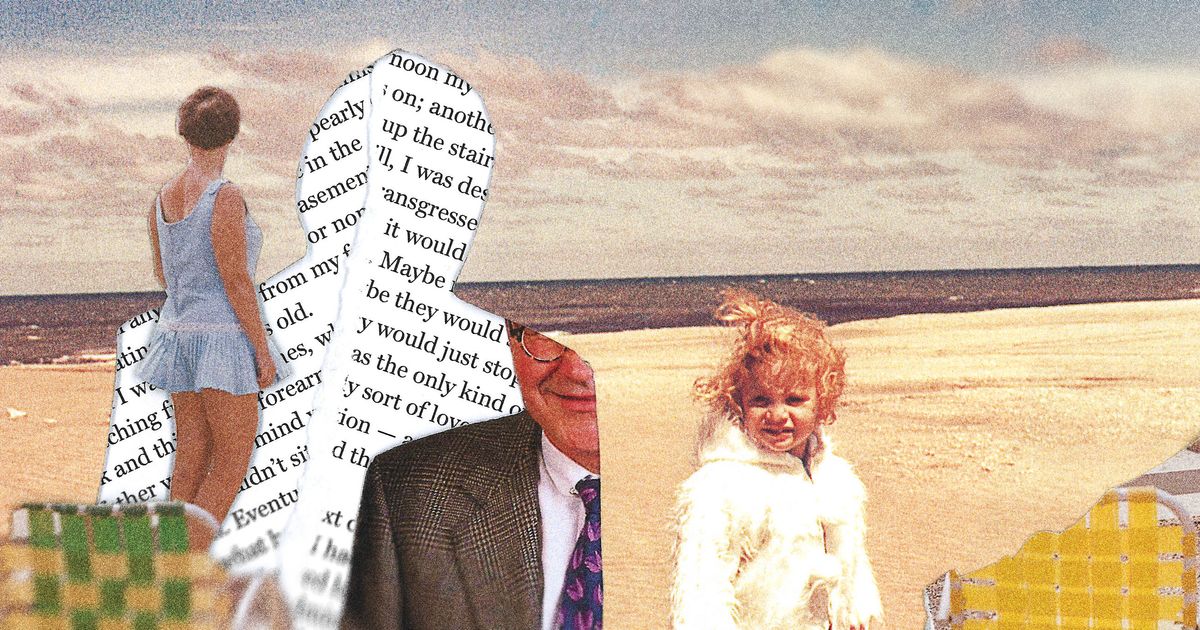 My own abusive mother and father were being replaced, and they knew it. My own abusive mother and father were being replaced, and they knew it. | |
Submitted at 05-02-2021, 05:20 PM by somedongus | |
 Utah Sen. Mitt Romney booed by the more than 1,900 Republican delegates who packed into the Maverik Center for the party’s state convention. Utah Sen. Mitt Romney booed by the more than 1,900 Republican delegates who packed into the Maverik Center for the party’s state convention. | |
Submitted at 05-02-2021, 03:39 PM by Xiphias | |
 The first major interview with one of the most revered comedy writers of all time. The first major interview with one of the most revered comedy writers of all time. | |
Submitted at 05-02-2021, 03:40 PM by somedongus | |
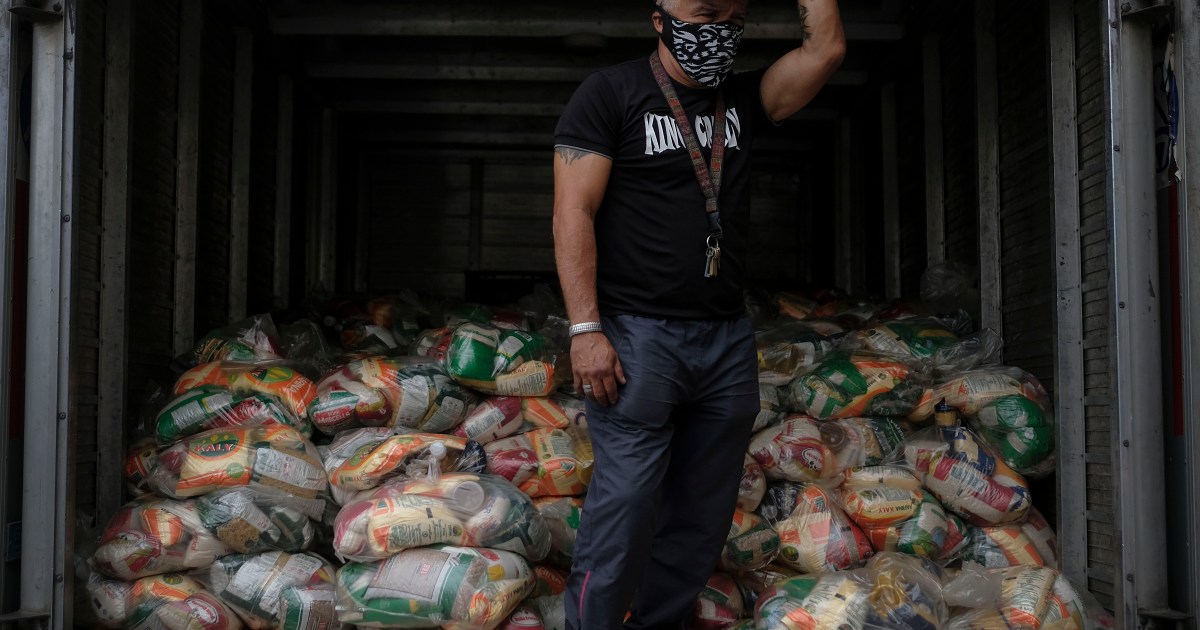 A new report finds that the US deployment of aid was aimed in part to unseat Venezuela’s President Nicolas Maduro. A new report finds that the US deployment of aid was aimed in part to unseat Venezuela’s President Nicolas Maduro. | |
Submitted at 05-02-2021, 03:38 PM by Xiphias | |
 The decision will stop any construction utilising money intended for the military. The decision will stop any construction utilising money intended for the military. | |
Submitted at 05-02-2021, 03:37 PM by Xiphias | |
 (Reuters) -The U.S. Supreme Court on Thursday offered new hope to thousands of long-term immigrants seeking to avoid deportation in a ruling that faulted the federal government for improperly notifying a man who came to the United States illegally from Guatemala to appear for a removal hearing. The justices, in a 6-3 decision that divided the high court's conservative bloc, overturned a lower court's decision that had prevented Agusto Niz-Chavez from pursuing his request to cancel the attempted expulsion based on the length of time he had lived in the United States. The justices decided that federal immigration law requires authorities to include all relevant details for a notice to appear for a hearing in one document rather than sending the information across multiple documents. (Reuters) -The U.S. Supreme Court on Thursday offered new hope to thousands of long-term immigrants seeking to avoid deportation in a ruling that faulted the federal government for improperly notifying a man who came to the United States illegally from Guatemala to appear for a removal hearing. The justices, in a 6-3 decision that divided the high court's conservative bloc, overturned a lower court's decision that had prevented Agusto Niz-Chavez from pursuing his request to cancel the attempted expulsion based on the length of time he had lived in the United States. The justices decided that federal immigration law requires authorities to include all relevant details for a notice to appear for a hearing in one document rather than sending the information across multiple documents. | |
Submitted at 05-02-2021, 03:36 PM by Xiphias | |