

| News | |||||||||||||||||||||||||||||||||||||||||||||||||||||||||||||||||||||||||||||||||||||||||||||||||||||||||||||||||||||||||||||||||||||||||||||||||||||||||||||||
 Mussels and fries may just be the perfect combo. Mussels and fries may just be the perfect combo. | |
Submitted at 07-15-2022, 02:22 PM by nocash | |
0 Comments | |
 “The only thing we are on Earth for is to reproduce,” patriarch Errol Musk has declared. “The only thing we are on Earth for is to reproduce,” patriarch Errol Musk has declared. | |
Submitted at 07-15-2022, 11:40 AM by John Holmes Boxxyfucker | |
 More than a century ago, the naturalist John Muir took President Theodore Roosevelt to camp beneath an ancient, gnarled tree in Yosemite National Park.
The tree, known as the Grizzly Giant, was more than 2,000 years old, stood more than 200 feet tall and spread branches that were several feet in diameter. Soon after, Roosevelt, who described the tree and its surrounding grove as a “temple,” extended federal protections for the park in the Sierra Nevada of California.
In the past several days, however, the Grizzly Giant has been threatened by the Washburn fire, which has torn through more than 3,700 acres of brush and timber in the southern part of the national park, and prompted evacuation orders for the tourist-driven community of Wawona, Calif.
“We have to go to the ends of the earth to protect this tree,” said Garrett Dickman, a forest ecologist with Yosemite National Park, who is helping to manage the efforts to protect the Mariposa Grove of Giant Sequoias, the largest and most popular of the park’s three clusters with more than 500 mature trees.
In a 15-month period between 2020 and 2021, an estimated 13 to 19 percent of the world’s population of sequoia trees were killed or mortally wounded, according to a report by the National Park Service. The number is especially staggering, scientists say, given how few died in the preceding centuries.
“The past couple years have been a real wake-up,” he added. “We never thought the giant sequoias would really burn.” More than a century ago, the naturalist John Muir took President Theodore Roosevelt to camp beneath an ancient, gnarled tree in Yosemite National Park.
The tree, known as the Grizzly Giant, was more than 2,000 years old, stood more than 200 feet tall and spread branches that were several feet in diameter. Soon after, Roosevelt, who described the tree and its surrounding grove as a “temple,” extended federal protections for the park in the Sierra Nevada of California.
In the past several days, however, the Grizzly Giant has been threatened by the Washburn fire, which has torn through more than 3,700 acres of brush and timber in the southern part of the national park, and prompted evacuation orders for the tourist-driven community of Wawona, Calif.
“We have to go to the ends of the earth to protect this tree,” said Garrett Dickman, a forest ecologist with Yosemite National Park, who is helping to manage the efforts to protect the Mariposa Grove of Giant Sequoias, the largest and most popular of the park’s three clusters with more than 500 mature trees.
In a 15-month period between 2020 and 2021, an estimated 13 to 19 percent of the world’s population of sequoia trees were killed or mortally wounded, according to a report by the National Park Service. The number is especially staggering, scientists say, given how few died in the preceding centuries.
“The past couple years have been a real wake-up,” he added. “We never thought the giant sequoias would really burn.” | |
Submitted at 07-15-2022, 02:42 AM by sleeppoor | |
 The GOP nominee for governor of Pennsylvania paid the far-right platform a $5,000 “consulting” fee. Now, new Gab accounts are automatically following him. The GOP nominee for governor of Pennsylvania paid the far-right platform a $5,000 “consulting” fee. Now, new Gab accounts are automatically following him. | |
Submitted at 07-15-2022, 02:38 AM by sleeppoor | |
 “Until leaders in the Democratic Party stand up and say this is unacceptable to take this money or any money like this, or until election laws are changed, the opportunity is there for a group like AIPAC to do this,” said Logan Bayroff, vice president of communications at J Street, the pro-Israel nonprofit group that advocates for diplomacy-based solutions. “We don’t know where it ends. I wouldn’t be surprised to find other Republican-aligned groups deciding to play in Democratic primaries going forward.”
AIPAC’s role in Democratic elections has changed drastically in just a handful of months. For many years, the group claimed to be a bipartisan entity, and didn’t officially endorse candidates. Until this election cycle, the group didn’t even have a super PAC; now, it’s on pace to spend nearly $20 million in the 2022 Democratic primary cycle alone, making it by far the most influential individual political group in Democratic electoral politics.
The group’s ability to influence the outcome of those Democratic races has drawn close attention from Republican mega-donors. In May, GOP billionaires Paul Singer and Bernie Marcus donated $1 million each to AIPAC’s super PAC. Marcus famously gave $7 million to President Trump’s campaign in 2016.
Crucially, AIPAC’s United Democracy Project super PAC has not been similarly active in Republican primaries, even in races where Republican candidates have been widely criticized for antisemitic comments. Representatives like Marjorie Taylor Greene, who infamously claimed that Jewish space lasers were behind California’s 2018 wildfires, has not faced any UDP-backed primary. “Have you seen them spend a dime in a Republican primary?” asked Bayroff. “What would a million dollars have done helping MTG’s primary challenger?”
AIPAC has, however, endorsed numerous Republicans in their general elections. Among that slate of endorsees are Elise Stefanik, Barry Loudermilk, and Scott Perry, who famously compared Democrats to Nazis. “Until leaders in the Democratic Party stand up and say this is unacceptable to take this money or any money like this, or until election laws are changed, the opportunity is there for a group like AIPAC to do this,” said Logan Bayroff, vice president of communications at J Street, the pro-Israel nonprofit group that advocates for diplomacy-based solutions. “We don’t know where it ends. I wouldn’t be surprised to find other Republican-aligned groups deciding to play in Democratic primaries going forward.”
AIPAC’s role in Democratic elections has changed drastically in just a handful of months. For many years, the group claimed to be a bipartisan entity, and didn’t officially endorse candidates. Until this election cycle, the group didn’t even have a super PAC; now, it’s on pace to spend nearly $20 million in the 2022 Democratic primary cycle alone, making it by far the most influential individual political group in Democratic electoral politics.
The group’s ability to influence the outcome of those Democratic races has drawn close attention from Republican mega-donors. In May, GOP billionaires Paul Singer and Bernie Marcus donated $1 million each to AIPAC’s super PAC. Marcus famously gave $7 million to President Trump’s campaign in 2016.
Crucially, AIPAC’s United Democracy Project super PAC has not been similarly active in Republican primaries, even in races where Republican candidates have been widely criticized for antisemitic comments. Representatives like Marjorie Taylor Greene, who infamously claimed that Jewish space lasers were behind California’s 2018 wildfires, has not faced any UDP-backed primary. “Have you seen them spend a dime in a Republican primary?” asked Bayroff. “What would a million dollars have done helping MTG’s primary challenger?”
AIPAC has, however, endorsed numerous Republicans in their general elections. Among that slate of endorsees are Elise Stefanik, Barry Loudermilk, and Scott Perry, who famously compared Democrats to Nazis. | |
Submitted at 07-15-2022, 02:38 AM by sleeppoor | |
/cloudfront-us-east-1.images.arcpublishing.com/tgam/2HWWDAX4BBKCLIQV7OKZTBOJWI.jpg) Unfortunately, the Weeknd’s hometown concert – the first on his highly anticipated After Hours Til Dawn tour – was called off at the last minute because of the widespread Rogers network outage that day. The tour is set to open in Philadelphia on Thursday.
“I don’t blame the Weeknd for the postponement,” Ms. Turcot says. “I blame Rogers.”
She’s not alone, of course. The disruption of the telecom giant’s internet and cellular service created outrage and chaos for businesses and individuals around the country. At Rogers Centre – the domed stadium that bears the company’s name and colours – the network failure had an impact on critical venue operations, including security, point-of-sale functions and ticket processing.
The concert’s promoter, Live Nation, said it was impossible to even open the doors to the venue. Unfortunately, the Weeknd’s hometown concert – the first on his highly anticipated After Hours Til Dawn tour – was called off at the last minute because of the widespread Rogers network outage that day. The tour is set to open in Philadelphia on Thursday.
“I don’t blame the Weeknd for the postponement,” Ms. Turcot says. “I blame Rogers.”
She’s not alone, of course. The disruption of the telecom giant’s internet and cellular service created outrage and chaos for businesses and individuals around the country. At Rogers Centre – the domed stadium that bears the company’s name and colours – the network failure had an impact on critical venue operations, including security, point-of-sale functions and ticket processing.
The concert’s promoter, Live Nation, said it was impossible to even open the doors to the venue. | |
Submitted at 07-15-2022, 02:28 AM by sleeppoor | |
 With the Supreme Court overturning Roe v. Wade last month, the architect of a controversial Texas abortion law has already aimed at marriage equality, and his next target could leave Texans without access to lifesaving preventive care.
Jonathan Mitchell, the former solicitor general who helped write Senate Bill 8, the restrictive abortion law, opened a private law firm in Texas in 2018 to go after decades of the High Court's rulings, according to The Dallas Morning News.
Since the beginning of his career, Mitchell has been vocal about his desire to dismantle decades of decisions he believes depart from the Constitution’s language or recognize constitutional rights that do not have a textual foundation. Due to the Supreme Court’s continued shift in his direction, his cases will likely serve as a bellwether of the country’s legal system.
As the architect of Senate Bill 8, which makes everyday Texas citizens abortion bounty hunters, Mitchell, who once clerked under Justice Antonin Scalia, has spent years advocating for the Supreme Court to reverse Roe vs. Wade. His legal theories and court cases laid the groundwork for the ruling to fall.
In the four years since opening a one-person firm in Austin, Mitchell has litigated on a wide range of issues, including affirmative action, marriage equality, and contraception mandates.
Mitchell now has set his sights on Descovy and Truvada, two medications that help prevent HIV transmission when taken as PrEP, or pre-exposure prophylaxis, because those medications enable homosexual behavior, the suit states. With the Supreme Court overturning Roe v. Wade last month, the architect of a controversial Texas abortion law has already aimed at marriage equality, and his next target could leave Texans without access to lifesaving preventive care.
Jonathan Mitchell, the former solicitor general who helped write Senate Bill 8, the restrictive abortion law, opened a private law firm in Texas in 2018 to go after decades of the High Court's rulings, according to The Dallas Morning News.
Since the beginning of his career, Mitchell has been vocal about his desire to dismantle decades of decisions he believes depart from the Constitution’s language or recognize constitutional rights that do not have a textual foundation. Due to the Supreme Court’s continued shift in his direction, his cases will likely serve as a bellwether of the country’s legal system.
As the architect of Senate Bill 8, which makes everyday Texas citizens abortion bounty hunters, Mitchell, who once clerked under Justice Antonin Scalia, has spent years advocating for the Supreme Court to reverse Roe vs. Wade. His legal theories and court cases laid the groundwork for the ruling to fall.
In the four years since opening a one-person firm in Austin, Mitchell has litigated on a wide range of issues, including affirmative action, marriage equality, and contraception mandates.
Mitchell now has set his sights on Descovy and Truvada, two medications that help prevent HIV transmission when taken as PrEP, or pre-exposure prophylaxis, because those medications enable homosexual behavior, the suit states. | |
Submitted at 07-15-2022, 02:23 AM by sleeppoor | |
 Former Empire actor and red carpet scientist Terrence Howard gave an address in Uganda this week, in which he claimed “I was able to identify the grand unified field equation they've been looking for, and put it into geometry." This, Howard asserted, had led to him developing “a new hydrogen technology” that the country could use to defend itself. Howard, who studied engineering at Pratt but did not complete his degree, has a history of making bold if somewhat muddled scientific claims.
Howard, who has done marketing videos for a controversial ayahuasca retreat in Costa Rica, quit acting after Empire, then came out of retirement the following year for a TV project. He went mildly viral in 2019 for saying on the Emmys red carpet—in response to a totally unrelated question about his retirement from acting—that he had, in his words, “made some discoveries in my own personal life with the science that, y’know, Pythagoras was searching for.” Some of his discoveries are laid out on a website dedicated to proving that one times one equals two. Former Empire actor and red carpet scientist Terrence Howard gave an address in Uganda this week, in which he claimed “I was able to identify the grand unified field equation they've been looking for, and put it into geometry." This, Howard asserted, had led to him developing “a new hydrogen technology” that the country could use to defend itself. Howard, who studied engineering at Pratt but did not complete his degree, has a history of making bold if somewhat muddled scientific claims.
Howard, who has done marketing videos for a controversial ayahuasca retreat in Costa Rica, quit acting after Empire, then came out of retirement the following year for a TV project. He went mildly viral in 2019 for saying on the Emmys red carpet—in response to a totally unrelated question about his retirement from acting—that he had, in his words, “made some discoveries in my own personal life with the science that, y’know, Pythagoras was searching for.” Some of his discoveries are laid out on a website dedicated to proving that one times one equals two. | |
Submitted at 07-14-2022, 07:07 PM by Wreckard | |
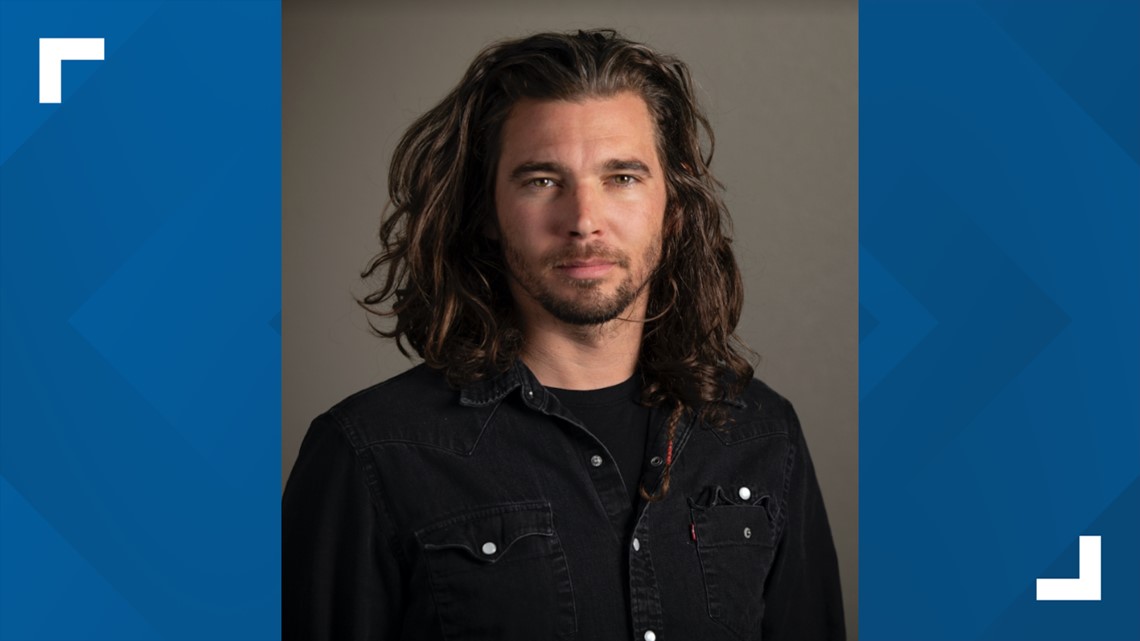 King, who was the company's creative director, died unexpectedly July 9, according to Meow Wolf. King, who was the company's creative director, died unexpectedly July 9, according to Meow Wolf. | |
Submitted at 07-14-2022, 05:51 PM by sleeppoor | |
 When I was 9, my family went on a long, strange road trip. Our destination was Walt Disney World, in Orlando, Fla., and the cost of admission was a lie.
It was April of 1989, and my parents said the trip couldn’t wait until summer break. As the oldest of three children, I had the job of excusing our prolonged absence by telling our school we were headed to a family funeral. I remember being touched by my teachers’ condolences, which struck me as genuine, even if the funeral was not.
Staring down the American landscape from the back seat of a rented car, I pondered the logic and suddenness of our trip. We were very poor and had never been on vacation, much less traveled to an amusement park resort. Then there was the decision to drive cross-country to Florida, which hardly seemed practical for a family living on a small island in southeastern Alaska. My stepdad was miserable by the time we crossed the Rockies, and I couldn’t help wondering why he hadn’t chosen to make the much shorter drive to Disneyland, in California. None of it made any sense at all until our last night in Florida, when I woke up to use the bathroom after a long, soda-fueled day of exploring the Magic Kingdom. Stumbling through our cheap hotel room, I saw my stepdad packing a suitcase with bricks of cocaine — something the television program “Miami Vice” had taught me to recognize.
Aside from some new furniture, our lives didn’t improve in any material way because of my stepdad’s working vacation. We remained poor. But for weeks after we got home from Florida, I was mindful of the person I was now supposed to be: a boy touched by tragedy, still grieving for some lost relative. I was mindful, too, of what could happen to my stepdad if my lies unraveled.
By then, I was familiar with the kinds of stories poor people must get used to telling. I’d heard my mom swear that the rent check was already in the mail while watching her slip it into an envelope. I knew when she’d passed bad checks because the owner of the corner store taped them to the back of the cash register until the debt was paid. And I’d read the notes outlining invented reasons I couldn’t attend school whenever there were field trips that cost money we didn’t have.
If I ever thought of these as lies, I soon came to see them as part of the etiquette of poverty — a means of getting by for the poor and also a gift we give to the rich, a practice that lets us avoid talking about the uncomfortable differences between us. Over time, it becomes second nature. Observing this etiquette doesn’t feel dishonest because its falsehoods recognize the deeper truth that many of society’s institutions are hostile to the poor. Lying to the landlord keeps a roof over our heads. Lying to the social worker keeps our family together. Lying to ourselves allows us to believe it’s all going to be OK, somehow, someday. When I was 9, my family went on a long, strange road trip. Our destination was Walt Disney World, in Orlando, Fla., and the cost of admission was a lie.
It was April of 1989, and my parents said the trip couldn’t wait until summer break. As the oldest of three children, I had the job of excusing our prolonged absence by telling our school we were headed to a family funeral. I remember being touched by my teachers’ condolences, which struck me as genuine, even if the funeral was not.
Staring down the American landscape from the back seat of a rented car, I pondered the logic and suddenness of our trip. We were very poor and had never been on vacation, much less traveled to an amusement park resort. Then there was the decision to drive cross-country to Florida, which hardly seemed practical for a family living on a small island in southeastern Alaska. My stepdad was miserable by the time we crossed the Rockies, and I couldn’t help wondering why he hadn’t chosen to make the much shorter drive to Disneyland, in California. None of it made any sense at all until our last night in Florida, when I woke up to use the bathroom after a long, soda-fueled day of exploring the Magic Kingdom. Stumbling through our cheap hotel room, I saw my stepdad packing a suitcase with bricks of cocaine — something the television program “Miami Vice” had taught me to recognize.
Aside from some new furniture, our lives didn’t improve in any material way because of my stepdad’s working vacation. We remained poor. But for weeks after we got home from Florida, I was mindful of the person I was now supposed to be: a boy touched by tragedy, still grieving for some lost relative. I was mindful, too, of what could happen to my stepdad if my lies unraveled.
By then, I was familiar with the kinds of stories poor people must get used to telling. I’d heard my mom swear that the rent check was already in the mail while watching her slip it into an envelope. I knew when she’d passed bad checks because the owner of the corner store taped them to the back of the cash register until the debt was paid. And I’d read the notes outlining invented reasons I couldn’t attend school whenever there were field trips that cost money we didn’t have.
If I ever thought of these as lies, I soon came to see them as part of the etiquette of poverty — a means of getting by for the poor and also a gift we give to the rich, a practice that lets us avoid talking about the uncomfortable differences between us. Over time, it becomes second nature. Observing this etiquette doesn’t feel dishonest because its falsehoods recognize the deeper truth that many of society’s institutions are hostile to the poor. Lying to the landlord keeps a roof over our heads. Lying to the social worker keeps our family together. Lying to ourselves allows us to believe it’s all going to be OK, somehow, someday. | |
Submitted at 07-14-2022, 05:35 PM by sleeppoor | |
 X-rays reveal artist’s face with hat and neckerchief on canvas in National Galleries of Scotland collection X-rays reveal artist’s face with hat and neckerchief on canvas in National Galleries of Scotland collection | |
Submitted at 07-14-2022, 05:27 PM by sleeppoor | |
 In my third year of reporting on the coronavirus pandemic, I find woodpeckers, which can ram their heads against hard surfaces about 20 times a second, to be incredibly relatable. But the birds’ extraordinary behavior raises an obvious question: Why, as one team of scientists wrote in 1976, is the countryside “not littered with dazed and dying woodpeckers”?
The just-as-obvious answer is that woodpecker skulls have adaptations, such as spongy bone in the front of their skulls, that absorb or dissipate the shocks from their pecks, protecting their squishy brains. This explanation features in books, news articles, zoo displays, and scientific papers. “You can’t avoid it,” Sam Van Wassenbergh, a biologist at the University of Antwerp, told me. It’s so accepted that some scientists have tried to work out exactly which parts of the skull absorb shocks, while others have designed helmets and other protective technology inspired by the birds. There’s just one problem: As Van Wassenbergh and his colleagues have now shown, woodpecker heads don’t absorb shocks at all.
Although the shock-absorption idea seems superficially sound, “the more you think about it, the less sense it makes,” Van Wassenbergh said. Woodpeckers peck trees to send messages, dig out hidden insects, and excavate nesting holes; many of their body parts—strong beaks, grasping feet, and stiff, strut-like tails—have evolved to maximize the kinetic energy they deliver with each blow. If their skulls absorbed that energy, they’d just need to pound harder, which would negate any benefits from the absorption. If what you need is a hammer, why strap a cushion onto its head?
To check his suspicions, Van Wassenbergh and his colleagues filmed three woodpecker species as they hammered into wood, using high-speed cameras that could capture 4,000 frames every second. The team then analyzed every frame to see how parts of the birds’ head move relative to one another. If the skull really was absorbing shocks, then upon each peck, the brain should decelerate far less than the beak—just as when a car hits a bump, its body jerks less than its wheels do. But the videos revealed that, in fact, when a woodpecker pecks wood, its entire head, including the brain, comes to a stop at the same rate. (The team used the position of the eye as a proxy for the front of the brain, because the two are jammed closely together in woodpeckers, with little room for movement.) “That really lays to rest the idea that some part of the head is acting as a shock absorber,” Margaret Rubega, an ornithologist at the University of Connecticut who wasn’t involved in the study, told me. In my third year of reporting on the coronavirus pandemic, I find woodpeckers, which can ram their heads against hard surfaces about 20 times a second, to be incredibly relatable. But the birds’ extraordinary behavior raises an obvious question: Why, as one team of scientists wrote in 1976, is the countryside “not littered with dazed and dying woodpeckers”?
The just-as-obvious answer is that woodpecker skulls have adaptations, such as spongy bone in the front of their skulls, that absorb or dissipate the shocks from their pecks, protecting their squishy brains. This explanation features in books, news articles, zoo displays, and scientific papers. “You can’t avoid it,” Sam Van Wassenbergh, a biologist at the University of Antwerp, told me. It’s so accepted that some scientists have tried to work out exactly which parts of the skull absorb shocks, while others have designed helmets and other protective technology inspired by the birds. There’s just one problem: As Van Wassenbergh and his colleagues have now shown, woodpecker heads don’t absorb shocks at all.
Although the shock-absorption idea seems superficially sound, “the more you think about it, the less sense it makes,” Van Wassenbergh said. Woodpeckers peck trees to send messages, dig out hidden insects, and excavate nesting holes; many of their body parts—strong beaks, grasping feet, and stiff, strut-like tails—have evolved to maximize the kinetic energy they deliver with each blow. If their skulls absorbed that energy, they’d just need to pound harder, which would negate any benefits from the absorption. If what you need is a hammer, why strap a cushion onto its head?
To check his suspicions, Van Wassenbergh and his colleagues filmed three woodpecker species as they hammered into wood, using high-speed cameras that could capture 4,000 frames every second. The team then analyzed every frame to see how parts of the birds’ head move relative to one another. If the skull really was absorbing shocks, then upon each peck, the brain should decelerate far less than the beak—just as when a car hits a bump, its body jerks less than its wheels do. But the videos revealed that, in fact, when a woodpecker pecks wood, its entire head, including the brain, comes to a stop at the same rate. (The team used the position of the eye as a proxy for the front of the brain, because the two are jammed closely together in woodpeckers, with little room for movement.) “That really lays to rest the idea that some part of the head is acting as a shock absorber,” Margaret Rubega, an ornithologist at the University of Connecticut who wasn’t involved in the study, told me. | |
Submitted at 07-14-2022, 03:48 PM by sleeppoor | |
 “By geographically, demographically and physically engineering space, the regime enables Jews to live in a contiguous area with full rights, including self-determination, while Palestinians live in separate units and enjoy fewer rights,” the group said.
“This qualifies as an apartheid regime, although Israel is commonly viewed as a democracy upholding a temporary occupation,” it added.
Soon after, in April last year, Human Rights Watch presented its own landmark 213-page report which came to the same conclusion. The rights group found that Israeli authorities are “committing the crimes against humanity of apartheid and persecution”. “By geographically, demographically and physically engineering space, the regime enables Jews to live in a contiguous area with full rights, including self-determination, while Palestinians live in separate units and enjoy fewer rights,” the group said.
“This qualifies as an apartheid regime, although Israel is commonly viewed as a democracy upholding a temporary occupation,” it added.
Soon after, in April last year, Human Rights Watch presented its own landmark 213-page report which came to the same conclusion. The rights group found that Israeli authorities are “committing the crimes against humanity of apartheid and persecution”. | |
Submitted at 07-14-2022, 02:14 PM by Nibbles | |
 When Chelsea Robinson saw the video of her father’s arrest, she was taken aback.
“It broke my heart,” Robinson said. “He was just standing there, not doing anything.”
It was April 10 of last year, and Hughie Robinson, who was 52 at the time, had just finished a four-day stint at Barnes-Jewish Hospital. He was a kidney patient, suffering from stage 4 renal failure.
On April 7, he got good news: he was second in line for a possible kidney transplant. So on that day, he drove to the hospital and parked in the garage where he normally parked, on Kingshighway near Interstate 64 (Highway 40). He was in the hospital for four days, in a weakened state, drugged and prepared for the transplant that never came.
Robinson looked for his Buick and couldn’t find it. He asked for help at the main desk. He looked again to no avail, this time with the help of a security guard. Eventually, while he was wandering the garage looking for his car, he caught the attention of other Barnes-Jewish security guards.
The guards apparently suspected that Robinson was casing the garage, looking to steal cars. They never asked him for the parking garage ticket he had in his pocket. They didn’t notice that he was wearing a patient bracelet, from his just completed four-day stay.
“While Hughie was continuing to look for his Buick, several of Defendant’s security guards, including the guard who had earlier been assigned to help Hughie locate his car, approached Hughie. Hughie asked, ‘What did I do?’ The guards did not answer. Instead, one guard grabbed Hughie’s shoulder and arm forcefully, in the spot where Hughie’s arm was tender from the port. Another of Defendant’s guards tackled Hughie. Both guards began to beat him. A third guard then jumped on top of Hughie. Hughie cried out that the guards were hurting him. At least one of the guards responded, ‘Good.’ The guards then forced Hughie into a pair of handcuffs. All of this was on video.” When Chelsea Robinson saw the video of her father’s arrest, she was taken aback.
“It broke my heart,” Robinson said. “He was just standing there, not doing anything.”
It was April 10 of last year, and Hughie Robinson, who was 52 at the time, had just finished a four-day stint at Barnes-Jewish Hospital. He was a kidney patient, suffering from stage 4 renal failure.
On April 7, he got good news: he was second in line for a possible kidney transplant. So on that day, he drove to the hospital and parked in the garage where he normally parked, on Kingshighway near Interstate 64 (Highway 40). He was in the hospital for four days, in a weakened state, drugged and prepared for the transplant that never came.
Robinson looked for his Buick and couldn’t find it. He asked for help at the main desk. He looked again to no avail, this time with the help of a security guard. Eventually, while he was wandering the garage looking for his car, he caught the attention of other Barnes-Jewish security guards.
The guards apparently suspected that Robinson was casing the garage, looking to steal cars. They never asked him for the parking garage ticket he had in his pocket. They didn’t notice that he was wearing a patient bracelet, from his just completed four-day stay.
“While Hughie was continuing to look for his Buick, several of Defendant’s security guards, including the guard who had earlier been assigned to help Hughie locate his car, approached Hughie. Hughie asked, ‘What did I do?’ The guards did not answer. Instead, one guard grabbed Hughie’s shoulder and arm forcefully, in the spot where Hughie’s arm was tender from the port. Another of Defendant’s guards tackled Hughie. Both guards began to beat him. A third guard then jumped on top of Hughie. Hughie cried out that the guards were hurting him. At least one of the guards responded, ‘Good.’ The guards then forced Hughie into a pair of handcuffs. All of this was on video.”
| |
Submitted at 07-14-2022, 05:43 AM by sleeppoor | |
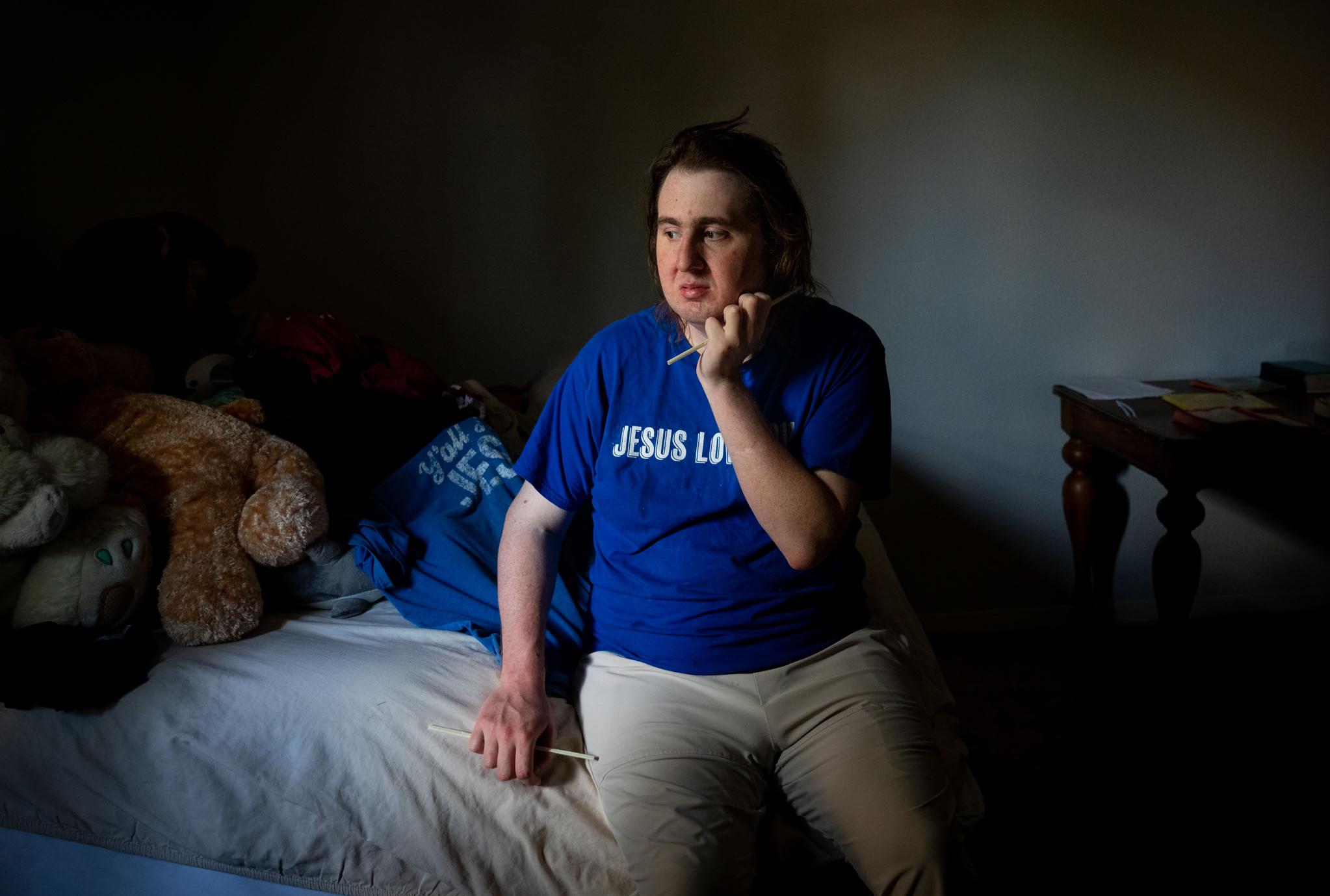 When Charles Brown first called The Harris Center to get treatment for his autistic son, Barack Obama was in his first term as president.
They told him Chase, who was 18 at the time, would have to go on a waitlist.
When he called back the next year, they said the same thing — it might be 10 years before he could get services such as employment training, residential care and behavioral support which are funded by the state and Medicaid. It might even be 15.
It’s been 11 years. Chase still is years from getting help.
“He joined the list … when he got out of high school,” Lisa Brown, Chase’s mother, said, struggling to mask her frustration on a recent call to the center. “Do you have an estimate of, like, when he might qualify?”
The representative with the center, Harris County’s point of entry for publicly funded intellectual and developmental disability services, said they had no idea — without more government funding, there’s not much they can do.
They’d call her in another two years with an update.
Brown hung up the phone, resigned. Her thoughts raced to Chase, who at 29 couldn’t get a job or drive; couldn’t manage his own money or keep his outbursts at bay.
Chase’s father died almost five years ago. And she isn’t getting any younger. When Charles Brown first called The Harris Center to get treatment for his autistic son, Barack Obama was in his first term as president.
They told him Chase, who was 18 at the time, would have to go on a waitlist.
When he called back the next year, they said the same thing — it might be 10 years before he could get services such as employment training, residential care and behavioral support which are funded by the state and Medicaid. It might even be 15.
It’s been 11 years. Chase still is years from getting help.
“He joined the list … when he got out of high school,” Lisa Brown, Chase’s mother, said, struggling to mask her frustration on a recent call to the center. “Do you have an estimate of, like, when he might qualify?”
The representative with the center, Harris County’s point of entry for publicly funded intellectual and developmental disability services, said they had no idea — without more government funding, there’s not much they can do.
They’d call her in another two years with an update.
Brown hung up the phone, resigned. Her thoughts raced to Chase, who at 29 couldn’t get a job or drive; couldn’t manage his own money or keep his outbursts at bay.
Chase’s father died almost five years ago. And she isn’t getting any younger. | |
Submitted at 07-14-2022, 05:13 AM by sleeppoor | |
 In the days following a deadly SWAT raid on a house that burned down in Albuquerque’s International District, police and local media repeatedly said that the man they were trying to arrest that night was wanted on a federal warrant.
The morning after the incident, Police Chief Harold Medina said at a news conference that the Department’s Investigative Support Unit (ISU) was searching for Qiaunt Kelley who “had some felony warrants, one from the state level, one from the federal level.”
Later in the same news conference, a lieutenant said they had found “two active warrants for Mr. Kelley” in an internal police database, one for a “federal probation violation for carjacking” and another for “unlawful taking of a motor vehicle out of the city of Santa Fe.”
Over the course of the next three days, local media including the Albuquerque Journal, KRQE and KOB uncritically repeated this false information.
However, a search of federal court records over the past month by Source New Mexico shows no federal warrant issued against Kelley or any property associated with him.
There were no federal warrants for Kelley in N.M. when SWAT was called out to the house Kelley was visiting on July 6, a spokesperson for the U.S. Attorney’s Office said Tuesday.
“In the district of New Mexico, there were no federal warrants at that time,” said Scott Howell, spokesperson for the N.M. District Office.
On Monday, the Journal, again citing police, reported that Kelley was wanted “on felony warrants.” That is also not true.
In reality, New Mexico Corrections Department Probation and Parole Division Director Melanie Martinez on March 21 signed a warrant for Kelley’s arrest, saying he violated five conditions of his parole. In the days following a deadly SWAT raid on a house that burned down in Albuquerque’s International District, police and local media repeatedly said that the man they were trying to arrest that night was wanted on a federal warrant.
The morning after the incident, Police Chief Harold Medina said at a news conference that the Department’s Investigative Support Unit (ISU) was searching for Qiaunt Kelley who “had some felony warrants, one from the state level, one from the federal level.”
Later in the same news conference, a lieutenant said they had found “two active warrants for Mr. Kelley” in an internal police database, one for a “federal probation violation for carjacking” and another for “unlawful taking of a motor vehicle out of the city of Santa Fe.”
Over the course of the next three days, local media including the Albuquerque Journal, KRQE and KOB uncritically repeated this false information.
However, a search of federal court records over the past month by Source New Mexico shows no federal warrant issued against Kelley or any property associated with him.
There were no federal warrants for Kelley in N.M. when SWAT was called out to the house Kelley was visiting on July 6, a spokesperson for the U.S. Attorney’s Office said Tuesday.
“In the district of New Mexico, there were no federal warrants at that time,” said Scott Howell, spokesperson for the N.M. District Office.
On Monday, the Journal, again citing police, reported that Kelley was wanted “on felony warrants.” That is also not true.
In reality, New Mexico Corrections Department Probation and Parole Division Director Melanie Martinez on March 21 signed a warrant for Kelley’s arrest, saying he violated five conditions of his parole. | |
Submitted at 07-14-2022, 01:14 AM by sleeppoor | |
 House appropriators voted Friday to extend a Trump-era border policy, adding a six-month extension of Title 42 to the Department of Homeland Security Budget.
The amendment, sponsored by Rep. Dan Newhouse (R-Wash.), was passed by voice vote, leaving unclear which Democrats voted in support of the effort.
Title 42 contravenes asylum law, allowing border officials to rapidly expel migrants without allowing them to seek protection in the U.S.
The Biden administration continued the policy during the first year of its administration but moved in April to rescind the policy. The Centers for Disease Control and Prevention (CDC) determined the pandemic conditions that Trump used to justify his emergency order were no longer necessary as the U.S. learns to live with COVID-19. House appropriators voted Friday to extend a Trump-era border policy, adding a six-month extension of Title 42 to the Department of Homeland Security Budget.
The amendment, sponsored by Rep. Dan Newhouse (R-Wash.), was passed by voice vote, leaving unclear which Democrats voted in support of the effort.
Title 42 contravenes asylum law, allowing border officials to rapidly expel migrants without allowing them to seek protection in the U.S.
The Biden administration continued the policy during the first year of its administration but moved in April to rescind the policy. The Centers for Disease Control and Prevention (CDC) determined the pandemic conditions that Trump used to justify his emergency order were no longer necessary as the U.S. learns to live with COVID-19.
| |
Submitted at 07-14-2022, 01:10 AM by sleeppoor | |
 Park officials believe the Higgins landing craft that has recently surfaced is a World War II surplus vessel that was put into service at the lake before it sank. Park officials believe the Higgins landing craft that has recently surfaced is a World War II surplus vessel that was put into service at the lake before it sank. | |
Submitted at 07-13-2022, 11:22 PM by John Holmes Boxxyfucker | |
Submitted at 07-13-2022, 09:48 PM by Dreaded Candiru | |
:format(url)/cloudfront-us-east-1.images.arcpublishing.com/baltimorebanner/6RVW4THX3RAJPEZTI734UEMXZQ.jpg) A Baltimore Police officer has been arrested and charged with conspiring with a motorcycle club to sell drugs and providing its president with a ghost gun, according to a federal complaint unsealed Wednesday.
Steven Angelini, 41, an officer since 2006, was arrested Wednesday morning in Baltimore County, where he was set to stand trial for an unrelated theft case involving items allegedly taken from a grocery store self-checkout. Angelini was charged in the case in September. A Baltimore Police officer has been arrested and charged with conspiring with a motorcycle club to sell drugs and providing its president with a ghost gun, according to a federal complaint unsealed Wednesday.
Steven Angelini, 41, an officer since 2006, was arrested Wednesday morning in Baltimore County, where he was set to stand trial for an unrelated theft case involving items allegedly taken from a grocery store self-checkout. Angelini was charged in the case in September. | |
Submitted at 07-13-2022, 07:02 PM by sleeppoor | |