

| News | |||||||||||||||||||||||||||||||||||||||||||||||||||||||||||||||||||||||||||||||||||||||||||||||||||||||||||||||||||||||||||||||||||||||||||||||||||||||||||||||
 Thirty-seven minutes after my emails went out, I received a chipper response from the captain of the Shipley team for the 1994-95 season, Niels Pennings: "I would be happy to discuss this event as I am the person who threw the basketball." Thirty-seven minutes after my emails went out, I received a chipper response from the captain of the Shipley team for the 1994-95 season, Niels Pennings: "I would be happy to discuss this event as I am the person who threw the basketball." | |
Submitted at 08-02-2022, 02:40 PM by nocash | |
0 Comments | |
 EXCLUSIVE: A 1980s pop culture mainstay is plotting a comeback. AMC Networks is developing a Max Headroom drama series reboot, with Matt Frewer set to reprise his role as the world’s first ar… EXCLUSIVE: A 1980s pop culture mainstay is plotting a comeback. AMC Networks is developing a Max Headroom drama series reboot, with Matt Frewer set to reprise his role as the world’s first ar… | |
Submitted at 08-02-2022, 02:34 PM by nocash | |
 Like Obama with Osama bin Laden, Biden did not portray Zawahiri's death as an end to the War on Terror, but instead as a kind of a kind of proof of concept. But what did it prove, and what is the concept?
IN REIGN OF TERROR: HOW THE 9/11 ERA DESTABILIZED AMERICA AND PRODUCED TRUMP, I contend that President Obama made a substantial mistake by not declaring the War on Terror concluded after U.S. Navy SEALs slew Osama bin Laden in 2011. There was never a better chance to decisively declare 9/11 avenged and the emergency powers granted to the presidency during the construction of the War on Terror due for rollback. That simply was not an approach the Obama administration was interested in, and ending the War on Terror, as I report in the book, was never a serious consideration.
On Saturday in Kabul, a CIA drone strike killed Ayman al-Zawahiri, offering another convincingly symbolic opportunity to dismantle the War on Terror. Zawahiri was bin Laden's successor. By most accounts, he was the driving ideological force within al-Qaeda. Zawahiri was the last substantial figure within al-Qaeda on 9/11—sorry to Saif al-Adel, but you're comparatively obscure—to remain at large. While there's no substitute for the missed bin Laden opportunity, there is a plausible enough argument that killing Zawahiri is a final piece in avenging 9/11.
The Biden administration, like its nearest Democratic predecessor, and like its Republican predecessor after the slaying of ISIS leader Abu Bakr al-Baghdadi, was not interested on Monday in making that argument.
Shortly before President Biden gave brief remarks about the killing, I joined a reporters' background briefing with someone I agreed to identify as a senior administration official. The purpose of these briefings is to present the administration's narrative of the operation. There's value to joining those briefings once you keep in mind that very often, what's said in them gets contradicted by later accounts and revelations. Accordingly, I want to not get too wrapped up in the details presented by the Biden administration. You can read about those specific assertions in all the other press coverage. We will learn in the coming days whether or not the administration is accurately presenting the strike as killing Zawahiri and no one else; and so forth. Like Obama with Osama bin Laden, Biden did not portray Zawahiri's death as an end to the War on Terror, but instead as a kind of a kind of proof of concept. But what did it prove, and what is the concept?
IN REIGN OF TERROR: HOW THE 9/11 ERA DESTABILIZED AMERICA AND PRODUCED TRUMP, I contend that President Obama made a substantial mistake by not declaring the War on Terror concluded after U.S. Navy SEALs slew Osama bin Laden in 2011. There was never a better chance to decisively declare 9/11 avenged and the emergency powers granted to the presidency during the construction of the War on Terror due for rollback. That simply was not an approach the Obama administration was interested in, and ending the War on Terror, as I report in the book, was never a serious consideration.
On Saturday in Kabul, a CIA drone strike killed Ayman al-Zawahiri, offering another convincingly symbolic opportunity to dismantle the War on Terror. Zawahiri was bin Laden's successor. By most accounts, he was the driving ideological force within al-Qaeda. Zawahiri was the last substantial figure within al-Qaeda on 9/11—sorry to Saif al-Adel, but you're comparatively obscure—to remain at large. While there's no substitute for the missed bin Laden opportunity, there is a plausible enough argument that killing Zawahiri is a final piece in avenging 9/11.
The Biden administration, like its nearest Democratic predecessor, and like its Republican predecessor after the slaying of ISIS leader Abu Bakr al-Baghdadi, was not interested on Monday in making that argument.
Shortly before President Biden gave brief remarks about the killing, I joined a reporters' background briefing with someone I agreed to identify as a senior administration official. The purpose of these briefings is to present the administration's narrative of the operation. There's value to joining those briefings once you keep in mind that very often, what's said in them gets contradicted by later accounts and revelations. Accordingly, I want to not get too wrapped up in the details presented by the Biden administration. You can read about those specific assertions in all the other press coverage. We will learn in the coming days whether or not the administration is accurately presenting the strike as killing Zawahiri and no one else; and so forth. | |
Submitted at 08-02-2022, 05:25 AM by sleeppoor | |
:quality(70)/cloudfront-us-east-1.images.arcpublishing.com/cmg/GI2PMIRICVHRHFXBAYBRVQS7ZQ.jpg) Authorities in Dallas are investigating the bizarre death of a man whom they believe died after being struck by a bullet he fired at a woman Saturday morning. Authorities in Dallas are investigating the bizarre death of a man whom they believe died after being struck by a bullet he fired at a woman Saturday morning. | |
Submitted at 08-01-2022, 05:43 PM by sleeppoor | |
 (no they fucking didn't) (no they fucking didn't) | |
Submitted at 08-01-2022, 12:47 AM by A Fistful Of Double Downs | |
 Worn out useless document: let it burn Worn out useless document: let it burn | |
Submitted at 07-31-2022, 06:20 PM by Nibbles | |
 Now, millions of people may be sidelined from their jobs due to long COVID. Katie Bach, a senior fellow with the Brookings Institution, drew on survey data from the Census Bureau, the Federal Reserve Bank of Minneapolis and the Lancet to come up with what she says is a conservative estimate: 4 million full-time equivalent workers out of work because of long COVID. Now, millions of people may be sidelined from their jobs due to long COVID. Katie Bach, a senior fellow with the Brookings Institution, drew on survey data from the Census Bureau, the Federal Reserve Bank of Minneapolis and the Lancet to come up with what she says is a conservative estimate: 4 million full-time equivalent workers out of work because of long COVID. | |
Submitted at 07-31-2022, 05:12 PM by Nibbles | |
 Spain’s Law of Democratic Memory would condemn the regime of Francisco Franco and create a national DNA bank to help search for the disappeared. Spain’s Law of Democratic Memory would condemn the regime of Francisco Franco and create a national DNA bank to help search for the disappeared. | |
Submitted at 07-30-2022, 09:51 PM by sleeppoor | |
 This map shows you how far you can travel from each station in Europe in less than 5 hours. It is inspired by the great Direkt Bahn Guru. The data is based off of this site, which sources it from the Deutsch Bahn. This map shows you how far you can travel from each station in Europe in less than 5 hours. It is inspired by the great Direkt Bahn Guru. The data is based off of this site, which sources it from the Deutsch Bahn. | |
Submitted at 07-30-2022, 08:09 PM by sleeppoor | |
 In many cases, the encounters started as traffic stops or there were no allegations of violence or serious crimes In many cases, the encounters started as traffic stops or there were no allegations of violence or serious crimes | |
Submitted at 07-30-2022, 08:06 PM by sleeppoor | |
 Taking a deep dive on a trend that disproportionately affects Black and low-income Nashvillians Taking a deep dive on a trend that disproportionately affects Black and low-income Nashvillians | |
Submitted at 07-30-2022, 08:03 PM by sleeppoor | |
 Experts working near international water reservoirs on the border say that the severe drought currently happening throughout the American West and Northern Mexico may soon have dire effects across South Texas as well.
Martin Castro, the Watershed Science Director at the Rio Grande International Study Center (RGISC) in Laredo, said they are seeing alarming reports in water levels.
“Falcon is dropping drastically from week to week,” said Castro. “I mean, a week ago it dropped a foot.”
The International Water and Boundary Commission (IWBC) is currently reporting water levels at just 23% capacity at Amistad Reservoir north west of Del Rio, with water levels at only 11.5% at Falcon International Reservoir south of Zapata.
The numbers represent a severely depleted capacity for the two reservoirs that supply virtually all communities downstream with running water along the border.
When asked if it is possible that Zapata County and the Rio Grande Valley could run out of water in the next few weeks, Castro responded, “It doesn't look like things are improving so it's a real possibility. I can certainly see that happening. But a lot of the public is not aware of this. There's a lot of lack of communication to the public about conserving water.” Experts working near international water reservoirs on the border say that the severe drought currently happening throughout the American West and Northern Mexico may soon have dire effects across South Texas as well.
Martin Castro, the Watershed Science Director at the Rio Grande International Study Center (RGISC) in Laredo, said they are seeing alarming reports in water levels.
“Falcon is dropping drastically from week to week,” said Castro. “I mean, a week ago it dropped a foot.”
The International Water and Boundary Commission (IWBC) is currently reporting water levels at just 23% capacity at Amistad Reservoir north west of Del Rio, with water levels at only 11.5% at Falcon International Reservoir south of Zapata.
The numbers represent a severely depleted capacity for the two reservoirs that supply virtually all communities downstream with running water along the border.
When asked if it is possible that Zapata County and the Rio Grande Valley could run out of water in the next few weeks, Castro responded, “It doesn't look like things are improving so it's a real possibility. I can certainly see that happening. But a lot of the public is not aware of this. There's a lot of lack of communication to the public about conserving water.” | |
Submitted at 07-30-2022, 08:00 PM by sleeppoor | |
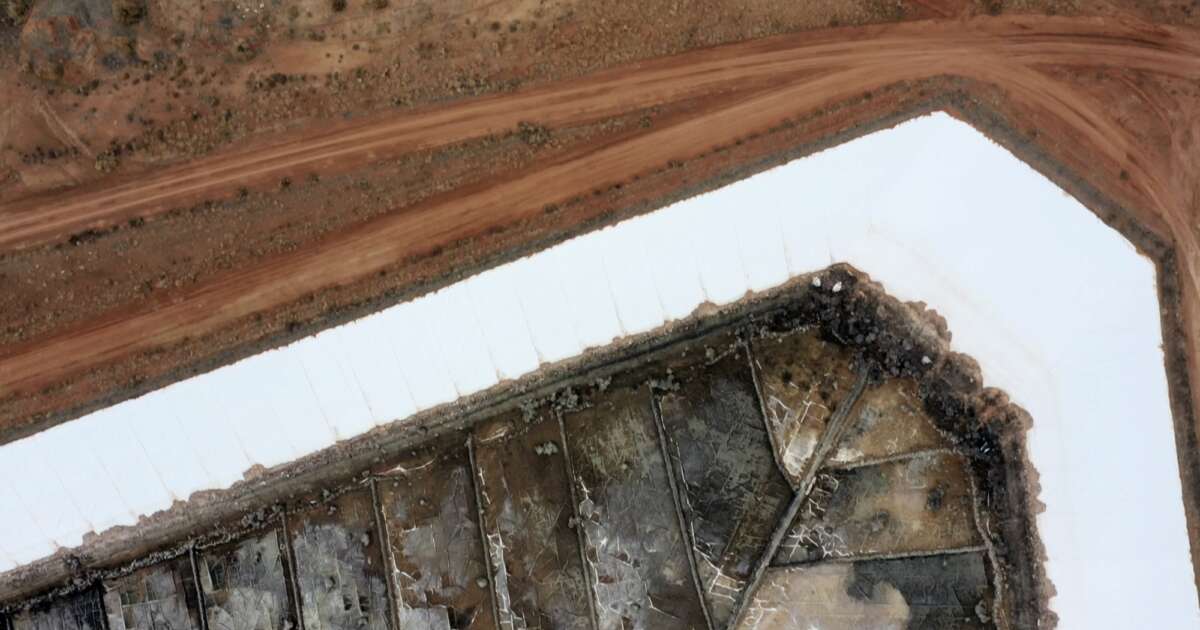 Over the past fifteen years, forward US military installations in Iraq and Afghanistan (and more recently in Syria and Egypt) produced an unprecedented volume and variety of waste: batteries, ammunition, vehicle parts, tires, e-waste, treated plywood, PVC pipe, industrial lubricants, paint, plastic water bottles, Styrofoam trays, uniforms, furniture, animal carcasses, and medical waste. Joint Base Balad in Iraq (hereafter JBB, now Balad Air Base), for instance, housed around 36,000 US and allied service members and contractors. Thanks to the US military’s commitment to semipermanent basing and subcontracted support services, JBB produced about 250 tons of waste per day, roughly three times the amount of a comparably populated town in the United States. In a perverse infrastructural loop, this waste was disposed of by dousing it in fuel and burning it in open-air pits, producing forms of toxicity unprecedented in bygone eras of US war.
Like the uncounted Iraqi and Afghan civilians who also lived downwind from the pits’ plumes, veterans and military contractors we spoke with were exposed to particulate matter and a range of irritant and pathogenic substances in the smoke. These exposures are associated with grave health problems, including soft tissue cancers, autoimmune disorders, skin conditions, asthma, and an irreversible airway disease called constrictive bronchiolitis. Waves of Iraqi and Afghan deaths and illnesses, including cancers and birth defects, have followed US invasion and occupation, associated not only with the pits but also with the United States’ use of depleted uranium munitions and other toxic materiel. This is abetted by the devastation of local infrastructures and health systems from years of US sanctions, bombing, and invasion (Dewachi 2017; Rubaii 2020).
Pollution and toxification are central to US military violence. The burn pits both exemplify and render in microcosm the way such violence fosters some privileged lifeworlds by destroying others. Of course, in a geopolitically networked world of wealthy liberal states stratified along racial and colonial lines, many people outside the US benefit from this backing and many within its own national borders do not. Highly protected and uniquely exposed, military personnel inhabit this contradiction in an especially acute way.
Veterans we talked to described disposing of fellow soldiers’ latrine waste by mixing it with barrels of burning aviation fuel, with only rags to protect them from the hazardous smoke. They told us about waking in the shipping containers they slept in drenched in sweat because their air conditioners sucked in too much airborne particulate to run. They characterized the stench, color, and quality of the smoke they inhaled and the substances they coughed up, their irreversible declines in lung capacity, and the sudden onset of terminal cancer. And they expressed a keen awareness that all of this was a direct effect of the prosaic work of making war—of soldiers eating, drinking, shitting, receiving medical treatment, wearing out their uniforms, running and repairing vehicles and computers, and doing all this potentially dirty work within spaces that had to be kept physically fortified. Over the past fifteen years, forward US military installations in Iraq and Afghanistan (and more recently in Syria and Egypt) produced an unprecedented volume and variety of waste: batteries, ammunition, vehicle parts, tires, e-waste, treated plywood, PVC pipe, industrial lubricants, paint, plastic water bottles, Styrofoam trays, uniforms, furniture, animal carcasses, and medical waste. Joint Base Balad in Iraq (hereafter JBB, now Balad Air Base), for instance, housed around 36,000 US and allied service members and contractors. Thanks to the US military’s commitment to semipermanent basing and subcontracted support services, JBB produced about 250 tons of waste per day, roughly three times the amount of a comparably populated town in the United States. In a perverse infrastructural loop, this waste was disposed of by dousing it in fuel and burning it in open-air pits, producing forms of toxicity unprecedented in bygone eras of US war.
Like the uncounted Iraqi and Afghan civilians who also lived downwind from the pits’ plumes, veterans and military contractors we spoke with were exposed to particulate matter and a range of irritant and pathogenic substances in the smoke. These exposures are associated with grave health problems, including soft tissue cancers, autoimmune disorders, skin conditions, asthma, and an irreversible airway disease called constrictive bronchiolitis. Waves of Iraqi and Afghan deaths and illnesses, including cancers and birth defects, have followed US invasion and occupation, associated not only with the pits but also with the United States’ use of depleted uranium munitions and other toxic materiel. This is abetted by the devastation of local infrastructures and health systems from years of US sanctions, bombing, and invasion (Dewachi 2017; Rubaii 2020).
Pollution and toxification are central to US military violence. The burn pits both exemplify and render in microcosm the way such violence fosters some privileged lifeworlds by destroying others. Of course, in a geopolitically networked world of wealthy liberal states stratified along racial and colonial lines, many people outside the US benefit from this backing and many within its own national borders do not. Highly protected and uniquely exposed, military personnel inhabit this contradiction in an especially acute way.
Veterans we talked to described disposing of fellow soldiers’ latrine waste by mixing it with barrels of burning aviation fuel, with only rags to protect them from the hazardous smoke. They told us about waking in the shipping containers they slept in drenched in sweat because their air conditioners sucked in too much airborne particulate to run. They characterized the stench, color, and quality of the smoke they inhaled and the substances they coughed up, their irreversible declines in lung capacity, and the sudden onset of terminal cancer. And they expressed a keen awareness that all of this was a direct effect of the prosaic work of making war—of soldiers eating, drinking, shitting, receiving medical treatment, wearing out their uniforms, running and repairing vehicles and computers, and doing all this potentially dirty work within spaces that had to be kept physically fortified. | |
Submitted at 07-30-2022, 08:06 PM by sleeppoor | |
/cloudfront-us-east-1.images.arcpublishing.com/pmn/JLB5QBJFCNDFBFIKPX36B5QCMM.jpg) Fear about monkeypox has phones ringing off the hook at local health clinics treating members of the LGBTQ community, as the disease newly declared a global health emergency spreads rapidly in Philadelphia.
Many local clinics are turning away callers looking for a vaccine, including some exposed to the disease, due to a lack of doses. Fear about monkeypox has phones ringing off the hook at local health clinics treating members of the LGBTQ community, as the disease newly declared a global health emergency spreads rapidly in Philadelphia.
Many local clinics are turning away callers looking for a vaccine, including some exposed to the disease, due to a lack of doses.
| |
Submitted at 07-30-2022, 07:55 PM by sleeppoor | |
 The crucial point, he argues, is that there is now no chance of us avoiding a perilous, all-pervasive climate breakdown. We have passed the point of no return and can expect a future in which lethal heatwaves and temperatures in excess of 50C (120F) are common in the tropics; where summers at temperate latitudes will invariably be baking hot, and where our oceans are destined to become warm and acidic. The crucial point, he argues, is that there is now no chance of us avoiding a perilous, all-pervasive climate breakdown. We have passed the point of no return and can expect a future in which lethal heatwaves and temperatures in excess of 50C (120F) are common in the tropics; where summers at temperate latitudes will invariably be baking hot, and where our oceans are destined to become warm and acidic. | |
Submitted at 07-30-2022, 06:14 PM by Nibbles | |
 It’s the latest example of the elite media’s peculiar attack on a populist movement by demonizing fans of Snyder’s superhero movies — especially the epic, full-length restoration Zack Snyder’s Justice League, one of the very best American films this century
(Armond White comes out swinging!) It’s the latest example of the elite media’s peculiar attack on a populist movement by demonizing fans of Snyder’s superhero movies — especially the epic, full-length restoration Zack Snyder’s Justice League, one of the very best American films this century
(Armond White comes out swinging!) | |
Submitted at 07-30-2022, 03:50 PM by OldBoringGuy | |
 Living his best life. Living his best life. | |
Submitted at 07-30-2022, 01:50 PM by Disruptive Emotional-Support Pig | |
 Scientists discover pits on the moon that are room temperature in the shade. Scientists discover pits on the moon that are room temperature in the shade. | |
Submitted at 07-30-2022, 04:54 AM by Grief Bacon | |
 With increased aggression from the Russian Federation and machinations via subsidiaries of the People’s Republic of China, the necessity of stay-behind operations has become clear once again. With increased aggression from the Russian Federation and machinations via subsidiaries of the People’s Republic of China, the necessity of stay-behind operations has become clear once again. | |
Submitted at 07-30-2022, 07:36 AM by Dreaded Candiru | |
 This is the third time a Long March 5B booster has made an uncontrolled reentry. This is the third time a Long March 5B booster has made an uncontrolled reentry. | |
Submitted at 07-30-2022, 01:46 AM by sleeppoor | |