
| News | |||||||||||||||||||||||||||||||||||||||||||||||||||||||||||||||||||||||||||||||||||||||||||||||||||||||||||||||||||||||||||||||||||||||||||||||||||||||||||||||
OpenAI, Google and Meta ignored corporate policies, altered their own rules and discussed skirting copyright law as they sought online information to train their newest artificial intelligence systems. | |
Submitted at 04-07-2024, 02:05 AM by sleeppoor | |
2 Comments | |
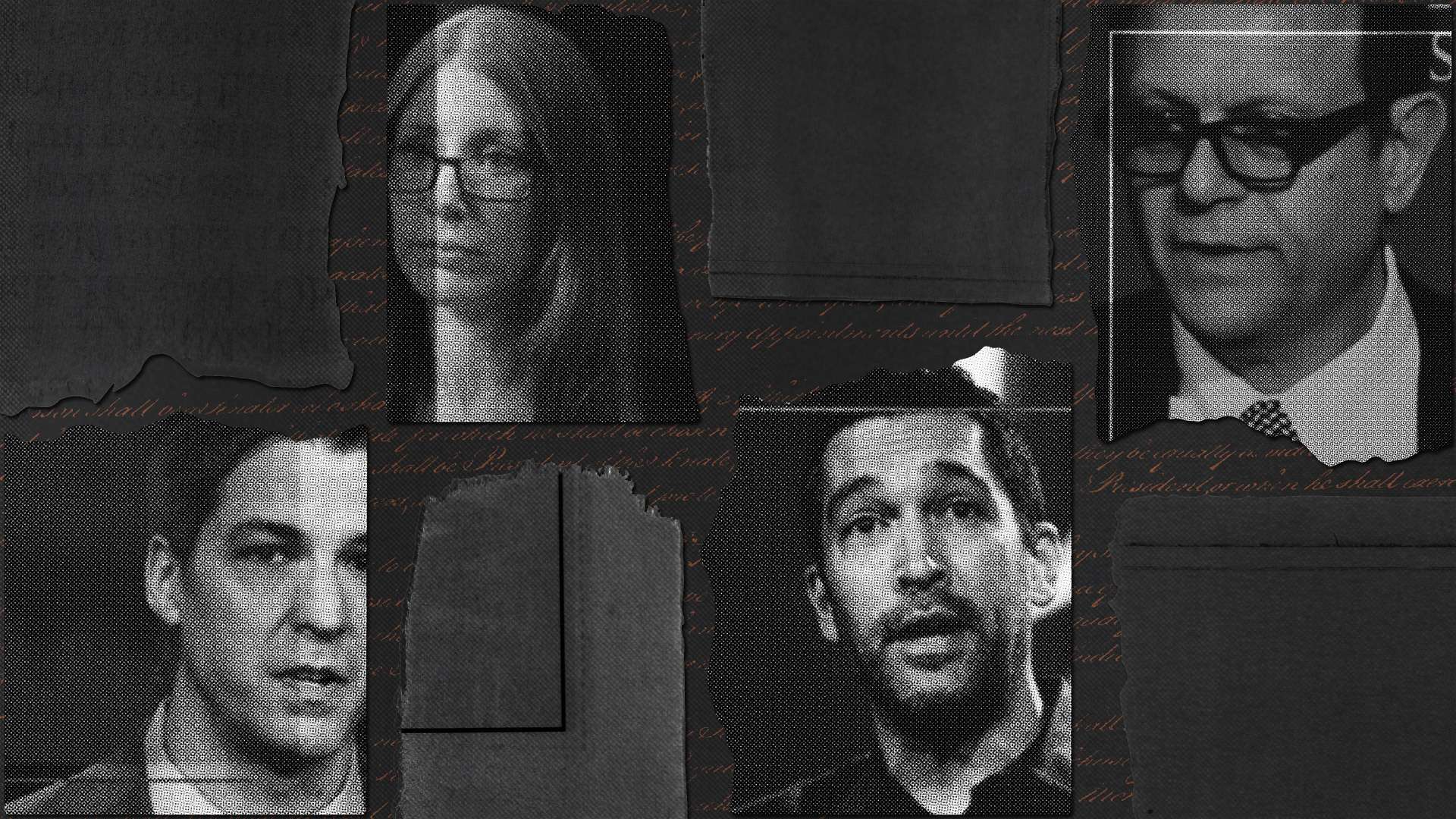
"I am listening to people of diverse viewpoints on it in order to make sense of the event and what followed. I want to hear every side," Kennedy said in the Friday statement.
He said that "reasonable people, including Trump opponents, tell me there is little evidence of a true insurrection."
He said that if elected he would "appoint a special counsel" that would "investigate whether prosecutorial discretion was abused for political ends in this case." | |
Submitted at 04-06-2024, 03:54 PM by Mordant | |
Counterfeits are the bane of the Parmigiano Reggiano Consortium, which is now trialling tech in the rind | |
Submitted at 04-06-2024, 09:25 AM by B. Weed | |
What a new meme says about content from China on TikTok. | |
Submitted at 04-06-2024, 08:24 AM by sleeppoor | |
If you’ve been watching television or tracking trending topics over the last few weeks, you’ve probably seen or read something about “white rural rage.” This is owed to the publication of a new book, White Rural Rage, by Tom Schaller and Paul Waldman, whose thesis is that white rural Americans, despite representing just 16 percent of the American electorate, are a “threat to the world’s oldest constitutional democracy.” | |
Submitted at 04-06-2024, 02:00 AM by Mordant | |
We are getting along OK without the promotional help of Facebook, but it does seem problematic that a behemoth such as Meta can dictate the terms of our communications.
Apparently, Meta deems climate change too controversial for discussion on their platforms.
I had suspected such might be the case, because all the posts I made prior to the attempted boost seemed to drop off the radar with little response. As I took a closer look, I found others complaining about Facebook squelching posts related to climate change.
Steve Lerner, a Lawrence psychologist who addresses the subject of climate anxiety in our documentary, recently moderated a series of public discussions around the state as part of the “Step By Step” gatherings he initiated with funding from Humanities Kansas. He says he encountered the same type of rejection as I did with Facebook.
Katherine Hayhoe, author of “Saving Us: A Climate Scientist’s Case for Hope and Healing in a Divided World,” serves as Chief Scientist for the Nature Conservancy and is a distinguished professor at Texas Tech. You might expect that she would be considered a legitimate authority on the subject.
But in the Meta-verse, where it seems virtually impossible to connect with a human being associated with the administration of the platform, rules are rules, and it appears they would prefer to suppress anything that might prove problematic for them. | |
Submitted at 04-06-2024, 12:45 AM by sleeppoor | |
Two new studies on mammal teeth, jaw, and ear evolution provide new insights into Jurassic-era mammals. | |
Submitted at 04-05-2024, 08:22 PM by sleeppoor | |
The specialty grocer, which operates the checkout tech at just two stores, will follow the same path as Amazon Fresh stores in the U.S., a spokesperson confirmed Friday. | |
Submitted at 04-05-2024, 05:18 PM by a total mess | |
Two things about our immigration debate are both true. One, America is in danger of turning its back on the global order set by the Refugee Convention—the commitment by the nations of the world, in the wake of the Holocaust, to welcome victims of persecution. Two, America still loves a refugee.
A single individual is a protagonist, whose story of the horrors they fled back home, and fear of what they might experience in the future, inspire sympathy and identification. A large group of people traveling together? That’s an invasion. When a picture of a single asylum seeker goes viral, it’s from immigration doves horrified at the costs of hawkish policies. Images of “migrant caravans” form the backdrop for Republican campaign ads aimed at skittish swing voters.
But the world doesn’t produce refugees on a bespoke basis. It produces them at industrial scale, as collateral damage from global upheavals. Each individual leaves for their own reasons, but the aggregate masses denote crisis, in both the countries they leave and the countries they flee to. And today, global displacement has reached all-time highs, particularly in the Western Hemisphere.
So here we are, facing a presidential election, with a significant fraction of Americans—predominantly Republicans—citing immigration as the most important issue facing the country, and the administration of President Joe Biden anxious to do something it can point to as “shutting down” the U.S.-Mexico border. | |
Submitted at 04-05-2024, 03:19 PM by sleeppoor | |
Iago, surprised. | |
Submitted at 04-05-2024, 01:56 PM by B. Weed | |
Amid a home insurance crisis and soaring housing prices, the Florida GOP has brought all its power to bear on their symptoms. | |
Submitted at 04-05-2024, 02:28 AM by sleeppoor | |
Just what we all wanted, even more ads to deal with in our everyday life
A new patent recently filed by TV and streaming device manufacturer Roku hints toward a possible future where televisions could display ads when you pause a movie or game.
For Roku, the time in which the TV is on but users aren’t doing anything is valuable. The company has started leasing out ad space in its popular Roku City screensaver—which appears when your TV is idle—to companies like McDonald’s and movies like Barbie. As tech newsletter Lowpass points out, Roku finds this idle time and its screensaver so valuable that it forbids app developers from overriding the screensaver with their own. But, if you plug in an Xbox or DVD player into the HDMI port on a Roku TV, you bypass the company’s screensaver and other ads. And so, Roku has been figuring out a way to not let that happen. | |
Submitted at 04-05-2024, 02:26 AM by sleeppoor | |
Submitted at 04-04-2024, 10:12 PM by sleeppoor | |
Submitted at 04-04-2024, 09:18 PM by Mordant | |
Submitted at 04-04-2024, 07:33 PM by DamnHead | |
On the hook to repay $1.3 billion of debt this year, the nation's largest prison telecom company, Securus, is on the verge of bankruptcy. Its failure would represent a remarkable victory for advocates—and a potential beginning of the end for the industry as we know it. | |
Submitted at 04-04-2024, 06:15 PM by sleeppoor | |
Louisiana Library workers or libraries who seek membership in the largest professional organization would be criminalized for doing so. | |
Submitted at 04-04-2024, 05:06 PM by thirteen3seven | |
Jane Willenbring was the first to blow the whistle on sexual harassment and assault in Antarctica. Years later, women are still coming forward with tales of horror as a government investigation unfolds. | |
Submitted at 04-04-2024, 03:34 PM by sleeppoor | |
Pascagoula Police Lt. Darren Versiga had been working in law enforcement for over a decade when the Sun Herald called his office in 2010, inquiring about how many cold cases the department had open.
The lieutenant soon discovered that the department had 26 unsolved cases in Pascagoula at the time, which he found odd.
The lieutenant told the Mississippi Free Press that he was shocked when someone at the Oklahoma crime lab told him they had the remains of several people that should have been sent back to Mississippi years ago.
“I thought, why would they have them for all these years?” Versiga said.
He said the 2012 discovery opened a “pandora’s box,” revealing a decades-old practice before the development of modern DNA testing where some county coroners, medical examiners and law-enforcement officials across the country would keep the human remains of people who could not be positively identified. Some would even use them for educational purposes or for “their own personal collections,” he said. Versiga did not name anyone specifically but said he found instances like that both in Mississippi and elsewhere in the country; not all of the incidents were intentional, he said. | |
Submitted at 04-04-2024, 03:42 AM by sleeppoor | |
Hours into a barefoot trek in the middle of the night along a highway in rural Nova Scotia, stranded without a phone, Mi'kmaq fisher Kevin Hartling says he and his friend felt that if they stopped walking they might die.
Hartling, who is from Membertou First Nation, and Blaise Sylliboy, from Eskasoni First Nation, say that last week they were detained by federal fisheries officers for fishing near Shelburne, N.S. The two men from Cape Breton say that at around 1 a.m., they were left at a gas station far from home without footwear or cellphones and ended up walking for about six hours before they used a borrowed phone to get through to a friend, who picked them up.
"It's basically a starlight tour, " Hartling said in an interview Wednesday, referring to a practice where police in Canada have taken vulnerable Indigenous people to a secluded location and left them to find their way home, sometimes in freezing conditions. "That's what was going through my mind the whole time .... If we stop moving, we're going to die. If we go and just sit somewhere to rest and fall asleep, we're dead." | |
Submitted at 04-04-2024, 03:38 AM by sleeppoor | |

OpenAI, Google and Meta ignored corporate policies, altered their own rules and discussed skirting copyright law as they sought online information to train their newest artificial intelligence systems.
"I am listening to people of diverse viewpoints on it in order to make sense of the event and what followed. I want to hear every side," Kennedy said in the Friday statement.
He said that "reasonable people, including Trump opponents, tell me there is little evidence of a true insurrection."
He said that if elected he would "appoint a special counsel" that would "investigate whether prosecutorial discretion was abused for political ends in this case."
Counterfeits are the bane of the Parmigiano Reggiano Consortium, which is now trialling tech in the rind
What a new meme says about content from China on TikTok.
If you’ve been watching television or tracking trending topics over the last few weeks, you’ve probably seen or read something about “white rural rage.” This is owed to the publication of a new book, White Rural Rage, by Tom Schaller and Paul Waldman, whose thesis is that white rural Americans, despite representing just 16 percent of the American electorate, are a “threat to the world’s oldest constitutional democracy.”
We are getting along OK without the promotional help of Facebook, but it does seem problematic that a behemoth such as Meta can dictate the terms of our communications.
Apparently, Meta deems climate change too controversial for discussion on their platforms.
I had suspected such might be the case, because all the posts I made prior to the attempted boost seemed to drop off the radar with little response. As I took a closer look, I found others complaining about Facebook squelching posts related to climate change.
Steve Lerner, a Lawrence psychologist who addresses the subject of climate anxiety in our documentary, recently moderated a series of public discussions around the state as part of the “Step By Step” gatherings he initiated with funding from Humanities Kansas. He says he encountered the same type of rejection as I did with Facebook.
Katherine Hayhoe, author of “Saving Us: A Climate Scientist’s Case for Hope and Healing in a Divided World,” serves as Chief Scientist for the Nature Conservancy and is a distinguished professor at Texas Tech. You might expect that she would be considered a legitimate authority on the subject.
But in the Meta-verse, where it seems virtually impossible to connect with a human being associated with the administration of the platform, rules are rules, and it appears they would prefer to suppress anything that might prove problematic for them.
Two new studies on mammal teeth, jaw, and ear evolution provide new insights into Jurassic-era mammals.
The specialty grocer, which operates the checkout tech at just two stores, will follow the same path as Amazon Fresh stores in the U.S., a spokesperson confirmed Friday.
Two things about our immigration debate are both true. One, America is in danger of turning its back on the global order set by the Refugee Convention—the commitment by the nations of the world, in the wake of the Holocaust, to welcome victims of persecution. Two, America still loves a refugee.
A single individual is a protagonist, whose story of the horrors they fled back home, and fear of what they might experience in the future, inspire sympathy and identification. A large group of people traveling together? That’s an invasion. When a picture of a single asylum seeker goes viral, it’s from immigration doves horrified at the costs of hawkish policies. Images of “migrant caravans” form the backdrop for Republican campaign ads aimed at skittish swing voters.
But the world doesn’t produce refugees on a bespoke basis. It produces them at industrial scale, as collateral damage from global upheavals. Each individual leaves for their own reasons, but the aggregate masses denote crisis, in both the countries they leave and the countries they flee to. And today, global displacement has reached all-time highs, particularly in the Western Hemisphere.
So here we are, facing a presidential election, with a significant fraction of Americans—predominantly Republicans—citing immigration as the most important issue facing the country, and the administration of President Joe Biden anxious to do something it can point to as “shutting down” the U.S.-Mexico border.
Iago, surprised.
Amid a home insurance crisis and soaring housing prices, the Florida GOP has brought all its power to bear on their symptoms.
Just what we all wanted, even more ads to deal with in our everyday life
A new patent recently filed by TV and streaming device manufacturer Roku hints toward a possible future where televisions could display ads when you pause a movie or game.
For Roku, the time in which the TV is on but users aren’t doing anything is valuable. The company has started leasing out ad space in its popular Roku City screensaver—which appears when your TV is idle—to companies like McDonald’s and movies like Barbie. As tech newsletter Lowpass points out, Roku finds this idle time and its screensaver so valuable that it forbids app developers from overriding the screensaver with their own. But, if you plug in an Xbox or DVD player into the HDMI port on a Roku TV, you bypass the company’s screensaver and other ads. And so, Roku has been figuring out a way to not let that happen.
On the hook to repay $1.3 billion of debt this year, the nation's largest prison telecom company, Securus, is on the verge of bankruptcy. Its failure would represent a remarkable victory for advocates—and a potential beginning of the end for the industry as we know it.
Louisiana Library workers or libraries who seek membership in the largest professional organization would be criminalized for doing so.
Jane Willenbring was the first to blow the whistle on sexual harassment and assault in Antarctica. Years later, women are still coming forward with tales of horror as a government investigation unfolds.
Pascagoula Police Lt. Darren Versiga had been working in law enforcement for over a decade when the Sun Herald called his office in 2010, inquiring about how many cold cases the department had open.
The lieutenant soon discovered that the department had 26 unsolved cases in Pascagoula at the time, which he found odd.
The lieutenant told the Mississippi Free Press that he was shocked when someone at the Oklahoma crime lab told him they had the remains of several people that should have been sent back to Mississippi years ago.
“I thought, why would they have them for all these years?” Versiga said.
He said the 2012 discovery opened a “pandora’s box,” revealing a decades-old practice before the development of modern DNA testing where some county coroners, medical examiners and law-enforcement officials across the country would keep the human remains of people who could not be positively identified. Some would even use them for educational purposes or for “their own personal collections,” he said. Versiga did not name anyone specifically but said he found instances like that both in Mississippi and elsewhere in the country; not all of the incidents were intentional, he said.
Hours into a barefoot trek in the middle of the night along a highway in rural Nova Scotia, stranded without a phone, Mi'kmaq fisher Kevin Hartling says he and his friend felt that if they stopped walking they might die.
Hartling, who is from Membertou First Nation, and Blaise Sylliboy, from Eskasoni First Nation, say that last week they were detained by federal fisheries officers for fishing near Shelburne, N.S. The two men from Cape Breton say that at around 1 a.m., they were left at a gas station far from home without footwear or cellphones and ended up walking for about six hours before they used a borrowed phone to get through to a friend, who picked them up.
"It's basically a starlight tour, " Hartling said in an interview Wednesday, referring to a practice where police in Canada have taken vulnerable Indigenous people to a secluded location and left them to find their way home, sometimes in freezing conditions. "That's what was going through my mind the whole time .... If we stop moving, we're going to die. If we go and just sit somewhere to rest and fall asleep, we're dead."